
 NZ
 UK
 US
 AU
 IND

 CA

 Share
 X (Formerly Twitter)
 Whatsapp
 Facebook
 LinkedIn
 Telegram
 Email This Article
 Copy Link
 Summarize with AI
 Chat GPT
 Perplexity
Highlights
- Greenland Resources receives 30-year permit for Malmbjerg molybdenum and magnesium project.
- The company secures an exploitation licence following a 10-year offtake deal with European steelmakers.
- Greenland Resources' Malmbjerg project aims to meet 25% of EU molybdenum demand and all defence-grade supply.
Greenland Resources Inc. (Cboe CA: MOLY | FSE: M0LY), along with its wholly owned Greenlandic subsidiary, Greenland Resources A/S, has been granted a 30-year exploitation licence for its Malmbjerg molybdenum and magnesium project in east Greenland, now referred to as Piiaaffik Høstakken. The permit was signed on June 19, 2025, by Naaja H. Nathanielsen, Greenland’s Minister for Business, Mineral Resources, Energy, Justice and Gender Equality, and Dr. Ruben Shiffman, Chairman of the Board of Greenland Resources.
The licence allows the Company to pursue mining development and operations over a 30-year period, with the option to apply for an extension of up to 50 years. The Greenland government highlighted the importance of mineral resource projects in supporting local employment and contributing to Greenland’s long-term goal of building a self-sustaining economy. The permit follows the Company’s recently signed 10-year offtake agreement with several major European steel producers.
Minister Nathanielsen stated that the government’s support for this project reflects confidence in both Greenland’s broader mining sector and the specific development plans presented by Greenland Resources. The minister further noted the role of such projects in stimulating local economic activity and fostering collaboration through IBA (Impact and Benefit Agreements) between the company, local municipalities, and the Greenlandic government.
Minister for Social Affairs, Labour Market, Internal Affairs and Environment, Bentiaraq Ottesen, emphasized that mining projects in Greenland must adhere to high environmental standards. He underscored the importance of dialogue with local communities and environmental safeguards to ensure that development takes place responsibly.
Greenland Resources' Executive Chairman, Dr. Ruben Shiffman, noted that the Malmbjerg project is expected to contribute significantly to Greenland’s public finances and infrastructure development. Based on its NI 43-101 Feasibility Study, the project could generate close to USD 1 billion in taxes during its 20-year mine life and support the creation of new infrastructure on Greenland’s east coast.
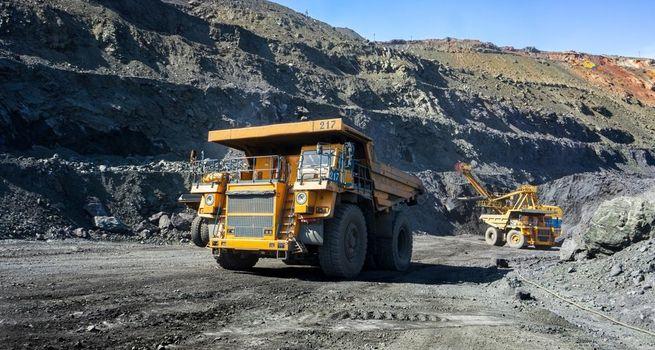
The Malmbjerg project is designed as an open-pit mine, with an environmentally focused design including reduced water usage, low aquatic disturbance, and modular infrastructure to minimize surface impact. The Definitive Feasibility Study, completed in 2022 by Tetra Tech, estimates initial capital expenditures of USD 820 million and a levered after-tax internal rate of return (IRR) of 33.8%, with a projected payback period of 2.4 years, assuming a molybdenum price of USD 18 per pound.
The mine contains Proven and Probable Reserves of 245 million tonnes at a grade of 0.176% MoS₂, equivalent to 571 million pounds of contained molybdenum. The Company anticipates annual production of 32.8 million pounds during the first decade of operations, covering an estimated 25% of the European Union’s annual molybdenum consumption and 100% of its defence-related needs.
In addition to molybdenum, the project includes magnesium as a byproduct. Greenland Resources is exploring innovative technologies to recover magnesium from saline water used in operations, which contains approximately 900 ppm of magnesium. The company is working toward incorporating magnesium economics into its feasibility analysis.
The EU currently lacks domestic molybdenum extraction but remains one of the top global users, primarily for high-strength steel and defence applications. Molybdenum is essential in military-grade materials, and over 80% of metals used in defence sectors require molybdenum alloying. The EU’s reliance on imports largely from China and the U.S. has prompted interest in alternate, more secure sources of supply.
Similarly, Europe imports most of its magnesium from China, which dominates global production. With the EU's increasing focus on electric vehicle production and sustainable manufacturing, alternative magnesium sources such as Malmbjerg could support diversification efforts.
Mining operations at Malmbjerg must begin by December 31, 2028, unless otherwise approved. Greenland Resources indicated it expects to release further updates soon on its financing strategy, including equity and debt arrangements and the involvement of strategic investors.


 Oct 22, 2026





 Please wait processing your request...