
Kalkine’s Global Tariff Report delivers objective, data-driven insights into key global sectors impacted by tariff fluctuations. It assesses how these changes influence equity valuations across affected industries, with a focus on trade-sensitive sectors that often attract increased investor attention during times of tariff-related uncertainty. The report also highlights defensive and countercyclical segments that tend to show resilience—or even outperformance—amid disruptions in global trade dynamics.
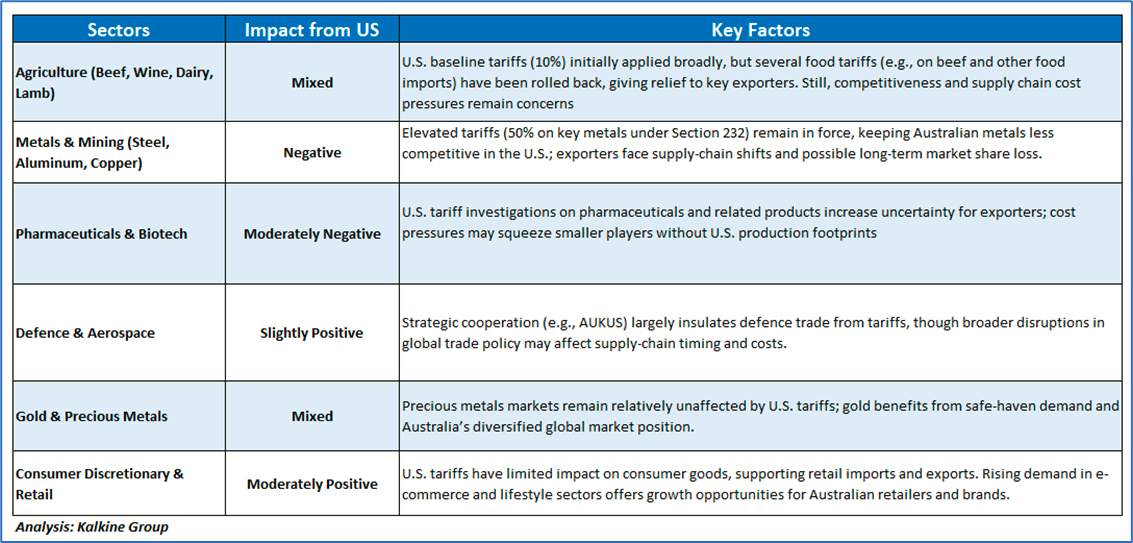
As illustrated in the table below, several key sectors in different countries are directly impacted by the recent tariff announcement from President Trump.


Key Highlights
Latest Key Developments (as of 12 January 2026)
Trump Tariffs Impact on Australian Trade
- Initial U.S. Tariffs: Trump’s “reciprocal tariffs” policy imposed at least 10 % tariffs on Australian imports, with higher rates on steel and aluminium, despite Australia’s attempts to secure exemptions.
- Tariff Rollbacks on Food Exports: The U.S. has recently removed many tariffs on Australian food exports, including beef, supporting the Australia‑U.S. Free Trade Agreement and benefiting key export sectors.
- Economic Impact and Policy Response: While overall effects on Australia’s diversified export economy are modest, some sectors remain exposed, prompting policymakers to continue advocating for tariff removal and competitive positioning.
Trump-Era Tariffs Continue to Impact Canada-U.S. Trade in 2026
- S. Tariffs and Canadian Countermeasures: The Trump administration’s tariffs (up to 25–35%) on non‑USMCA goods such as steel, aluminum, vehicles, and lumber have prompted Canada to impose counter-tariffs on a wide range of U.S. products.
- USMCA Exemptions and Risks: Canada maintains key USMCA exemptions to protect duty-free access for compliant goods, though these protections could face pressure during the 2026 USMCA review.
- Trade Diversification and Economic Outlook: Canada is diversifying export markets to offset reduced U.S. exports, with forecasts suggesting a “status quo” trade relationship in 2026, despite lingering uncertainties over tariff escalation or changes in exemptions.
U.S.–China Tariff Pressures Persist Amid Legal and Trade Uncertainty
- Tariff Framework Still Intact: U.S.–China tariff tensions remain elevated with Trump’s broad tariff structure still in place and a pending Supreme Court ruling on the legality of sweeping tariff powers adding significant policy uncertainty for exporters and markets.
- Selective Tactical Adjustments: While some tariff escalations were paused and a few duties reduced, effective U.S. tariff rates on Chinese imports remain high, and planned tariffs on Chinese chips have been delayed to 2027, signaling a mix of strategic pressure and calibrated restraint.
- China’s Trade Adaptation: Chinese exporters are redirecting trade flows — including commodities like copper — in response to tariff distortions, as Beijing’s negotiators engage Washington to manage tensions even as broader trade negotiations remain slow and structurally constrained.
U.S.–EU Tariff Tensions Persist Despite Framework Agreement
- Tariff Framework Still Pressuring EU: Trump’s reciprocal tariff regime continues to apply elevated duties on EU industrial exports — including steel and aluminum — despite the 2025 U.S.–EU framework agreement that set a 15% tariff ceiling to prevent further escalation.
- Regulatory Implementation Underway: The European Commission is advancing regulatory measures to operationalize the Joint Statement — adjusting customs duties and granting selective U.S. market access — as Brussels seeks greater trade predictability and stability.
U.S.–India Tariff Tensions Escalate Amid Russia-Linked Penalties
- Higher Tariff Exposure: India now faces combined U.S. tariffs of up to ~50% on several export categories due to a 25% reciprocal tariff and an additional 25% penalty linked to its continued Russian oil purchases, with Trump warning of further hikes and a proposed bill allowing tariffs of up to 500% increasing concerns that Indian exports to the U.S. could face significant disruption.
- Diplomacy vs. Economic Stress: India has sought tariff relief diplomatically after reducing Russian oil intake, but exporters — especially MSMEs — are reporting weaker order books and margin compression amid rising tariff uncertainty.
- Policy Response & Stalled Trade Talks: The RBI is considering additional credit and financing support for affected exporters, while broader U.S.–India trade deal negotiations remain stalled, extending tariff overhang risks for India and the region.

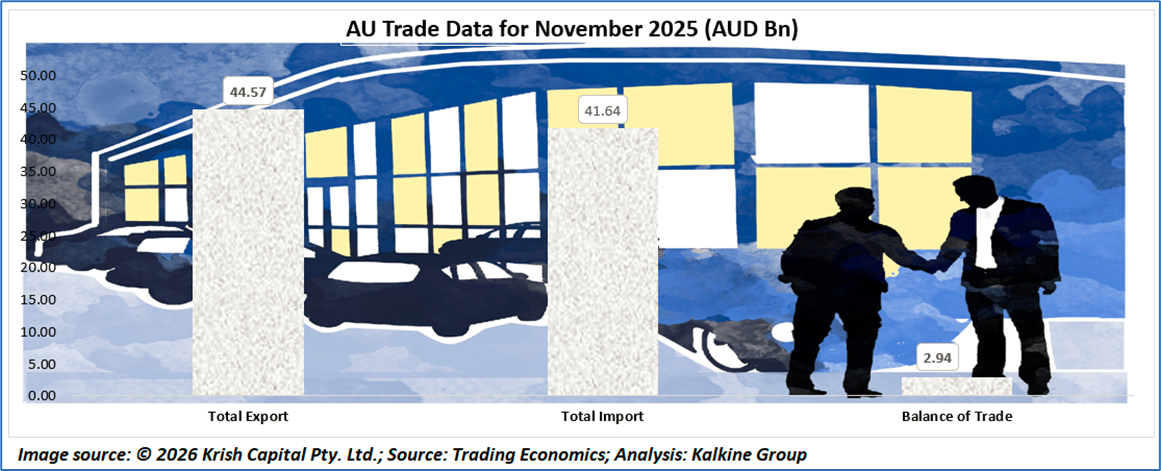
Australia’s external indicators show a mixed picture in recent periods. The country posted a trade surplus of AUD 2.94bn in November 2025 as exports reached AUD 44.6bn, outpacing imports of AUD 41.6bn. However, the current account remained in deficit at AUD –16.6bn in September 2025, equivalent to –2.3% of GDP. External debt climbed to AUD 2.72tn, while terms of trade held steady at 114 points. Capital inflows strengthened to AUD 31.1bn, supported by foreign direct investment of AUD 81bn in December 2024. Tourism continued to rebound, with arrivals rising to 740,650 in October 2025. Other indicators, such as the terrorism index at 1.97 and weapons sales at 75 SIPRI TIV million in December 2024, reflected a relatively low-risk environment.


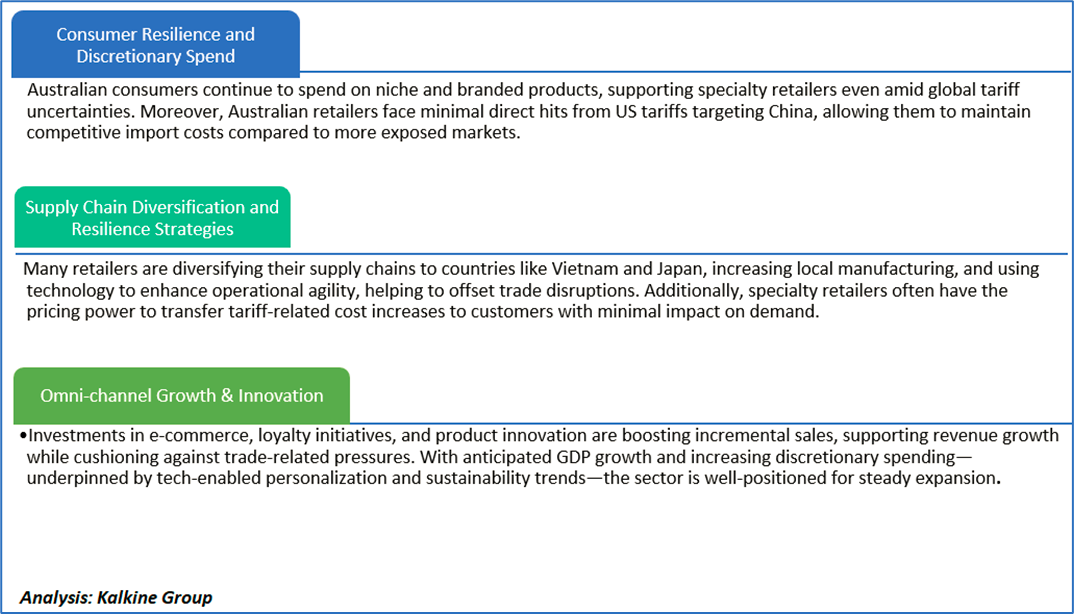
Amid elevated Market Volatility and Tariff pressures, Eagers Automotive Limited (ASX: APE) stands out as a defensive pick within the Specialty Retail sector, supported by rigorous fundamental and technical research.
Section 1: Company Overview and Fundamentals Insights
Company Overview: Eagers Automotive Limited (ASX: APE) is engaged in the sales of new and used motor vehicles, the distribution and sale of parts, accessories and car care products, the repair and servicing of vehicles, the provision of extended warranties and the ownership of property and investments. Kalkine’s Global Tariff Report covers the Investment Highlights, Management Commentary, Key Financial Metrics, Risks, and Technical Analysis along with the Valuation, Target Price, and Recommendation on the stock.
1.2 The Key Positives, Negatives, Investment Highlights, and Risks
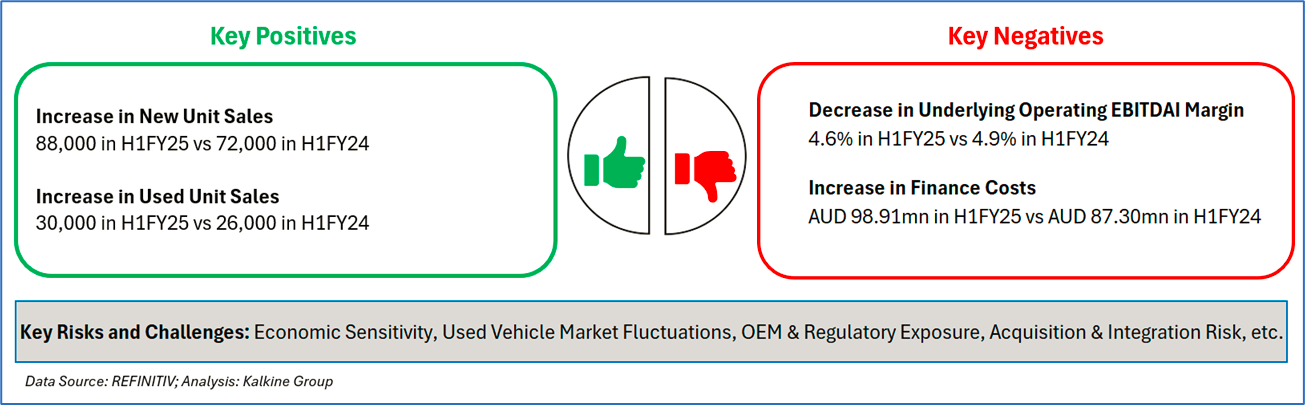
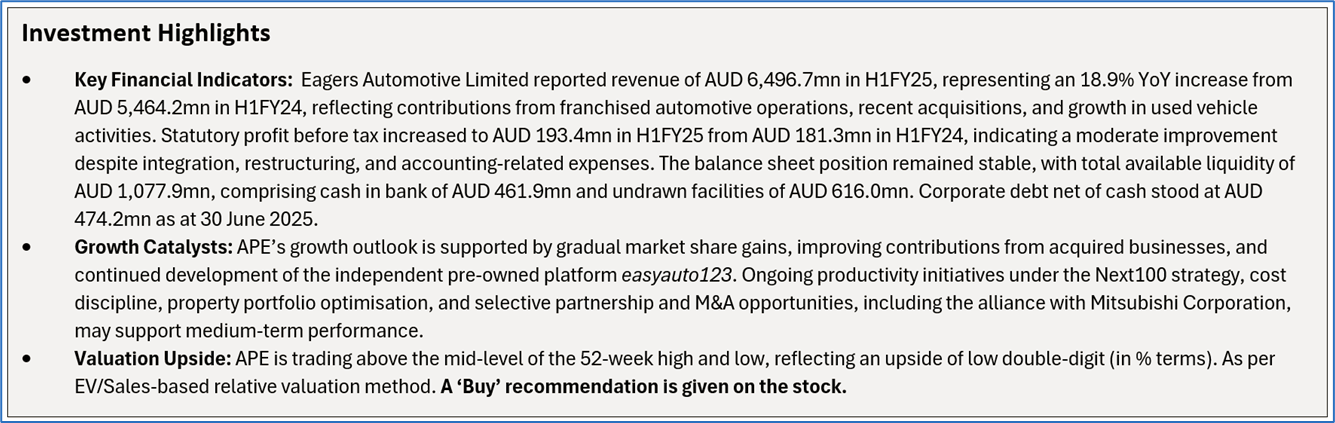
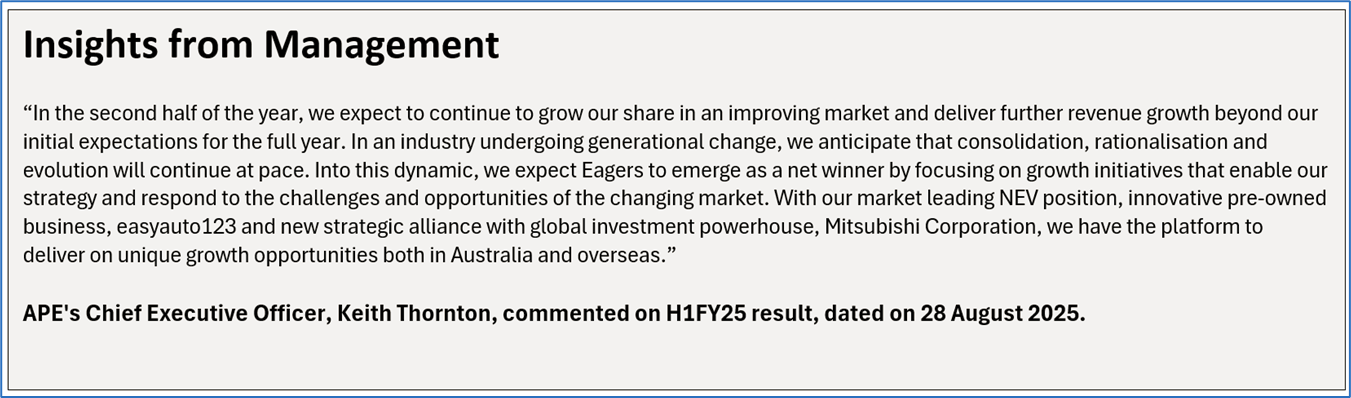
1.3 Top 10 Shareholders:
The top 10 shareholders together form ~48.33% of the total shareholding. Politis (Nicholas George), and Prater (Michelle Victoria) hold maximum stakes of 28.07% and 5.46%, respectively.
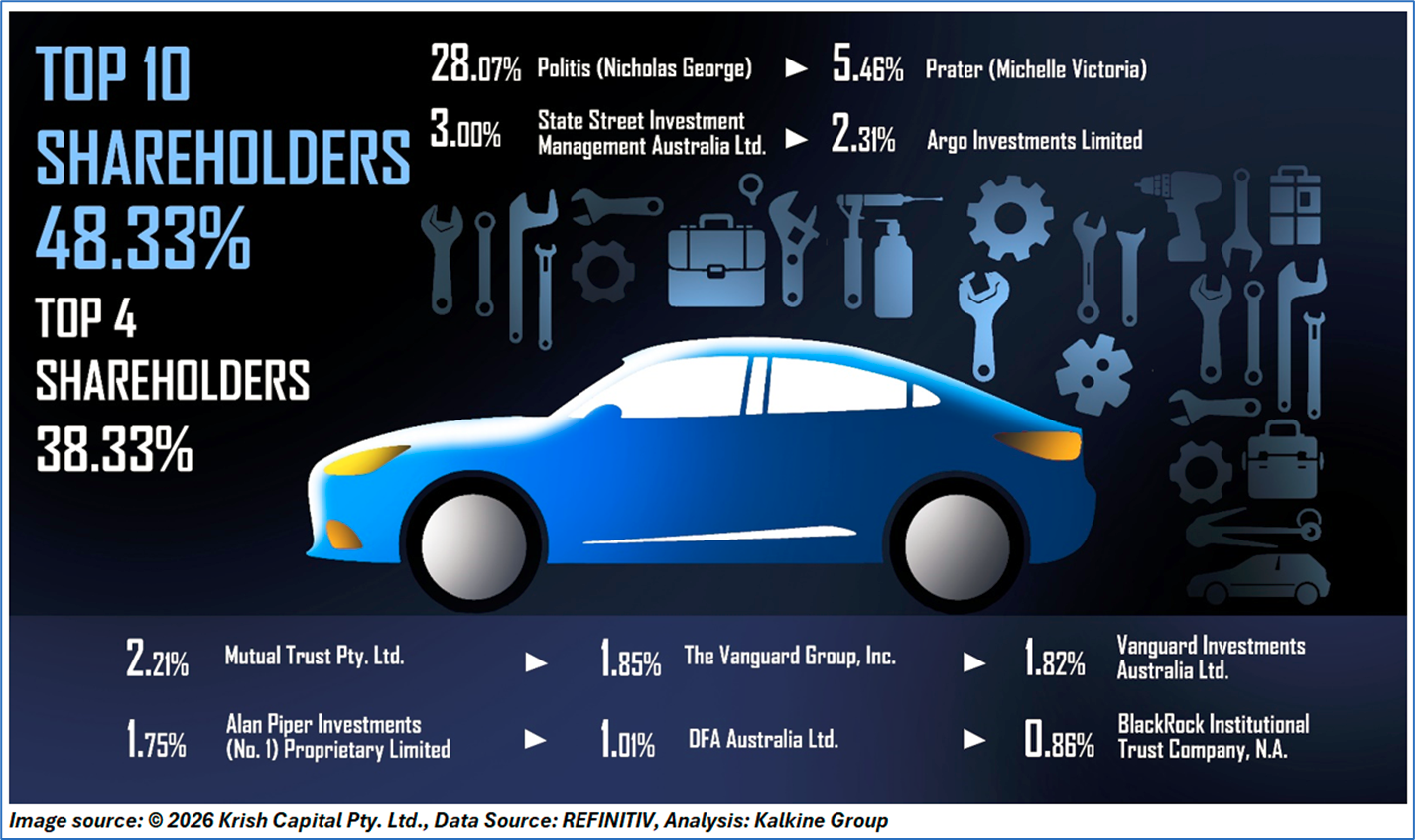
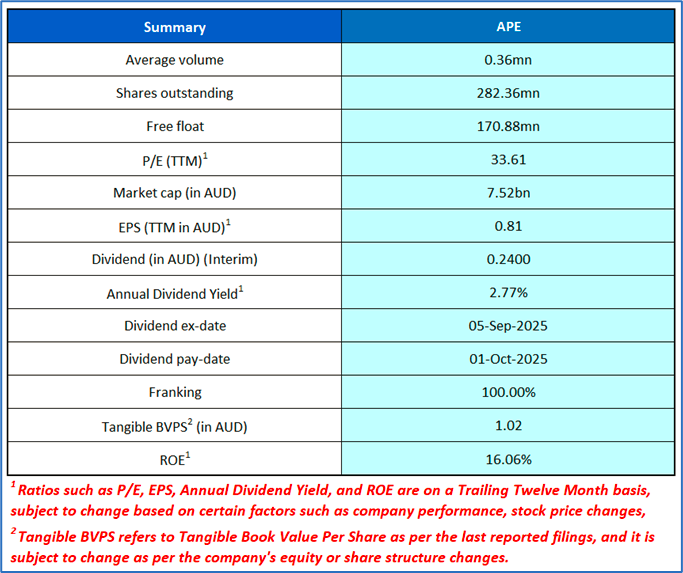
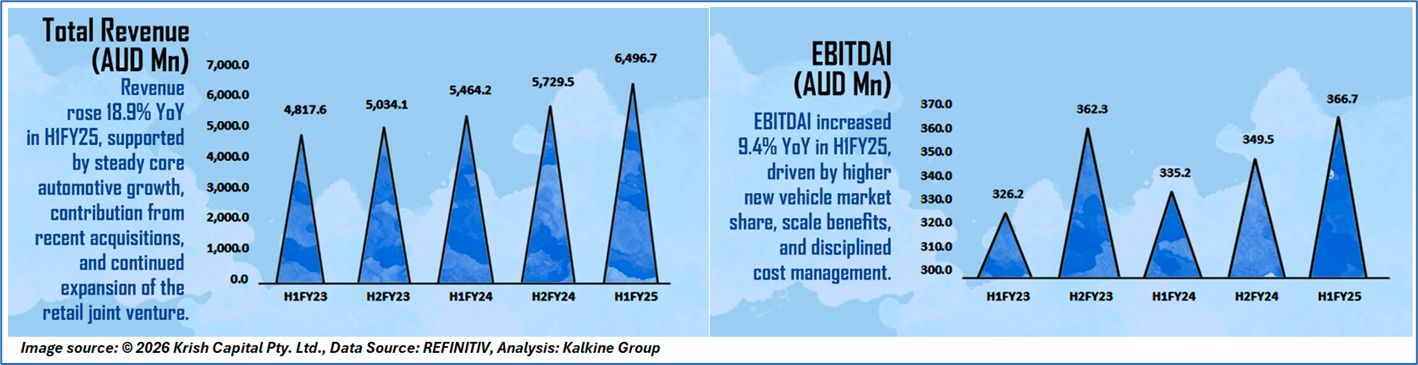
1.4 Key Metrics: APE’s statutory profit after tax AUD 134.2mn in H1FY25 compared to AUD 123.4mn in H1FY24. Below is captured other metrics:
Section 2: Business Updates, Financial and Operational Highlights
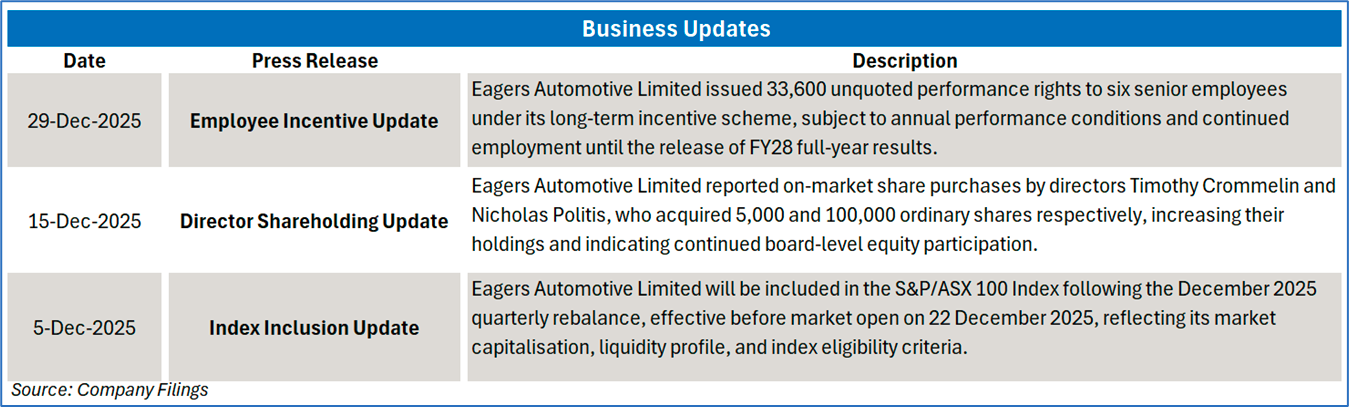
2.1 Recent Business Updates:
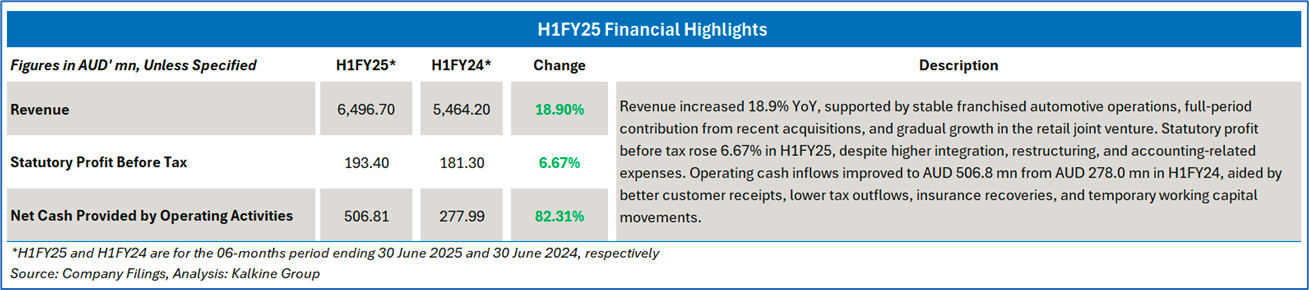
2.2 1HFY25 Results Highlights (for the 06 months ended 30 June 2025): Below mentioned are some key financial highlights:
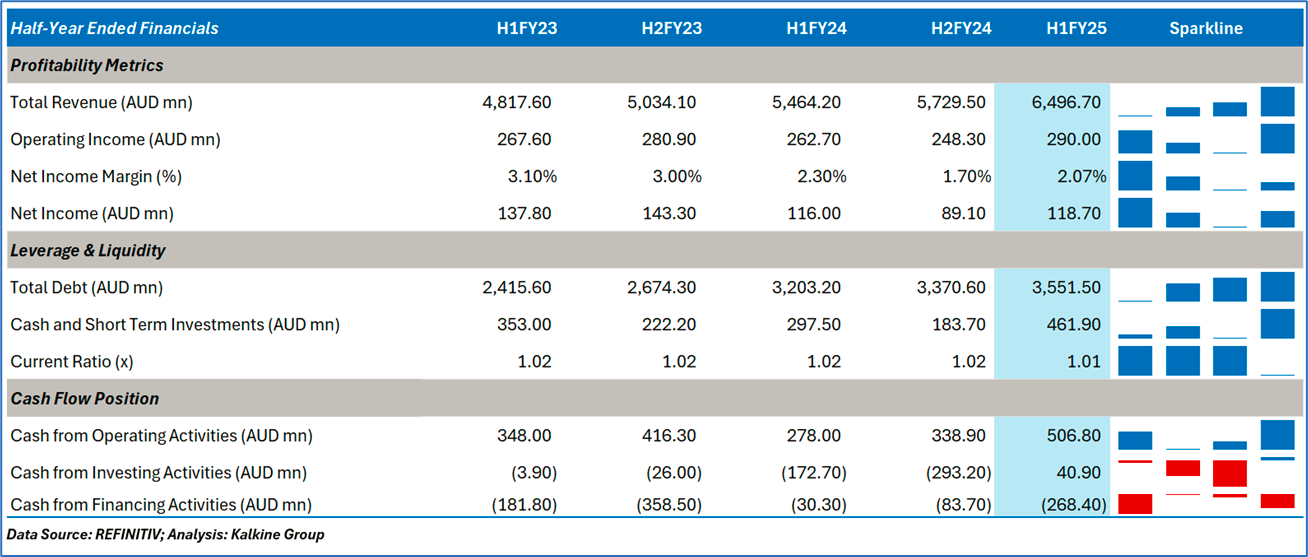
2.3 Historical Financial Trend
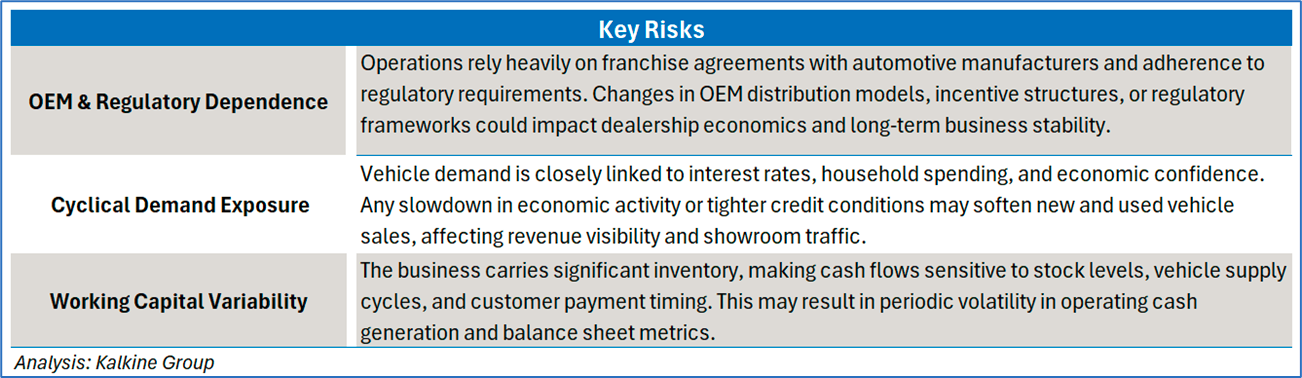
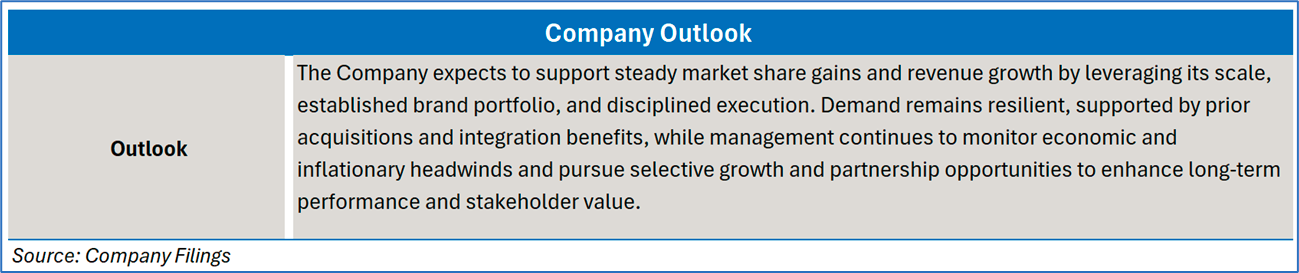
Section 3: Key Risks and Outlook:
Section 4: Stock Recommendation Summary
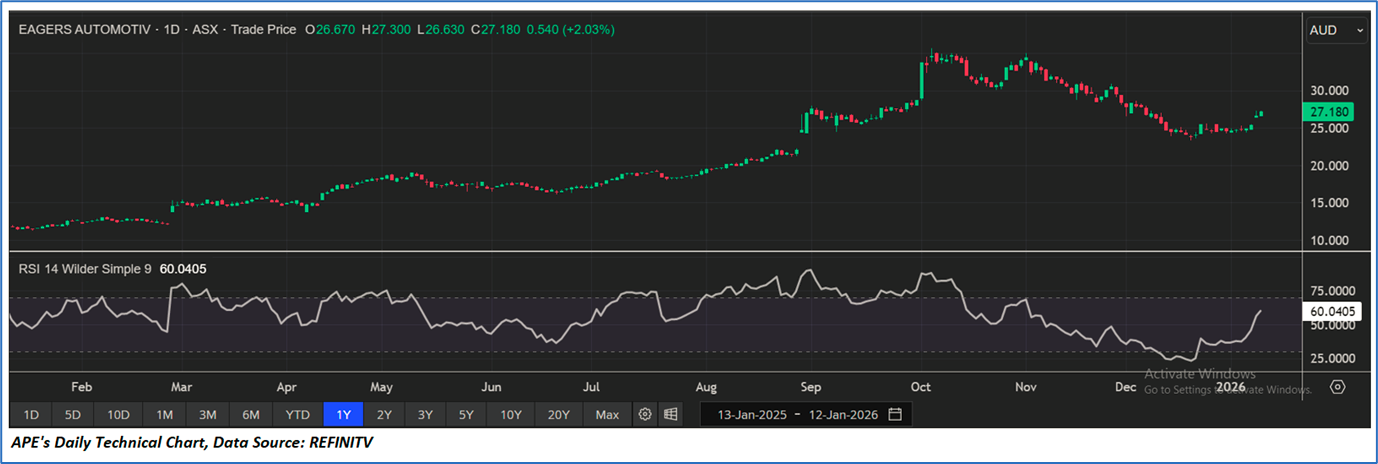
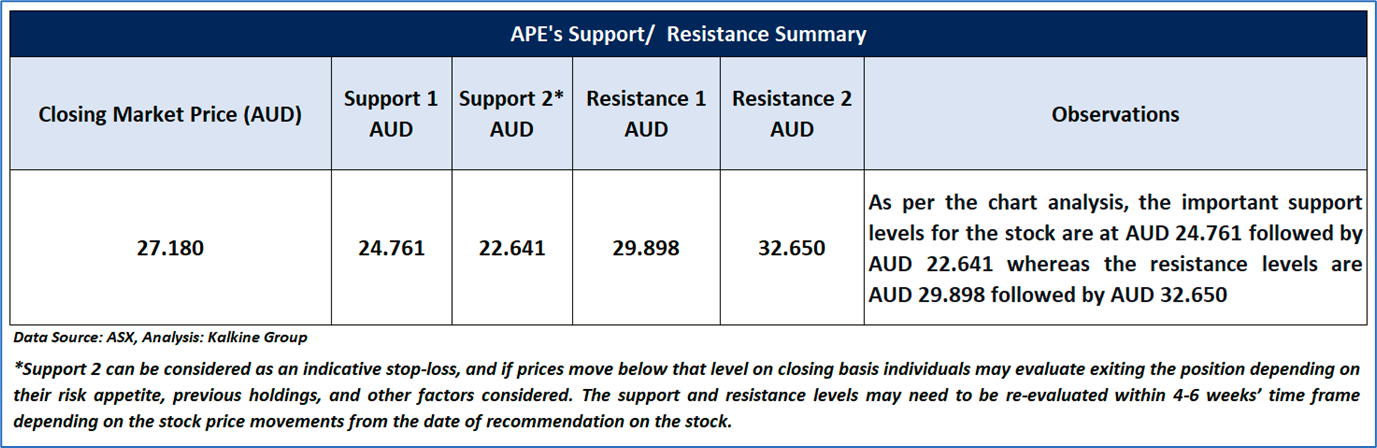
4.1 Price Performance and Technical Summary
The stock has decreased by ~21.74% in the last three months, and over the past six months, stock has increased by ~43.52%. The stock has a 52-week low and 52-week high of AUD 11.520 and AUD 35.640, respectively, and is currently trading above the 52-week high-low average. APE was last covered in a report dated ‘06 March 2025’.
4.2 Fundamental Valuation and Stock Recommendation
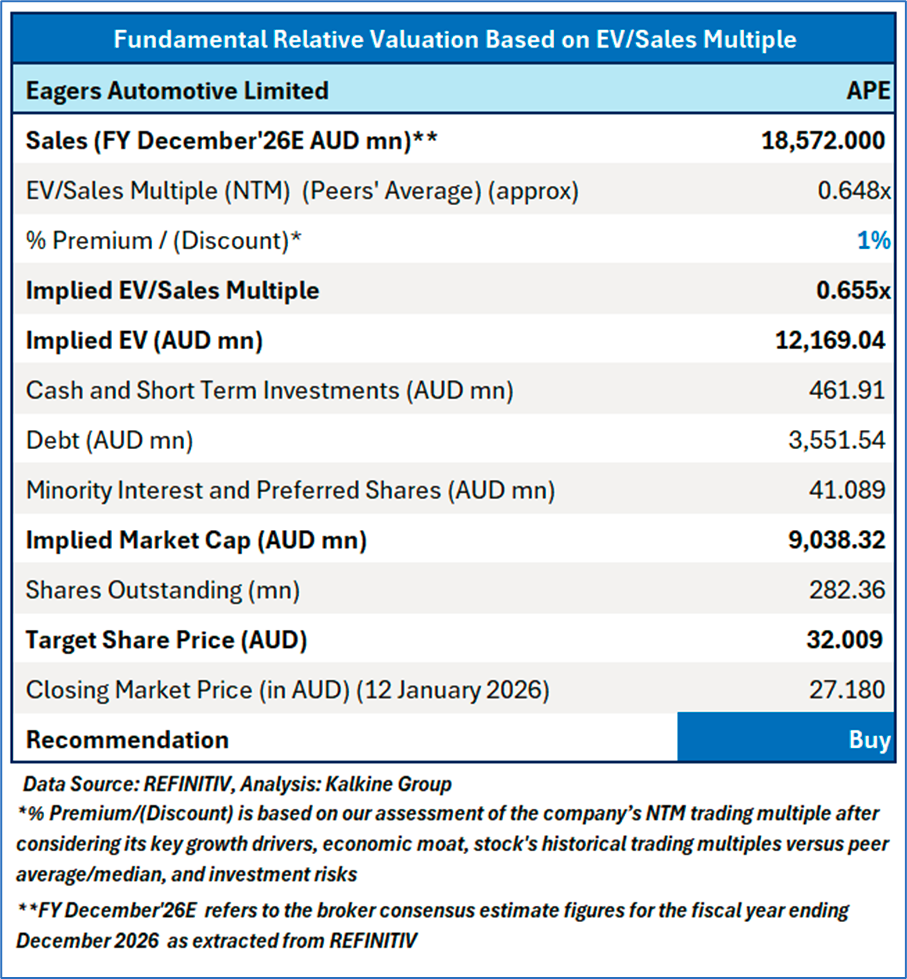
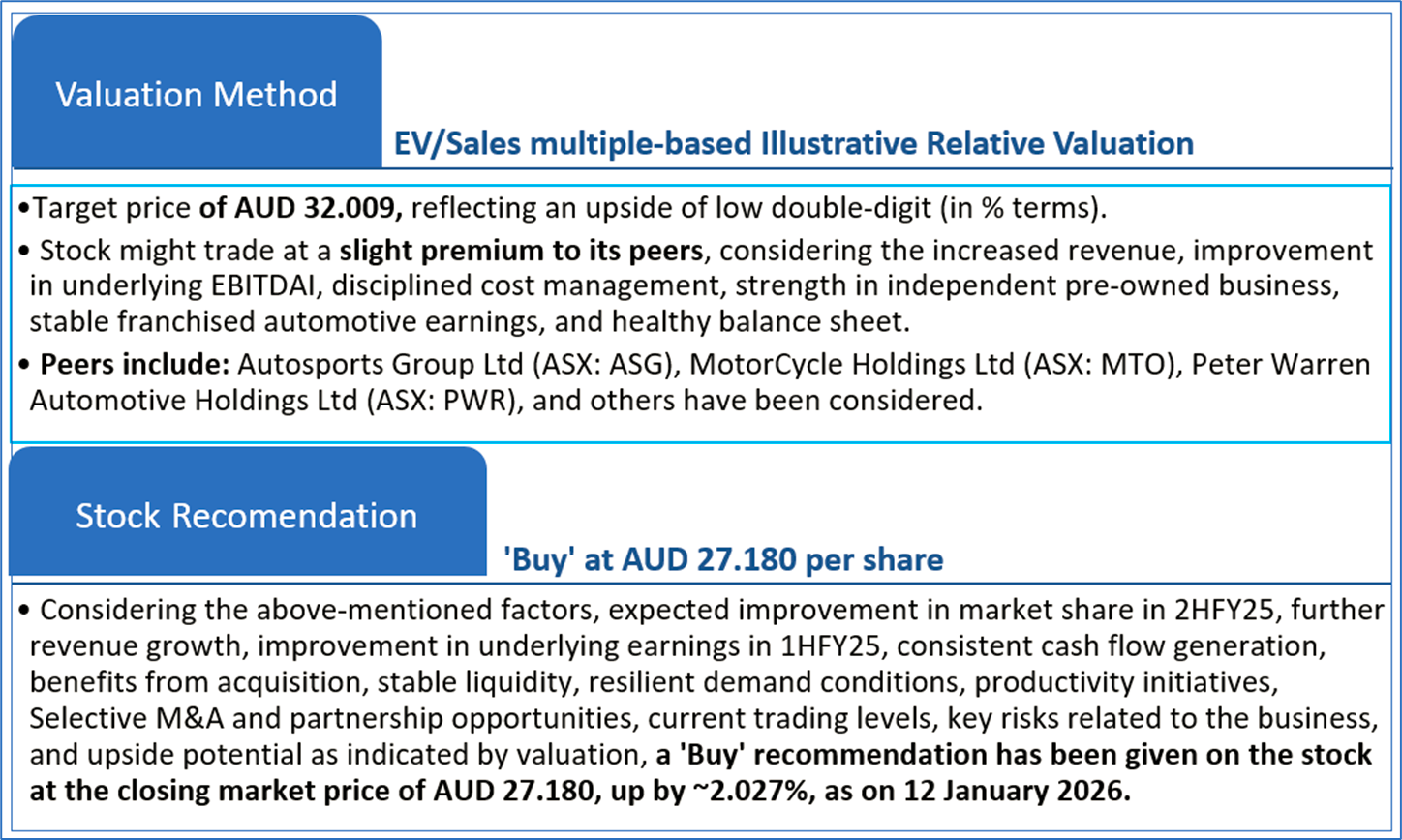
Markets are trading in a highly volatile zone currently due to certain macro-economic issues and geopolitical tensions prevailing. Therefore, it is prudent to follow a cautious approach while investing.
Note 1: Past performance is neither an indicator nor a guarantee of future performance.
Note 2: The reference date for all price data, currency, technical indicators, support, and resistance levels is 12 January 2026. The reference data in this report has been partly sourced from REFINITIV.
Note 3: Investment decisions should be made depending on an individual's appetite for upside potential, risks, holding duration, and any previous holdings. An 'Exit' from the stock can be considered if the Target Price mentioned as per the Valuation and or the technical levels provided has been achieved and is subject to the factors discussed above.
Note 4: Kalkine reports are prepared based on the stock prices captured either from REFINITIV or Trading View. Typically, REFINITIV or Trading View may reflect stock prices with a delay which could be a lag of 25-30 minutes. There can be no assurance that future results or events will be consistent with the information provided in the report. The information is subject to change without any prior notice.
Note 5: Dividend Yield may vary as per the stock price movement.
Technical Indicators Defined: -
Support: A level at which the stock prices tend to find support if they are falling, and a downtrend may take a pause backed by demand or buying interest. Support 1 refers to the nearby support level for the stock and if the price breaches the level, then Support 2 may act as the crucial support level for the stock.
Resistance: A level at which the stock prices tend to find resistance when they are rising, and an uptrend may take a pause due to profit booking or selling interest. Resistance 1 refers to the nearby resistance level for the stock and if the price surpasses the level, then Resistance 2 may act as the crucial resistance level for the stock.
Stop-loss: It is a level to protect further losses in case of unfavourable movement in the stock prices.
Past performance is not a reliable indicator of future performance.

 NZ
 UK
 US
 AU
 IND

 CA

 Please wait processing your request...