About the ETF
BetaPro NASDAQ 100 2x Daily Bull ETF (TSX: QQU) seeks investment results that correspond to 2x the daily performance of its underlying index, which represents 100 of the largest NASDAQ-listed non-financial companies. The funds investments may typically include American Depositary Receipts (ADRs), common stocks, ordinary shares, and tracking stocks. The fund is selected using minimum listing, size, and liquidity requirements, and weighted by market capitalization. As a levered fund, it is not a buy-and-hold investment and should not be expected to provide index leverage returns greater than a one-day period.
Performance & Risk:
- Leverage: QQU provides 2x daily exposure to the NASDAQ-100 Index, amplifying both gains and losses relative to the underlying benchmark. Decent rallies in large-cap technology stocks can drive outsized returns, while market pullbacks can lead to sharp declines.
- Volatility: The ETF carries high volatility because of its leveraged structure and daily reset mechanism. It is designed for short-term tactical trading rather than long-term investing.
- Example Performance: QQU has delivered substantial upside during bullish technology cycles, including a 113.3% annual return in 2023, but it also experienced a steep 61.7% decline in 2022, highlighting the significant risks tied to leveraged exposure.

How it Works:
- QQU seeks to provide 200% of the daily performance of the NASDAQ-100 Index before fees and expenses.
- The ETF uses leveraged investment strategies and forward agreements to achieve amplified exposure to the index without requiring investors to use margin accounts directly.
- Exposure resets daily, meaning holding periods longer than one day can result in returns that differ materially from exactly 2x the underlying index because of compounding and market volatility.
- The ETF is denominated in Canadian dollars and hedges U.S. dollar exposure back to CAD to reduce currency-related fluctuations.
Key Takeaway:
QQU is a speculative, high-risk leveraged ETF intended for active traders seeking amplified short-term exposure to large-cap growth and technology stocks. The ETF is not designed for long-term wealth accumulation, as extended holding periods during volatile markets can significantly impact returns due to leverage decay and compounding effects.
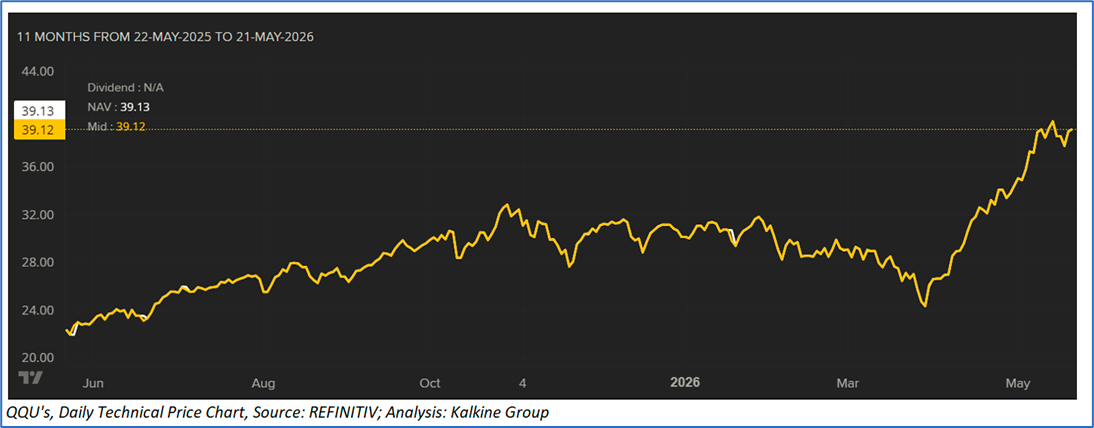
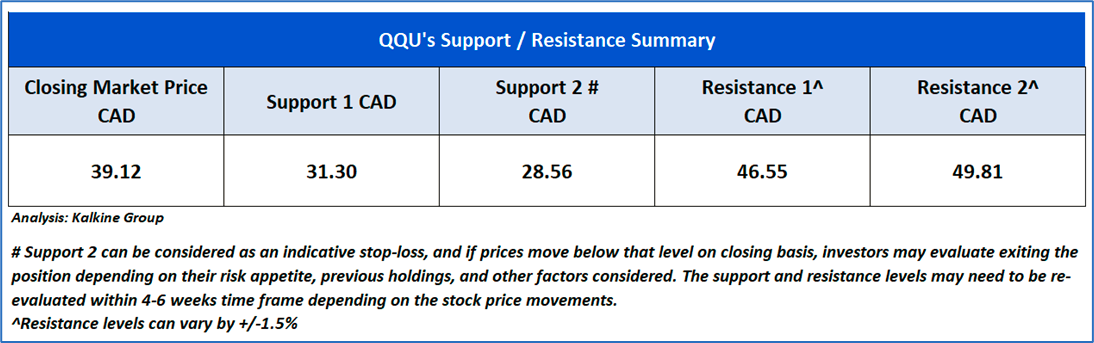
Price Chart & Technical Summary
Conclusion
QQU’s short-term price movements closely reflect the momentum and volatility of the NASDAQ-100 Index, but with amplified returns through its 2x leverage structure. The ETF is best suited for experienced traders using short-term strategies and technical analysis rather than passive long-term investors. Its daily reset feature makes performance highly sensitive to market direction and volatility over extended periods.

 NZ
 UK
 US
 AU
 IND

 CA

 Please wait processing your request...