
 NZ
 UK
 US
 AU
 IND

 CA

 Share
 X (Formerly Twitter)
 Whatsapp
 Facebook
 LinkedIn
 Telegram
 Email This Article
 Copy Link
 Summarize with AI
 Chat GPT
 Perplexity
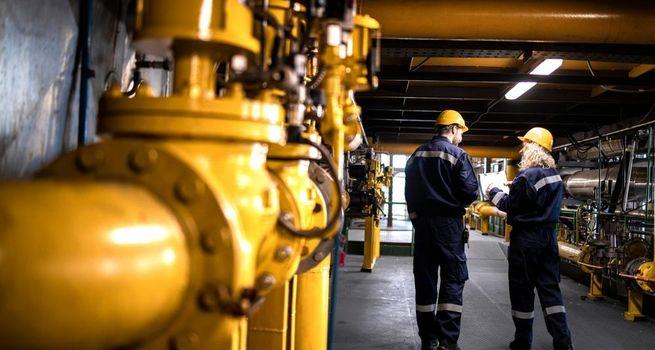
Strathcona Resources Ltd. (TSX: SCR) continues to position itself as a leading pure-play heavy oil producer in North America. The company reported solid third-quarter 2025 financial and operational results while maintaining its production outlook and capital discipline. Despite a decline in overall production following the sale of its Montney assets, Strathcona demonstrated operational resilience and generated meaningful free cash flow during the quarter.
With strong heavy oil assets, expansion projects underway, and shareholder returns through dividends and a special distribution, the company remains an important player in Canada’s energy sector.
Key Drivers Behind the Stock’s Movement
Strategic Asset Portfolio Shift
One of the primary factors influencing Strathcona’s recent performance was the divestment of its Montney business segment. The transaction led to a significant decline in total production compared to the previous year. However, the move reflects the company’s strategy to focus on high-margin thermal oil and enhanced recovery assets.
When adjusted for the Montney divestiture, production from continuing operations actually increased quarter-over-quarter. This highlights the underlying strength of the company’s core heavy oil operations.
Solid Operating Earnings Despite Lower Commodity Prices
Strathcona reported operating earnings of $235.5 million in the third quarter, translating to approximately $1.10 per share. The results were supported by strong realized oil prices and efficient cost management.
Although benchmark crude prices were lower compared to the previous year, the company maintained profitability through operational efficiencies and strong performance from its thermal oil projects.
The ability to sustain earnings during volatile commodity cycles is a key factor supporting investor confidence in the company’s long-term outlook.
Strong Liquids-Weighted Production
Strathcona’s production mix remains highly attractive for investors in the energy sector. During the quarter, the company produced approximately 116,201 barrels of oil equivalent per day, with 99.6% of production coming from liquids.
A liquids-focused production profile typically delivers stronger margins than natural gas-heavy portfolios, particularly during periods of weak gas prices. This production mix enhances revenue stability and supports the company’s cash flow generation.
Key Growth Catalysts
Expansion of Thermal Oil Projects
Thermal oil projects remain central to Strathcona’s long-term growth strategy. Production at the Cold Lake region increased 8% quarter-over-quarter, supported by the completion of maintenance work at the Tucker property and the addition of new wells at the Orion development.
Early performance from the new wells has been encouraging, with strong production rates contributing to record monthly output in the region. Continued development of thermal assets could support stable production growth in the coming years.
Major Development Projects in the Pipeline
Strathcona is advancing several major projects that could significantly boost future production.
The Lindbergh D01 West project, currently under development, is expected to begin production in mid-2026 and reach peak output of approximately 6,500 barrels per day.
Meanwhile, the Meota Central thermal oil project, currently more than halfway complete, is targeting first oil in late 2026 and is expected to deliver peak production of around 13,000 barrels per day.
These projects are being developed under structured cost frameworks, which reduces the risk of major capital overruns and improves project visibility for investors.
Significant Shareholder Returns
Another notable catalyst is Strathcona’s commitment to returning capital to shareholders. The company declared a quarterly dividend of $0.30 per share, reinforcing its strategy of rewarding investors through consistent income.
In addition, the company plans to distribute a special payment of $10 per share, representing more than $2 billion in total capital returned to shareholders. This distribution reflects strong balance sheet management and the proceeds from recent asset transactions.
Such shareholder-friendly initiatives can significantly improve investor sentiment toward the stock.
Key Risks to Consider
Despite its operational strengths, Strathcona faces several potential risks.
Commodity price volatility remains one of the biggest uncertainties for oil producers. Declines in global crude prices could directly impact revenue and profitability.
The company also faces execution risk related to large development projects, particularly thermal oil expansions that require significant capital investment.
Another factor is regulatory and environmental policy risk in Canada, where evolving climate regulations may influence the long-term outlook for oil sands and heavy oil producers.
Additionally, the company’s strategic shift toward a more concentrated asset base may increase exposure to operational disruptions at key production sites.
Valuation Outlook
Strathcona’s valuation is closely linked to its ability to generate free cash flow and maintain stable production from its core heavy oil assets.
During the quarter, the company generated free cash flow of $93.8 million, demonstrating its ability to generate surplus cash even during moderate oil price environments.
Investors in energy companies often focus on cash flow metrics, production growth, and dividend yield when assessing valuation. If Strathcona continues delivering stable cash flow and executes its growth projects successfully, the stock could attract increased interest from income-focused and value investors.
Technical Levels to Watch
From a technical perspective, Strathcona’s stock tends to move in line with broader energy sector sentiment and crude oil price trends.
Support levels typically emerge near historical consolidation zones where long-term investors accumulate shares.
Resistance levels often appear near previous highs where selling pressure may increase.
Traders also monitor key indicators such as moving averages, trading volume, and momentum indicators to assess potential trend reversals or breakout opportunities.
Conclusion
Strathcona Resources continues to strengthen its position as a leading heavy oil producer in Canada through operational efficiency, disciplined capital allocation, and a strategic focus on thermal oil projects.
While the sale of its Montney assets temporarily reduced production levels, the company’s core operations remain strong and continue to generate meaningful cash flow.
With multiple development projects underway, a liquids-focused production profile, and substantial shareholder returns, Strathcona is positioning itself for long-term growth in the energy sector.
If commodity prices remain supportive and the company successfully executes its development pipeline, Strathcona Resources could continue to create value for investors in the coming years.


 Nov 24, 2026





 Please wait processing your request...