
 NZ
 UK
 US
 AU
 IND

 CA

 Share
 X (Formerly Twitter)
 Whatsapp
 Facebook
 LinkedIn
 Telegram
 Email This Article
 Copy Link
 Summarize with AI
 Chat GPT
 Perplexity
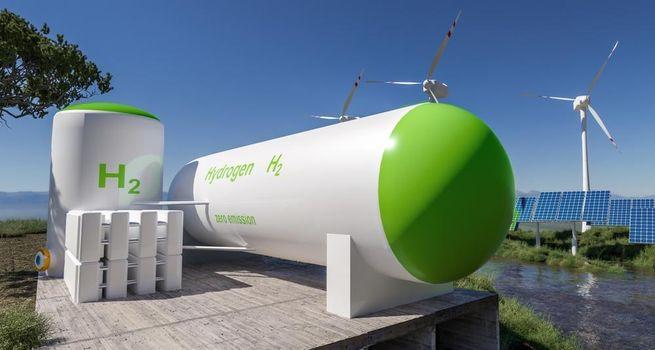
Image source: Shutterstock
Highlights
- First Hydrogen launches First Nuclear Corp., focused on advancing clean energy through SMRs.
- SMRs provide scalable, safe, and cost-effective power for green hydrogen production.
- The global market for SMRs is projected to reach US$295 billion by 2043.
First Hydrogen Corp. (TSXV: FHYD) is excited to announce the launch of its subsidiary, First Nuclear Corp., dedicated to advancing clean energy by leveraging Small Modular Reactors (SMRs). First Nuclear’s goal is to integrate advanced nuclear technology into green hydrogen production, providing sustainable energy solutions to support global decarbonization efforts and a zero-emission future.
Harnessing the Power of SMRs for Green Hydrogen
First Nuclear’s strategy centers on the use of SMRs, which are compact, scalable nuclear reactors that offer a continuous and reliable power source, independent of weather conditions. These features make SMRs ideal for green hydrogen production, ensuring stable and efficient operations. As the demand for clean energy grows, SMRs present a key opportunity to meet that need. The global market for SMRs is expected to reach US$72.4 billion by 2033 and US$295 billion by 2043, reflecting a compound annual growth rate (CAGR) of 30%, according to IDTechEx.
SMRs offer significant advantages over conventional nuclear reactors, including their smaller size and ability to be used in locations unsuitable for traditional nuclear plants. They can be pre-manufactured in dedicated facilities, allowing for faster and cheaper construction. Their modular nature also allows for scalability, enabling the addition of more SMRs over time as demand increases. Microreactors, a type of SMR, are particularly useful in rural areas that are difficult to connect to the main grid, providing reliable power in remote locations.
Safety and Efficiency of SMRs
The design of SMRs prioritizes safety. They operate at lower power and pressure than conventional reactors, reducing the need for human intervention and external power to shut down systems. This inherently boosts safety margins. Furthermore, SMRs require less fuel and have longer refueling intervals, typically every three to seven years, compared to the one to two years for conventional reactors. These features make SMRs an attractive choice for energy companies and startups looking to develop their nuclear power portfolio while focusing on clean energy.


 Nov 25, 2026





 Please wait processing your request...