
 NZ
 UK
 US
 AU
 IND

 CA

 Share
 X (Formerly Twitter)
 Whatsapp
 Facebook
 LinkedIn
 Telegram
 Email This Article
 Copy Link
 Summarize with AI
 Chat GPT
 Perplexity

Canada’s S&P/TSX Composite Index staged a decisive rebound on Monday, February 2, 2026, climbing 0.82% to close at 32,183.88, as investors rotated back into financials and defensive consumer stocks following a sharp late-January sell-off.
The recovery was powered by banking strength, resilient consumer demand, and selective technology buying, while energy and mining stocks lagged amid falling oil and precious metal prices. Adding to the positive tone, Canada’s Manufacturing PMI returned to expansion for the first time in a year, reinforcing hopes that domestic economic momentum is stabilising despite ongoing global trade headwinds.

Source: Kalkine Group
Which TSX Sectors Finished in the Green on February 2, 2026?
Which Sectors Drove the TSX Higher?
Financials
Canadian banks led the rally, rising roughly 1–2%, as investors priced in stable earnings, attractive dividends, and resilient balance sheets.
Consumer Staples & Consumer Discretionary
Defensive rotation supported grocery chains, retailers, and household brands as investors sought earnings visibility amid commodity volatility.
Technology
Select tech stocks rebounded sharply, benefiting from bargain-hunting after January’s pullback.
Which TSX Sectors Lagged the Market on February 2, 2026?
Which Areas Weighed on the Index?
Energy
Lower crude oil prices pressured oil producers and pipeline names, limiting overall index upside.
Materials & Mining
Gold and silver sell-offs dragged on precious-metal miners, extending sector underperformance.
Who Were the Top Gainers on the TSX on February 2, 2026?
Which Canadian Stocks Outperformed?
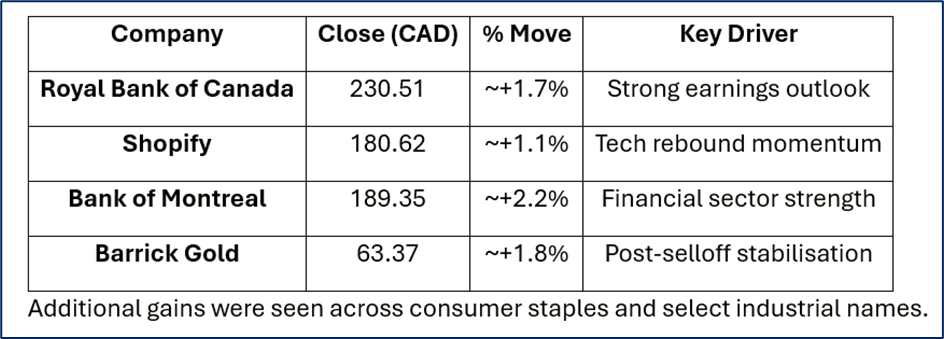
Source: Kalkine Group Analysis
Which Stocks Were the Biggest Losers on February 2, 2026?
Who Underperformed?
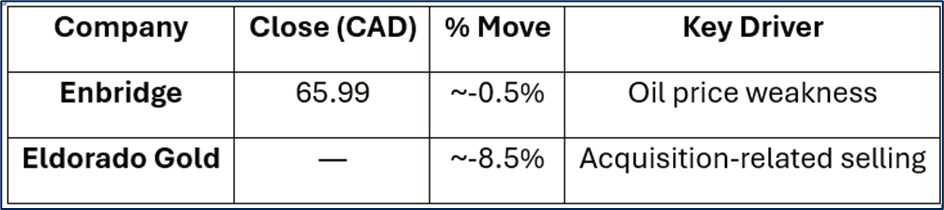
Source: Kalkine Group Analysis; Energy and precious-metal stocks remained the primary drags on index performance.
What Key Macro Drivers Are Shaping the TSX Right Now?
How Is Economic Data Influencing Markets?
Canada Manufacturing PMI
January PMI rose to 50.4, marking the first expansion in 12 months and signalling a modest rebound in industrial activity.
How Are Commodities Affecting the TSX?
- Gold and silver prices pulled back sharply, hurting miners
- Oil prices weakened, dragging energy stocks
What Role Is the Canadian Dollar Playing?
The CAD weakened ~0.6% to 1.3695 per USD, reflecting softer commodity prices and reducing near-term sentiment for resource equities.
What Does the Technical Picture Say About the TSX Composite?
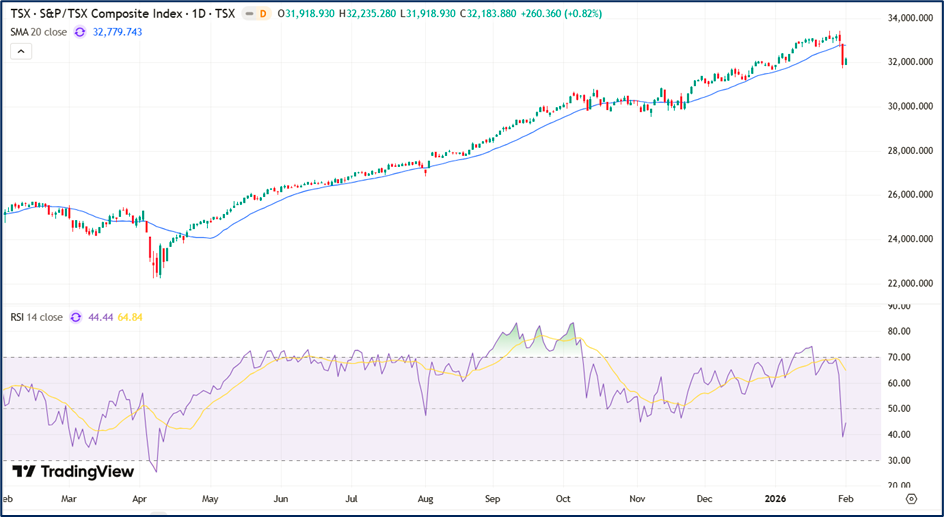
Source: Trading View
Is the Index Stabilising?
- Rebound from recent lows highlights support near 31,900–32,000
- Volatility remains elevated due to commodity swings
- Momentum indicators suggest a short-term recovery attempt, but within a choppy, range-bound market
What Is the Outlook for the TSX Composite Index?
Is the TSX Likely to Recover or Range-Trade Short Term?
Short-Term (0–3 Months):
Expect volatility and sector rotation. Defensive sectors and banks are likely to outperform while commodities remain unstable.
Can Earnings and Diversification Drive Gains Medium Term?
Medium-Term (3–12 Months):
A broadening rally beyond energy and materials into financials, staples, and quality tech could support index performance.
Will Long-Term Investors Be Rewarded?
Long-Term (1+ Years):
Historically, Canadian equities reward patient investors through bank dividends, infrastructure assets, and selective growth stocks.
What Investment Strategies Make Sense Right Now?
What Should Short-Term Investors Focus On?
- Defensive sectors: staples, utilities, telecom
- Maintain cash buffers amid headline risk
What About Medium-Term Positioning?
- High-quality banks and insurers
- Select materials exposure once commodities stabilise
How Should Long-Term Investors Position?
- Barbell strategy: dividend payers + structural growth
- Diversify internationally to reduce Canada-specific risk
What Are the Bull and Bear Scenarios for the TSX?
What Could Push the TSX Higher?
- Commodity price stabilisation
- Improving manufacturing data
- Strong bank and cyclical earnings
What Risks Could Drag the Index Lower?
- Prolonged metals and oil sell-offs
- Global economic slowdown
- Weaker CAD driving inflation pressures
What Are Analysts Saying About the TSX Composite?
- 12-month TSX Composite target: ~30,112
- Intact Financial: Target raised to CAD 318
- Cameco: Target ~CAD 156
- Thomson Reuters: Target ~USD 46
Final Takeaway: What Does the February 2 TSX Rebound Really Signal?
The TSX Composite’s 0.82% rebound to 32,183.88 on February 2, 2026 reflects a market recalibrating after commodity-led volatility. While energy and mining stocks remain under pressure, financials, consumer staples, and selective tech names continue to provide stability.
With PMI data improving but global risks unresolved, investors should expect rotation, volatility, and selective opportunities rather than a straight-line rally. Disciplined positioning across defensive income stocks and high-quality growth remains the most effective strategy as Canadian markets navigate 2026.


 Nov 26, 2026





 Please wait processing your request...