
 NZ
 UK
 US
 AU
 IND

 CA

 Share
 X (Formerly Twitter)
 Whatsapp
 Facebook
 LinkedIn
 Telegram
 Email This Article
 Copy Link
 Summarize with AI
 Chat GPT
 Perplexity
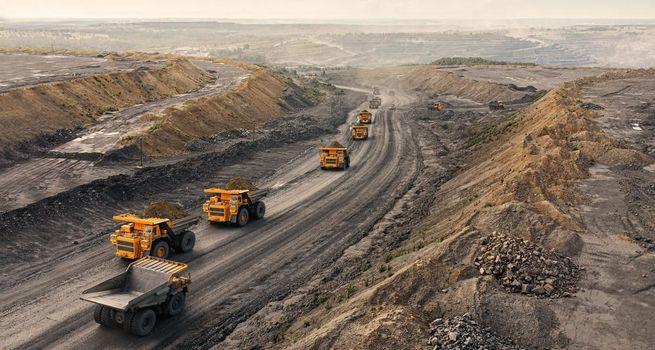
Image source: Shutterstock
Highlights
- Preliminary Phase 1 study shows over 95% effectiveness in sorting high-grade ore.
- Study prepares for the upcoming Pre-Feasibility Study (PFS) set to begin in Q2 2025.
- Phase 2 study underway to further validate ore sorting technology’s potential.
Manganese X Energy Corp. (TSXV:MN) has announced the completion of a preliminary Phase 1 ore sorting study conducted by ABH Engineering Inc. on sample material from the company’s Battery Hill manganese deposit near Woodstock, New Brunswick, Canada. The study forms part of the company’s preparation for its upcoming Pre-Feasibility Study (PFS), which is scheduled to start in the second quarter of 2025.
The results from the Phase 1 study have been favorable, with the initial test program demonstrating over 95% effectiveness in sorting high-grade ore from waste material. The sample set used for the testing had a grading of 7.7% Mn, with the two sorting technologies evaluated producing product grades of 12.9% Mn and 12% Mn, and reject grades of 1.4% Mn and 1.2%, respectively.
CEO Martin Kepman commented on the promising results, stating that the company is now proceeding with a more intensive Phase 2 study. This next phase will seek to further prove the potential economic viability of the sorting technology and its impact on the overall project.
The sorting process involves preconcentrating the ore by removing waste materials before further processing, a step that can offer various benefits. These benefits include improvements to project net present value (NPV) and internal rate of return (IRR), as well as reductions in energy and water consumption. Additionally, the process may lead to a reduction in cut-off grades, expansion of resources, and a potential increase in mine life and total metal production. The technology may also help reduce capital expenditures and tailings storage, which could reduce associated risks.
Brent Hilcher, Vice President of Mineral Processing at ABH Engineering, stated that the results from Manganese X’s tests were particularly promising. He noted that the sensor and predictive algorithms used in the sorting technology showed a high level of efficiency, with minimal errors, indicating that the technology could prove highly effective for future use in sorting manganese ore.


 Oct 22, 2026





 Please wait processing your request...