
 AU
AU
 UK
UK
 US
US
 NZ
NZ
 IND
IND

 CA
CA

 Share
Share
 X (Formerly Twitter)
 Whatsapp
 Facebook
 LinkedIn
 Telegram
 Email This Article
 Copy Link
 Summarize with AI
 Chat GPT
 Perplexity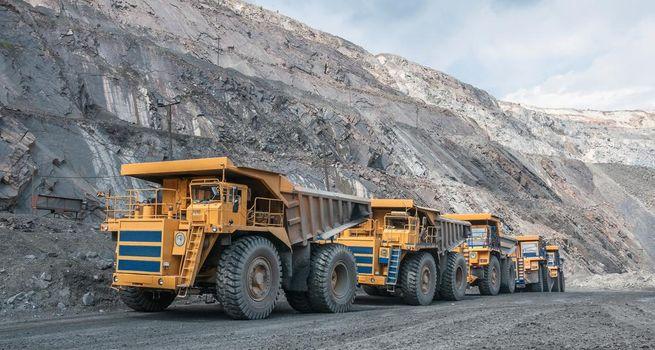
Highlights
Andean Precious Metals Corp (TSX: APM; OTCQX) is a diversified precious-metals producer operating the San Bartolome silver processing operation in Potosi, Bolivia, and the Golden Queen / Soledad Mountain gold-silver mine in Kern County, California.
The company reported producing roughly 99,000 to 100,000 gold-equivalent ounces in 2025 and has guided to 100,000 to 114,000 gold-equivalent ounces for 2026, signalling modest growth across its two operating assets.
Andean ended 2025 with a reported record liquid-asset position of about US$167 million, repaid its legacy credit facilities, and established a new US$40 million revolving facility with National Bank of Canada, pointing to a strong balance sheet.
A central strategic question is feedstock security at San Bartolome, where a 10-year agreement with Bolivian state miner COMIBOL for up to 7 million tonnes of oxide ore is intended to extend the operation life, with first deliveries expected by the end of 2026.
The investment case blends precious-metals price leverage and a growth-by-acquisition strategy against meaningful jurisdiction risk in Bolivia, feedstock-sourcing uncertainty, and the inherent volatility of silver and gold markets.
Introduction
Andean Precious Metals Corp (TSX: APM, also quoted on the OTCQX market in the United States) sits in an unusual corner of the Canadian-listed mining universe. It is a precious-metals producer, but it is neither a pure silver miner nor a conventional gold company. Instead, it operates two distinct assets in two very different jurisdictions: a long-running silver processing operation in the high Andes of Bolivia and a producing open-pit, heap-leach gold-silver mine in Southern California.
That combination gives Andean a profile that does not map neatly onto the usual categories investors use when they screen mining shares. It offers exposure to both silver and gold, to both an emerging-market and a developed-market jurisdiction, and to a business model that depends as much on sourcing and processing raw material as on digging it out of the ground.
For investors trying to understand the company, the questions are practical. What does Andean actually do? Where does its revenue come from? How strong is its balance sheet, and how durable is its production base? And how should the obvious opportunities be weighed against the equally obvious risks of operating in Bolivia and of being exposed to two of the most volatile commodity prices in the market?
This article works through those questions in plain language. It is written for general readers and investors who want an original, balanced overview rather than a promotional pitch. It does not contain personal financial advice, price targets, or forecasts of where the shares might trade. Where information is limited or uncertain, the language is deliberately cautious. The aim is to help readers build their own view, not to make the decision for them.
Company Snapshot
Andean Precious Metals Corp is a Canadian-incorporated precious-metals producer whose shares trade on the Toronto Stock Exchange under the ticker APM and on the OTCQX market in the United States. The company describes itself as a diversified silver and gold producer with a growth-by-acquisition strategy.
Its two operating assets are geographically and operationally distinct:
San Bartolome, Bolivia
San Bartolome is a silver processing operation located near the historic mining city of Potosi in Bolivia. Rather than relying solely on ore from its own mining, the operation has historically processed silver-bearing material sourced from a network of local cooperatives, independent miners and other suppliers in the region. This processing-led model makes feedstock sourcing a central part of the business: the plant needs a steady supply of suitable material to run at capacity.
The San Bartolome plant has a designed processing capacity in the region of 1.8 million tonnes per annum and has been a long-established silver producer in the area, having operated for many years. Andean gained control of the operation through its corporate roots in Empresa Minera Manquiri S.A., the entity that holds the Bolivian business.
Golden Queen / Soledad Mountain, California
In November 2023, Andean acquired a 100% interest in Golden Queen Mining Company, LLC for a reported US$66 million, gaining the Soledad Mountain mine in Kern County, Southern California. This transaction marked the company expansion into the United States and gave it a second producing asset in a developed, mining-friendly jurisdiction.
Soledad Mountain is a fully permitted, conventional open-pit operation that uses cyanide heap-leach and Merrill-Crowe processing to recover gold and silver from crushed, agglomerated ore. The site has been in commercial production since the mid-2010s and, according to the company, processes several million short tons of ore per year and employs a workforce of roughly 250 people.
Since commencing commercial production in the middle of the last decade, Soledad Mountain has built a multi-year operating record, and the company has reported exploration and drilling activity at the site aimed at better defining the deposit and supporting future mine planning. For a heap-leach operation, ongoing drilling and reserve work matter because they help determine how long the open pit can be economically extended at prevailing metal prices.
Corporate profile
Andean was founded and is led by Alberto Morales, who serves as the company executive chairman and chief executive officer and who has a background in corporate finance, mergers and acquisitions and restructuring. The company has consolidated key corporate functions in Monterrey, Mexico, while retaining its Canadian listing and incorporation. Across 2025 and into 2026 it has also signalled corporate ambitions beyond its current footprint, including steps related to a potential listing on a major US exchange.
In short, the snapshot is of a mid-tier precious-metals producer with two operating assets, a meaningful cash position, and an explicit appetite for further growth through acquisition.
Why Andean Precious Metals Is in Focus
Several threads have brought Andean Precious Metals into sharper focus for investors who follow the precious-metals space.
A two-asset, two-jurisdiction model
The most distinctive feature is the contrast between the company two operations. San Bartolome offers silver exposure in Bolivia, a country rich in mineral history but carrying well-documented political and operational complexity. Soledad Mountain offers gold and silver exposure in California, one of the more developed and predictable mining jurisdictions in the world, albeit with its own permitting and regulatory demands.
This pairing means the company is not wholly dependent on any single mine, metal or country. Diversification of that kind can soften the impact of a problem at any one asset, although, as discussed later, it also spreads management attention and brings two very different risk profiles under one roof.
Strong precious-metals prices
Andean operates in an environment that has been broadly supportive for precious-metals producers. Both silver and gold have attracted investor attention as monetary metals and, in silver case, as an industrial input. When metal prices are firm, producers with established operations and disciplined cost control tend to generate stronger cash flow. That backdrop has helped Andean report record financial results for 2025, including record revenue, EBITDA and free cash flow according to its own disclosures.
It is worth stressing, however, that strong results in a favourable year do not by themselves tell investors what a producer looks like across a full commodity cycle. Precious-metals prices have historically moved through long swings, and the test of a producer is how it performs when prices retreat as well as when they rise. Andean has not yet been observed across many such cycles in its current two-asset form, which is one reason a cautious, watchful stance is appropriate even after a strong reporting period.
A strengthened balance sheet
Andean has used recent strength to reinforce its financial position. The company has reported a record liquid-asset position, repaid legacy debt and put in place a new revolving credit facility. A producer that can fund growth from its own resources, rather than relying heavily on dilutive equity raises or expensive debt, is generally viewed more favourably, particularly in a sector where balance-sheet stress has historically destroyed shareholder value.
Growth ambitions and acquisition strategy
Finally, Andean is in focus because of what it says it wants to do next. Management has been explicit that acquisition-led growth is central to its strategy. The 2023 Golden Queen purchase is the template: buy a producing or near-producing asset, integrate it, and add to the company production and cash-flow base. Investors weighing the shares are, in effect, also weighing management ability to keep finding and executing deals that create value rather than destroy it.
Sector Background and Market Context
To understand Andean, it helps to understand the markets it sells into and the type of company it is.
Why does silver behave differently from gold?
Silver occupies an unusual position because it is both a precious metal and an industrial commodity. A meaningful share of silver demand comes from industrial uses, including electronics, solar photovoltaic panels and various electrical applications. The remainder comes from investment, jewellery and silverware.
This dual nature makes silver more economically sensitive than gold. When industrial activity is strong, silver can benefit from rising fabrication demand on top of any investment interest. When the economy weakens, industrial demand can soften even if investment demand holds up. Silver is also widely regarded as more volatile than gold, with sharper moves in both directions. For a company such as Andean, that means the silver-linked part of its business can swing more dramatically than the gold side.
What drives the gold price?
Gold is driven by a different set of forces. It is widely held as a store of value and a hedge against inflation, currency weakness and financial or geopolitical stress. Real interest rates, central-bank buying, the strength of the US dollar and broad investor sentiment all play a role. Gold typically has a smaller industrial demand component than silver, which is part of why it is often seen as a more defensive holding. For Andean, the Soledad Mountain operation provides direct exposure to this gold dynamic, balancing the more industrially sensitive silver exposure from Bolivia.
What kind of producer is Andean?
Andean is best understood as a mid-tier, multi-asset precious-metals producer rather than a single-mine junior or a global senior. Its 2025 production of roughly 99,000 to 100,000 gold-equivalent ounces places it in a middle tier where companies are large enough to generate real cash flow but small enough that a single operational setback, acquisition or commodity-price swing can move the financial picture materially.
The use of gold-equivalent ounces is itself worth understanding. Because Andean produces both gold and silver, it converts silver output into a gold-equivalent figure using prevailing price ratios, allowing the two metals to be combined into a single production number. This is standard practice in the sector, but it means reported gold-equivalent production can shift with the gold-to-silver price ratio as well as with physical output.
The processing and feedstock model
One feature that distinguishes San Bartolome from a conventional mine is its reliance on purchased and sourced feedstock. Rather than depending entirely on a single orebody it owns and mines, the operation has historically processed silver-bearing material drawn from cooperatives and other suppliers. This is closer to a toll-treatment or merchant-processing model in parts of the business.
Such a model has advantages and disadvantages. On the positive side, it can extend an operation effective life beyond the limits of any one deposit and can support local artisanal and cooperative mining economies. On the negative side, it makes the operation dependent on the willingness and ability of third parties to supply material at acceptable prices and grades, which introduces a sourcing risk that a self-contained mine does not face to the same degree.
What Investors Should Know
Beyond the headline description, several practical points help frame how the business actually works and what to monitor.
Two assets, two cost and margin profiles
The economics of the two operations differ. At Golden Queen, the company has framed its 2026 outlook in terms of cash costs and all-in sustaining costs per gold ounce, the standard metrics for a gold mine. At San Bartolome, it has framed expectations in terms of a gross margin per silver ounce. These are not directly comparable, and investors should resist the temptation to lump them together. A healthy margin at one asset can be offset by pressure at the other, depending on metal prices, input costs and feedstock dynamics.
It is also worth noting that the two assets are exposed to different input-cost pressures. A California open-pit mine carries costs tied to labour, energy, reagents such as cyanide and lime, and the regulatory and reclamation obligations of operating in the United States. A Bolivian processing operation carries a different mix, dominated by the cost of purchased feedstock and local labour and logistics. Investors trying to gauge group margins therefore need to keep two separate cost stories in mind rather than a single blended one.
The balance sheet is a core part of the story
Andean has placed considerable emphasis on financial strength. The company reported ending 2025 with a record liquid-asset position of roughly US$167 million, comprising cash and cash equivalents, short-term treasuries and money-market holdings, and a portfolio of strategic equity investments. It reported repaying its legacy credit facilities during the year and establishing a new US$40 million revolving facility with National Bank of Canada, and described itself as being in a debt-free position at year-end after repaying existing obligations. Into the first quarter of 2026 the company pointed to a liquid-asset position of around US$200 million.
A balance sheet of that nature gives the company flexibility: it can fund sustaining capital, pursue acquisitions and absorb a period of weaker prices without immediately resorting to dilutive financing. It is one of the more concrete positives in the investment case. That said, a strong cash position is only valuable if it is deployed wisely, which brings the discussion back to the acquisition strategy.
Feedstock and resource extension at San Bartolome
Because San Bartolome depends on a steady supply of material, the company has worked to secure longer-term feedstock. It has reported new ore-purchase arrangements with local communities and, notably, a long-term agreement with the Bolivian state mining entity COMIBOL to acquire up to 7 million tonnes of oxide ore from within a radius of the processing facility, with first deliveries anticipated by the end of 2026. The agreement is described as running for an initial 10-year term with an option to extend.
Andean has also indicated that an updated resource and reserve statement and a supporting NI 43-101 technical report for the operation were expected in the first half of 2026. For investors, that updated technical work is an important reference point, since it should provide a clearer, independently framed picture of how long the operation can run and on what basis.
Production cadence and guidance
The company has guided to 2026 production of between 100,000 and 114,000 gold-equivalent ounces, a modest step up from its 2025 figure of just under 100,000. It has also indicated that production is expected to be weighted toward the second half of 2026, reflecting the mining sequence at Golden Queen and the ore-delivery schedule at San Bartolome. A first-quarter 2026 update pointed to a meaningful year-over-year increase in production. Investors should expect quarterly output to vary, and a single soft quarter does not necessarily signal a trend, just as a single strong quarter does not guarantee one.
Guidance, by its nature, is an estimate rather than a promise. It reflects management current assumptions about grades, recoveries, throughput and feedstock availability, and those assumptions can change. The value of guidance to investors lies less in the precise mid-point and more in what it reveals about management expectations for the direction of the business and the cadence of production through the year.
Buy Case (Editorial View Only, Not Personal Financial Advice)
The following is general editorial commentary on why some investors might find Andean Precious Metals attractive. It is not a recommendation, and it should be read alongside the risks set out later. Nothing here should be taken as advice to buy, sell or hold the shares.
- Genuine diversification within precious metals
Andean offers exposure to both silver and gold and to both an emerging-market and a developed-market jurisdiction. For an investor who wants precious-metals exposure but is wary of betting on a single mine or a single metal, this built-in diversification is part of the appeal. A problem at one asset need not be fatal to the overall business.
- A demonstrably strong balance sheet
Few things matter more in mining than financial resilience, and Andean reported liquid-asset position, debt repayment and modest, undrawn revolving facility stand out. A producer that can self-fund growth and weather a downturn without emergency financing is, all else equal, lower-risk than a leveraged peer. This is arguably the single most concrete pillar of the bull case.
- Leverage to firm precious-metals prices
As a producer, Andean benefits when silver and gold prices are firm. Its record 2025 financial results illustrate how supportive metal prices can translate into strong revenue, earnings and free cash flow. For investors who are constructive on precious metals over the medium term, a profitable, cash-generative producer offers operating leverage to that view.
- A clear, repeatable growth template
The Golden Queen acquisition gives management a demonstrated playbook: identify a producing asset, fund it largely from internal resources, and integrate it to add production and cash flow. With a strong balance sheet and an experienced, finance-oriented leadership team, the company has both the means and the stated intent to pursue further deals. If executed with discipline, this strategy could compound value over time.
- Optionality from corporate initiatives
Steps such as efforts toward a listing on a major US exchange and measures aimed at improving share liquidity could, over time, broaden the company investor base and improve its market profile. These are not guaranteed to benefit shareholders, but they represent potential catalysts that go beyond pure commodity-price movements.
Taken together, the editorial buy case rests on a simple proposition: a financially robust, diversified, cash-generative producer with a credible growth strategy, trading in a sector where balance-sheet strength is comparatively rare. Whether that proposition is attractive at any given share price is a judgement each investor must make independently.
Key Investor Watchpoints
Whatever view an investor takes, several specific items are worth monitoring closely. These are the metrics and milestones most likely to shape the company trajectory.
Feedstock security at San Bartolome
Progress on the COMIBOL oxide-ore agreement, including confirmation that first deliveries arrive on the expected timeline around the end of 2026.
The breadth and durability of ore-purchase arrangements with local cooperatives and communities, which underpin the operation throughput.
The updated technical report
The content of the updated resource and reserve statement and NI 43-101 technical report for San Bartolome, which should clarify the operation expected life and economic basis.
Cost performance at both assets
All-in sustaining costs at Golden Queen relative to the company guided ranges, since heap-leach gold economics are sensitive to grade, recoveries and input costs.
Gross margin per silver ounce at San Bartolome, which captures the spread between feedstock cost and silver revenue.
Production delivery against guidance
Whether full-year 2026 output lands within the guided 100,000 to 114,000 gold-equivalent ounce range, and how the expected second-half weighting plays out.
Capital allocation
How the company deploys its substantial liquidity, particularly the discipline and pricing of any future acquisitions.
Any shift in approach to returning capital to shareholders versus reinvesting for growth.
Corporate developments
Progress, or lack of progress, on initiatives such as a potential major-exchange listing and measures intended to improve liquidity.
Risks to Watch
The opportunities described above are matched by real and material risks. A balanced view requires giving these equal weight.
Jurisdiction risk in Bolivia
Bolivia is the single most prominent jurisdiction risk in the Andean story. The country has a long mining history but also a record of political and policy complexity that can affect resource companies. Changes in government policy, taxation, royalties, currency controls, export rules, labour relations or the regulatory treatment of mining could all affect the San Bartolome operation. The operation reliance on cooperatives and on relationships with state-linked entities such as COMIBOL adds a further layer of dependence on the local political and social environment. Investors should treat Bolivian exposure as a genuine, ongoing risk rather than a background detail.
Feedstock-sourcing risk
Because San Bartolome processes sourced material, its throughput depends on a continuing supply of suitable feedstock at acceptable economics. If supply from cooperatives or other partners falls short, if the COMIBOL deliveries are delayed, or if the cost of feedstock rises relative to silver prices, the operation output and margins could suffer. This is a structurally different risk from that of a conventional mine with a defined, owned orebody, and it deserves close attention.
Commodity-price volatility
Andean revenue is tied directly to silver and gold prices, both of which can move sharply. Silver in particular is known for its volatility and its sensitivity to industrial demand. A sustained downturn in precious-metals prices would compress margins and cash flow across both assets, regardless of how well the operations are run. The strong 2025 results were achieved in a supportive price environment; a less favourable one would tell a different story.
Acquisition and integration risk
A growth-by-acquisition strategy carries inherent risk. Acquirers can overpay, misjudge the quality of an asset, or struggle to integrate a new operation. The very feature that makes the strategy attractive, namely the ability to add production quickly, is also what makes it dangerous if discipline slips. The success of any future deal cannot be assumed, and a poorly executed acquisition could erode the balance-sheet strength that is currently a core part of the investment case.
Operational and permitting risk in California
Soledad Mountain, while in a developed jurisdiction, is not risk-free. Heap-leach operations face their own technical challenges around recoveries, water management and environmental compliance, and California is a demanding regulatory environment. Permitting, reclamation obligations and community relations all require ongoing management. Any operational disruption or regulatory complication at the mine would directly affect the gold side of the business.
Concentration in two assets
With only two producing operations, Andean lacks the buffer that a larger, multi-mine portfolio provides. A serious problem at either San Bartolome or Soledad Mountain would have an outsized effect on group results. Diversification across two assets is better than reliance on one, but it is still a relatively concentrated base.
Single-metal accounting and gold-equivalent reporting
The use of gold-equivalent ounces, while standard, can obscure the underlying split between gold and silver and is sensitive to the assumed price ratio. Investors who rely solely on the headline gold-equivalent figure may miss shifts in the underlying physical production of each metal.
What Could Happen Next?
It is not possible to predict where the shares will trade or precisely how events will unfold, and nothing here should be read as a forecast. It is possible, however, to outline the kinds of developments that could shape the company path, in broad and balanced terms.
On the operational side
The most immediate milestones relate to execution. Delivery of 2026 production within the guided range, the arrival of first COMIBOL ore deliveries on schedule, and the publication of the updated San Bartolome technical report would each provide important information about the durability of the business. Conversely, delays to feedstock, weaker-than-expected recoveries or cost inflation at either asset would raise questions.
On the strategic side
Given the stated acquisition strategy and the substantial cash position, further corporate activity is plausible. A well-priced, well-integrated acquisition could add to production and cash flow; an expensive or poorly chosen one could do the opposite. Steps toward a major-exchange listing or other measures to broaden the investor base could, over time, affect how the market views the company, though such initiatives are uncertain in both timing and outcome.
On the macro side
Because Andean is a price-taker on silver and gold, the broad direction of precious-metals markets will heavily influence its financial results regardless of operational execution. A continued supportive environment would help; a sustained decline would hurt. The interaction between industrial silver demand, gold role as a haven asset, and the company own cost control will determine how the next phase plays out.
In each of these areas, the realistic expectation is a mix of progress and setbacks rather than a straight line in either direction. That is the normal texture of a mid-tier producer operating across two jurisdictions and two volatile commodities.
Long-Term Outlook
Over a longer horizon, the Andean Precious Metals story comes down to a few enduring questions.
First, can the company keep San Bartolome supplied with economic feedstock for years to come? The COMIBOL agreement and community arrangements are designed to address exactly this, and the updated technical report should help quantify the answer. If feedstock security is genuinely extended, the Bolivian operation becomes a more dependable cash generator. If it is not, the operation long-term contribution is more uncertain.
Second, can the company manage Bolivian jurisdiction risk without a serious disruption? This is partly outside management control, depending on the political and policy environment. A stable operating environment would support the long-term case; a deterioration would weigh on it. This risk is unlikely to disappear and should be regarded as a permanent feature of owning the shares.
Third, can management execute its acquisition strategy with discipline? The long-term upside in the story rests heavily on the idea that Andean can use its balance sheet to add production at sensible prices and integrate it well. A track record of value-accretive deals would strengthen the case considerably; a misstep would damage it.
Fourth, will precious-metals prices remain supportive? No producer can control this, but it is fundamental to long-term returns. Investors who are constructive on silver and gold over a multi-year horizon will view the operating leverage more favourably; those who are cautious on metals will be correspondingly more cautious on the shares.
Drawing these threads together, the long-term outlook is best described as promising but conditional. The combination of diversification, a strong balance sheet and a clear growth strategy is genuinely attractive. But the conditions attached, especially around Bolivian risk, feedstock security and disciplined capital allocation, are significant, and they prevent the case from being a simple one. The reasonable stance is constructive interest tempered by close attention to the specific watchpoints identified above.
Conclusion
Andean Precious Metals Corp is a distinctive precious-metals producer. It pairs a long-running silver processing operation in Bolivia with a producing gold-silver mine in California, giving it diversification across two metals and two very different jurisdictions. It has reported record financial results for 2025, a strong and largely debt-free balance sheet, and modest production growth guidance for 2026, all supported by an explicit growth-by-acquisition strategy.
At the same time, the company carries real and material risks. Bolivian jurisdiction risk, feedstock-sourcing uncertainty at San Bartolome, the volatility of silver and gold prices, and the inherent dangers of an acquisition-led strategy all weigh on the other side of the ledger. Its relatively concentrated, two-asset base offers some diversification but little redundancy.
For investors, the sensible approach is to hold the opportunities and the risks in view at the same time. The balance-sheet strength and diversification are genuine positives; the jurisdiction and feedstock risks are genuine concerns. How those factors net out is a personal judgement that depends on each investor own risk tolerance, time horizon and view of precious-metals markets. The watchpoints set out above offer a practical framework for following the story as it develops, without relying on prediction or hype.


 Jun 24, 2026
 Please wait processing your request...