
 AU
AU
 UK
UK
 US
US
 NZ
NZ
 IND
IND

 CA
CA

 Share
Share
 X (Formerly Twitter)
 Whatsapp
 Facebook
 LinkedIn
 Telegram
 Email This Article
 Copy Link
 Summarize with AI
 Chat GPT
 Perplexity
Is Bitfarms no longer just a Bitcoin miner? On January 5, 2026, Bitfarms Ltd. (TSX: BITF) saw its stock price surge by approximately 10%, closing at CAD 3.57. This move has caught the attention of retail and institutional investors alike, as the company undergoes one of the most aggressive business model transformations in the digital infrastructure sector.
Below is a deep-dive analysis of the drivers, the new "North American" strategy, and the operational updates moving the needle for BITF.
Key Reasons for the Jan 5, 2026 Price Jump
Source: Kalkine Group
The 10% rally wasn't a coincidence. It was the culmination of strategic announcements and market tailwinds:
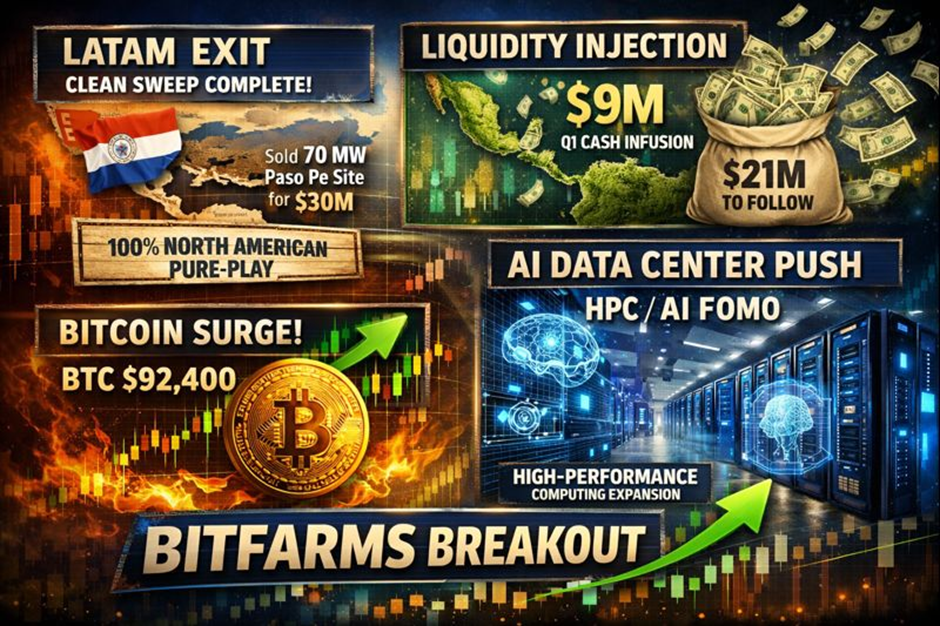
- The "Clean Sweep" Exit from Latin America: Just days prior, Bitfarms announced the sale of its 70 MW Paso Pe site in Paraguay for up to $30M. This officially completed their exit from Latin America, transforming them into a 100% North American pure-play.
- Liquidity Injection: The sale provides an immediate $9M cash infusion in Q1 2026, with another $21M to follow. Investors reacted positively to the "asset-light" shift and the focus on higher-margin jurisdictions.
- The Bitcoin Catalyst: Bitcoin prices remained buoyant (trading near $92,400 USD), providing a high-beta lift to the entire mining sector.
- HPC/AI FOMC (Fear of Missing Out): With the conversion of their Washington site to High-Performance Computing (HPC) well underway, BITF is being re-rated by analysts not just as a miner, but as an AI data center play.
The 2026 Business Model: From Hashes to HPC
Bitfarms has fundamentally shifted its identity. While it still mines Bitcoin, its "Latest Business Model" is now focused on Vertically Integrated Energy & Digital Infrastructure.
- GPU-as-a-Service (GaaS): The company is moving away from "commodity" mining toward leasing power and space for AI workloads.
- The Washington Conversion: Their 18 MW facility in Washington is the flagship project, designed to support Nvidia GB300 GPUs with advanced liquid cooling.
- Energy Arbitrage: By owning the infrastructure, they can toggle between Bitcoin mining (high risk/reward) and AI/HPC (stable, long-term contracts).
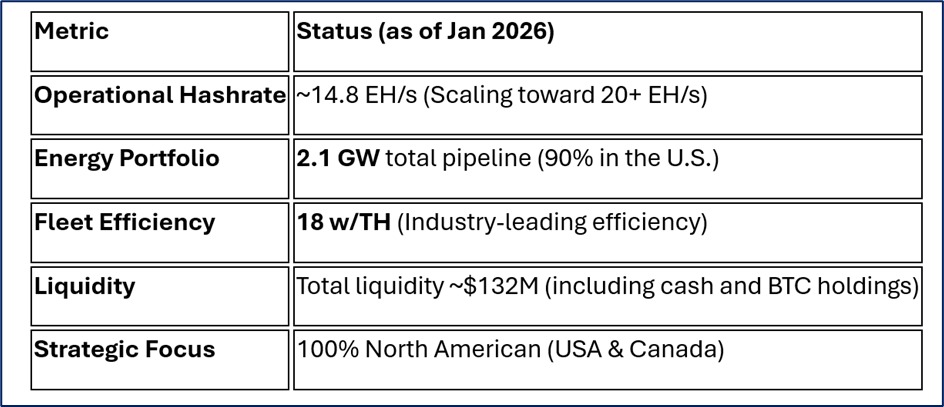
Latest Operational & Financial Updates
Source: Company Data
SWOT Analysis: The 2026 Outlook
Source: Kalkine Group
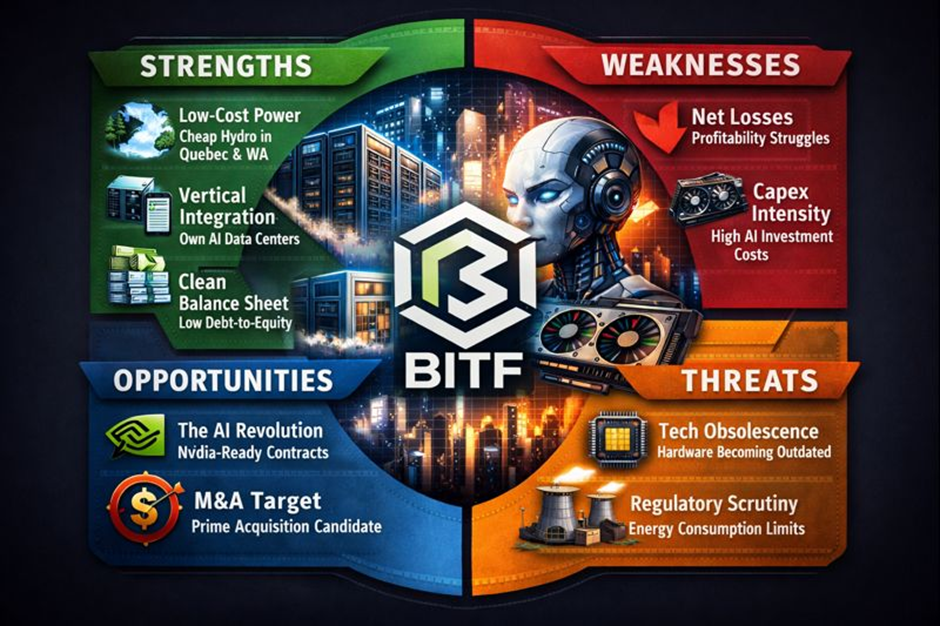
Strengths
- Low-Cost Power: Access to cheap hydroelectric power in Quebec and Washington.
- Vertical Integration: They build and operate their own data centers, allowing for faster retrofitting for AI.
- Clean Balance Sheet: Low debt-to-equity ratio compared to peers like Marathon or Riot.
Weaknesses
- Net Losses: Despite high revenue, the company has struggled with bottom-line profitability during the AI transition.
- Capex Intensity: Transitioning to AI/HPC requires massive upfront investment in GPUs and cooling systems.
Opportunities
- The AI Revolution: High demand for "Nvidia-ready" data centers could lead to high-margin, 5-10 year contracts.
- M&A Target: As a clean, North American operator, BITF remains a prime acquisition target for larger tech conglomerates.
Threats
- Technology Obsolescence: The risk of GPUs or ASICs becoming outdated before they pay for themselves.
- Regulatory Scrutiny: Increased pressure on energy consumption in North American power grids.
Critical Risks to Consider
- Execution Risk: Building AI data centers is vastly different from setting up Bitcoin miners. Delays in the Washington site (targeted for Dec 2026) could dampen investor sentiment.
- Bitcoin Volatility: If Bitcoin crashes, the "floor" for BITF’s valuation drops, regardless of their AI ambitions.
- GPU Supply Chain: Any shortage in Nvidia’s Blackwell or Rubin chips could stall their revenue diversification plans.
Conclusion
Bitfarms' 10% move on January 5 is a "vote of confidence" in their "Pivot to America" and "Pivot to AI" strategy. By shedding its Latin American assets and focusing on high-density power in the U.S., the company is positioning itself as a strategic bridge between the world of crypto and the industrial AI revolution. While the capital requirements are high and the competition is fierce, the market is currently rewarding Bitfarms for its clear, singular focus on North American infrastructure.


 Jun 24, 2026




 Please wait processing your request...