
 AU
AU
 UK
UK
 US
US
 NZ
NZ
 IND
IND

 CA
CA

 Share
Share
 X (Formerly Twitter)
 Whatsapp
 Facebook
 LinkedIn
 Telegram
 Email This Article
 Copy Link
 Summarize with AI
 Chat GPT
 Perplexity
Key Takeaways
- The Institutional Bridge is Built: Regulated products and sophisticated trading infrastructure are cementing crypto's place in institutional portfolios.
- Tech Drives Value: Layer 2 scaling, DeFi security, and RWA tokenization will be the main value drivers, not just speculative hype.
- Regulation is Maturing: Global clarity, particularly in the US, is fostering confidence and market sophistication.
- Volatility Persists: While the long-term trend is upward, significant price swings driven by macro factors and market fragmentation are still to be expected.

Current Trends and Price Dynamics
The market is showing signs of maturation despite persistent volatility. The convergence of several trends suggests a structural shift in how digital assets are traded and perceived.
- Price Volatility and Milestones: Major cryptocurrencies like Bitcoin (BTC) and Ethereum (ETH) are expected to reach new price milestones in 2026, driven by factors like the Bitcoin Halving cycle disruption, increased institutional ease, and demand for DeFi/NFTs on the Ethereum network. However, volatility remains high and is often linked to investor attention, macroeconomic shocks (interest rates, recessions), and geopolitical events.
- BTC Price Estimates (Global Reports 2026): Range between $80,000–$200,000, reflecting a broad spectrum of optimism and caution.
- ETH Price Estimates (Global Reports 2026): Averaging around $5,000–$8,000, driven by ecosystem growth and network upgrades.
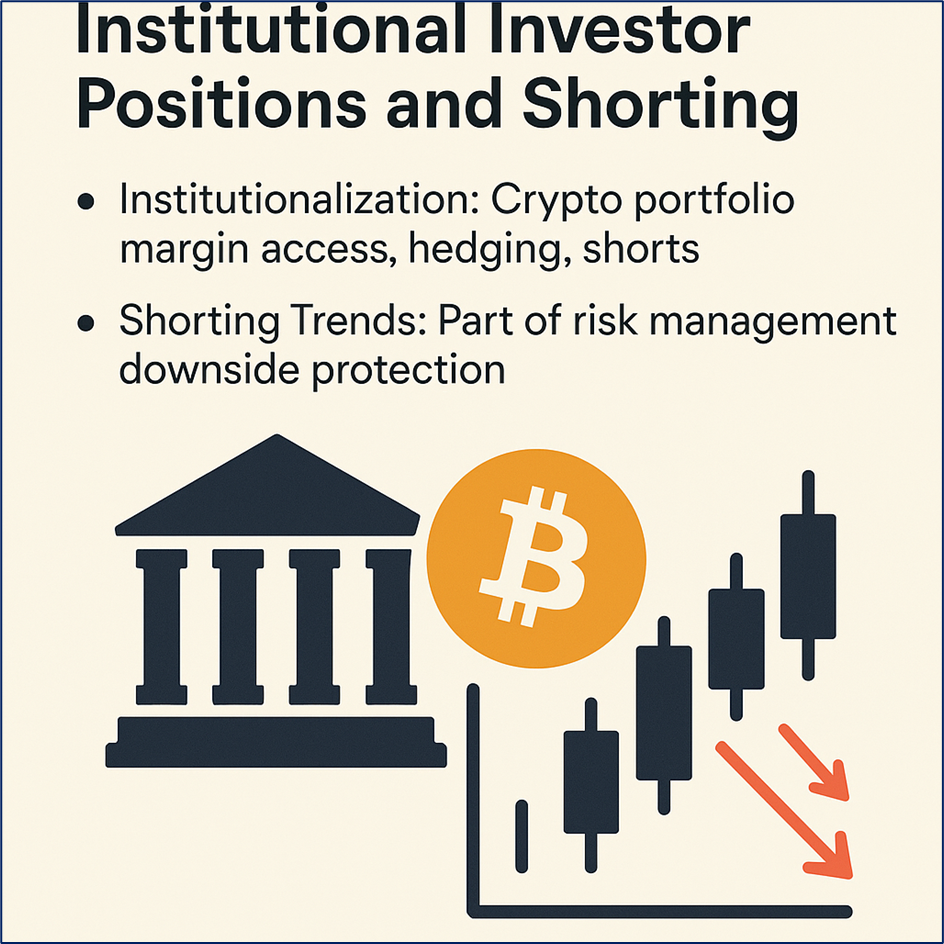
- Institutional Investor Positions and Shorting: The introduction of regulated products like Spot Bitcoin ETFs in the US has created a new, massive vector for institutional capital flow.
- Institutionalization: Sophisticated players like hedge funds are adopting advanced trading mechanisms, such as crypto portfolio margin access, which allows for more capital-efficient and flexible risk management across spot, futures, and derivatives, including hedged and short positions. This suggests a greater comfort and infrastructure for complex institutional strategies, including shorting.
- Shorting Trends: While retail shorting is often speculative, institutional shorting is now an integrated part of complex risk management and arbitrage strategies, especially with the refinement of derivatives products. Downside hedging (protection) has been extensive, suggesting a market that is preparing for risks while maintaining long-term bullish sentiment.
Source: Kalkine Group
2026 Outlook: Medium and Long Term
The outlook points toward a sustained, gradual growth trajectory driven by institutional adoption, regulatory clarity, and technological advancement, potentially marking a "farewell to the 'four-year cycle'."
Key Predictions for 2026
- DeFi Mainstreaming: Decentralized Finance (DeFi) is anticipated to integrate with mainstream finance. Platforms are expected to launch AI-driven risk management and reinforce on-chain security.
- Regulatory Clarity: Global regulatory frameworks are projected to become clearer and more supportive. In the US, progress on bills like the Digital Asset Market Structure bill is expected to stimulate institutional investment.
- NFTs and Metaverse Evolution: Non-Fungible Tokens (NFTs) will evolve beyond pure collectibles, gaining more functional utility and integration with real-world identities and assets (e.g., virtual meta property).
- Scalability Solutions: Increased adoption of Layer 2 solutions (e.g., zero-knowledge and optimistic rollups) on chains like Ethereum and Bitcoin is expected to significantly improve transaction throughput and lower costs.
Investments, Strategies, Risks, and Government Focus
Investment and Strategies
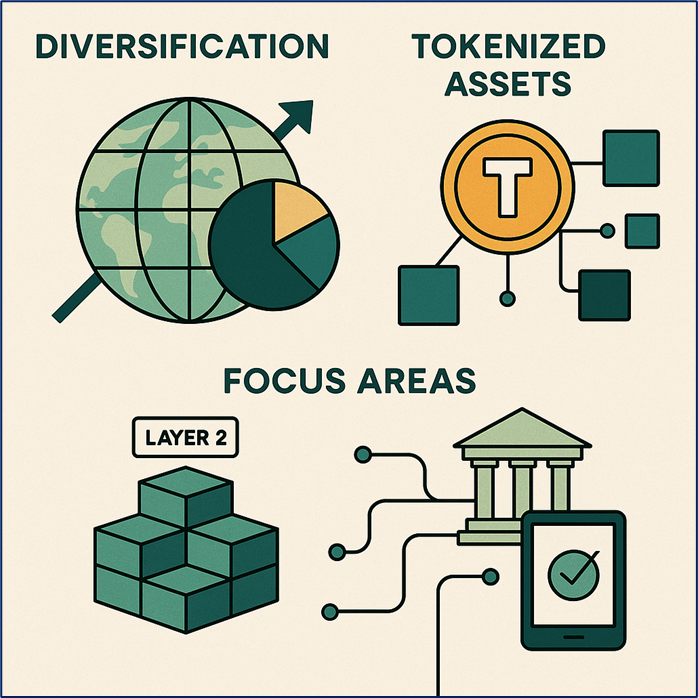
- Diversification: Active global diversification and a blend of fundamental and quantitative strategies are recommended for multi-asset portfolios.
- Tokenized Assets: Exploring tokenized assets (Real-World Assets or RWAs) and fractional investing offers exposure to traditional assets on the blockchain.
- Focus Areas: Investing in Layer 2 innovations and protocols building out the infrastructure for institutional DeFi (e.g., lending rails and on-chain risk management) are key themes.
Source: Kalkine Group
Risks
Crypto assets remain high-risk and unstable. Key risks include:
- Market Volatility: Sudden and significant price fluctuations.
- Fraud and Hacking: Security breaches of wallets or trading platforms.
- Regulatory Uncertainty: Shifting or suddenly enforced policies globally.
- Platform Failure: Loss of funds if a trading platform or wallet provider goes bankrupt.
Canada Focus
Canadian regulatory focus is heavily centered on investor protection and cyber security.
- Regulation: Canadians must use platforms registered with provincial/territorial securities regulators. The Canadian Securities Administrators maintains a list of authorized crypto asset trading platforms.
- Risk Mitigation: Official guidance emphasizes checking registration, using strong security for wallets, and understanding the risks of fraud and sudden value loss.
- Government Initiatives: The National Cyber Security Strategy aims to improve capacity to combat cybercrime and secure critical systems, which is relevant for the private sector infrastructure underpinning the crypto ecosystem.
Professional Financial Outlook
Investment banks and fund managers are embracing a new market landscape shaped by Artificial Intelligence (AI), fragmentation (geopolitical shifts), and higher inflation volatility.
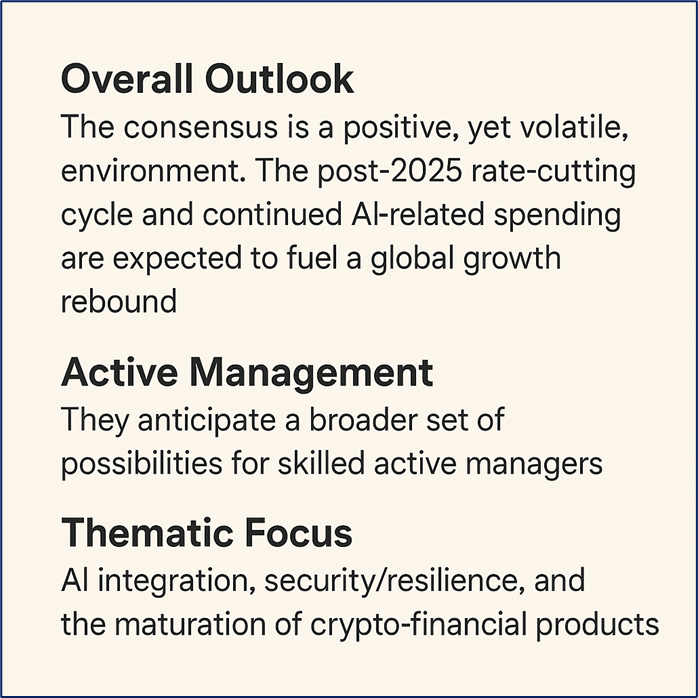
- Overall Outlook: The consensus is a positive, yet volatile, environment. The post-2025 rate-cutting cycle and continued AI-related spending are expected to fuel a global growth rebound, supporting multi-asset portfolios, including crypto.
- Active Management: They anticipate a broader set of possibilities for skilled active managers, favoring those who can navigate complexity, market dispersion, and idiosyncratic credit events.
- Thematic Focus: AI integration, security/resilience, and the maturation of crypto-financial products (derivatives, structured products) are core themes. They view the increasing institutionalization and regulatory clarity as a de-risking factor over the long term.
Source: Kalkine Group
Cryptocurrencies and Related Stocks to Watch in 2026
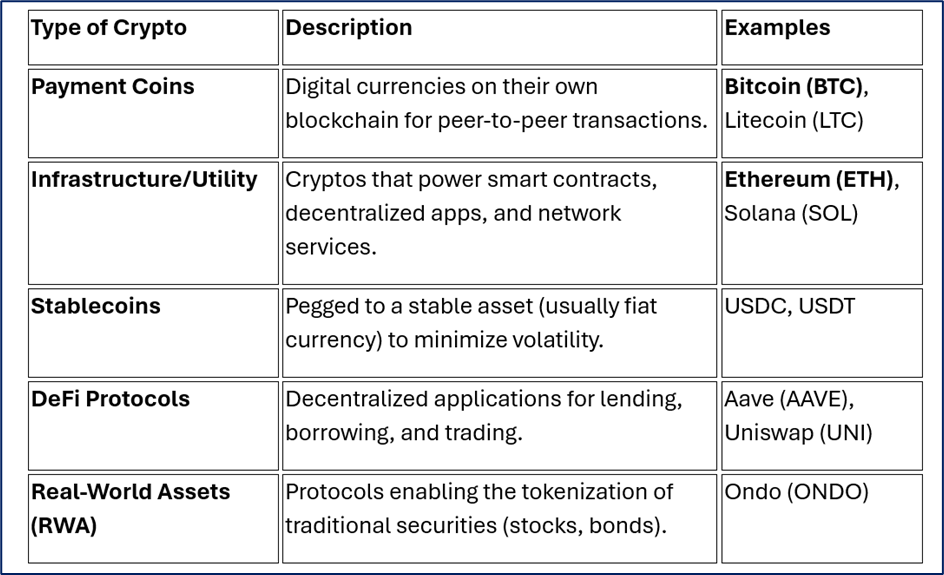
Various Types of Currencies
Source: Kalkine Group
Crypto Stocks to Watch (2026)
Stocks with high exposure to the crypto market are often volatile but offer retail investors a regulated way to gain exposure. Companies with strong fundamentals and strategic positioning for the next market cycle include:
- MicroStrategy (MSTR): Known for its massive Bitcoin holdings, its stock performance is closely tied to BTC price movements.
- Miners (e.g., Marathon, CleanSpark): Companies leveraging efficiency to profit from the mining process, offering significant leverage to any sustained cryptocurrency market recovery.
- Coinbase (COIN) / Crypto-Exchanges: Companies benefiting from increased trading volume and institutional custody services.
Conclusion
2026 is poised to be a year where structural adoption overtakes cyclical speculation. For the prudent retail investor, this means shifting focus from merely "buying the dip" to investing strategically in protocols and companies building the next generation of financial infrastructure. The core challenge remains risk management within an increasingly complex and regulated, yet highly volatile, market.
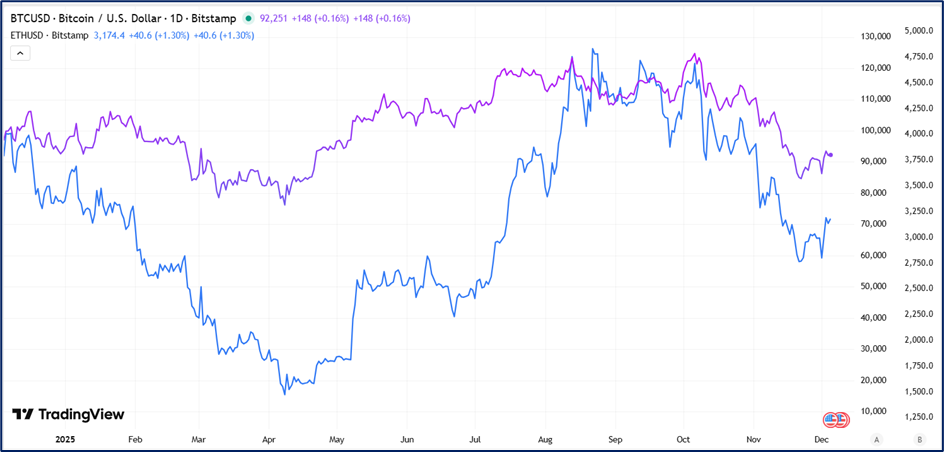
Source: Trading View, 5 December 2025, 7:57 AM UTC


 Jun 24, 2026




 Please wait processing your request...