
 AU
AU
 UK
UK
 US
US
 NZ
NZ
 IND
IND

 CA
CA

 Share
Share
 X (Formerly Twitter)
 Whatsapp
 Facebook
 LinkedIn
 Telegram
 Email This Article
 Copy Link
 Summarize with AI
 Chat GPT
 Perplexity
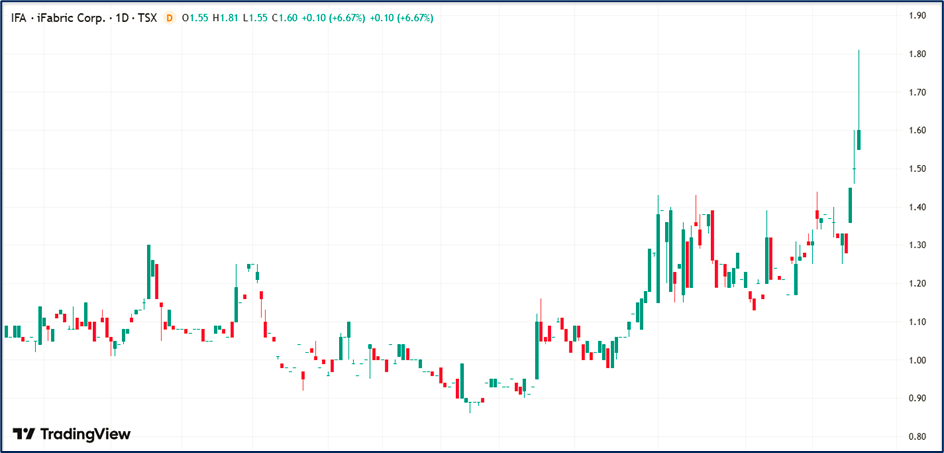
The TSX has a new momentum darling. iFabric Corp (TSX: IFA) recently caught fire, surging roughly 18% in a high-volume breakout that has retail investors and micro-cap analysts scouring the filings. For a company that operates at the intersection of performance apparel, medical-grade protection, and "smart" sleep tech, this move signals more than just a lucky day on the tape—it suggests a fundamental shift in market sentiment.
Here is the deep dive into why iFabric is suddenly on everyone’s radar, the mechanics of their "Intelligent" business model, and the hurdles they still face.
The Catalyst: Why the 18% Spike?
Stock movements of this magnitude in the micro-cap space usually boil down to three things: earnings beats, contract wins, or strategic pivots.
- Earnings Momentum: Recent quarterly results showcased a tightening of the ship. Improved gross margins and a return to profitability (or narrowed losses) have signaled to the street that the post-pandemic "inventory glut" in the apparel sector has finally cleared.
- The "Dream" Partnership: Speculation and updates regarding their Intelligent Fabric Technologies (IFTNA) division—specifically partnerships with major North American retailers for their proprietary "PROTX2" and "DreamSkin" technologies—have acted as a massive tailwind.
- Institutional Accumulation: On thin-float stocks like IFA, a few "smart money" entries can trigger an 18% squeeze as retail investors chase the momentum.

Source: Kalkine Group
The Business Model: More Than Just "Clothes"
iFabric isn't a clothing company; it is a Life Sciences and Specialty Chemicals company disguised as an apparel wholesaler. They operate through two primary pillars:
- Intelligent Fabric Technologies (IFTNA)
This is the "crown jewel." IFTNA develops high-value chemical applications for textiles.
- PROTX2: A dual-action antibacterial and antifungal technology. While it gained fame for its efficacy against viruses during the pandemic, its long-term value lies in medical scrubs and high-performance athletic gear.
- DreamSkin: A revolutionary technology designed to help skin retain moisture and regulate temperature. By embedding this into bedding and sleepwear, iFabric is tapping into the multi-billion dollar "Sleep Economy."
- Coconut Grove (Apparel & Intimates)
This is the "cash cow" segment. It focuses on the design and distribution of intimate apparel and accessories. While less "flashy" than the lab-grown tech, it provides the distribution network and retail relationships (with giants like Walmart and Hudson's Bay) that allow their chemical technologies to reach the mass market.
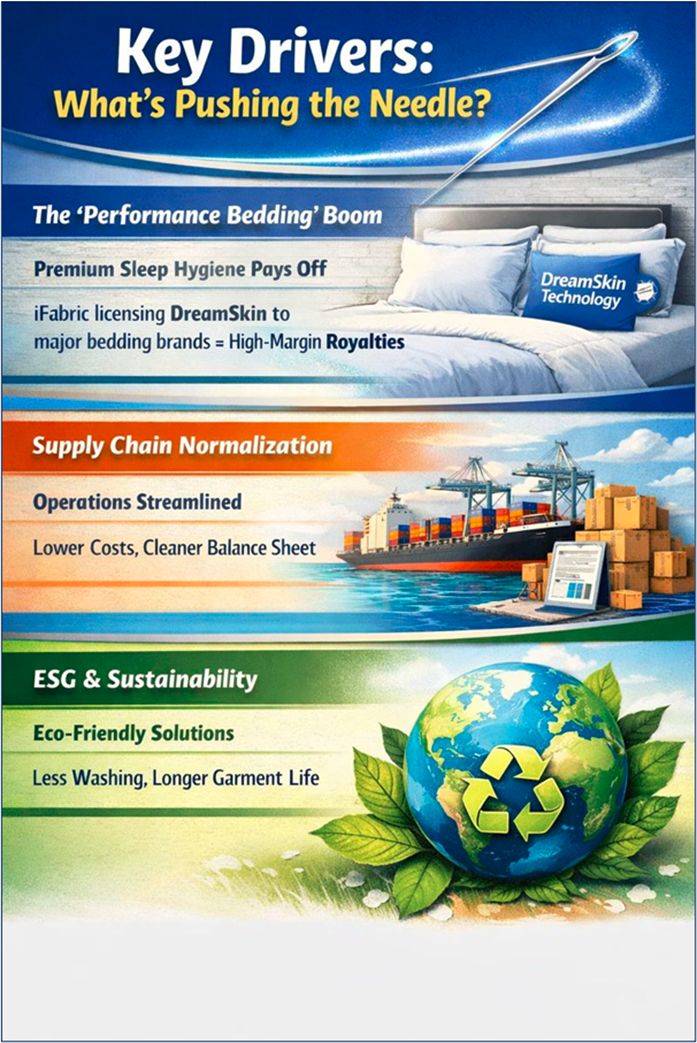
Key Drivers: What’s Pushing the Needle?
- The "Performance Bedding" Boom: Consumers are increasingly willing to pay a premium for sleep hygiene. iFabric’s ability to license its DreamSkin technology to major bedding brands allows for a high-margin, "Intel Inside" style royalty model.
- Supply Chain Normalization: After two years of erratic shipping costs and inventory hoarding, iFabric has streamlined its operations, leading to a much cleaner balance sheet.
- ESG and Sustainability: Their chemical treatments often allow for fewer washes and longer garment life, hitting the "Sustainability" checklist that institutional ESG funds require.
Source: Kalkine Group
The Analytical Reality: Risks to Consider
While an 18% jump is exhilarating, seasoned investors look for the "trap."
- Customer Concentration: iFabric relies heavily on a handful of large-scale retail partners. If a major player drops a line, the revenue impact is immediate and severe.
- Liquidity Risk: As a micro-cap on the TSX, the trading volume can be thin. Entering a position is easy; exiting during a downturn without crashing the price can be difficult.
- R&D Heavy Costs: Staying ahead in the "Intelligent Fabric" space requires constant capital expenditure. If their next tech iteration fails to gain retail adoption, the burn rate could become an issue.
The Verdict: A Micro-Cap with Macro Ambitions
iFabric Corp is currently in a "show me" phase. The 18% pop suggests that the market is finally rewarding the company for moving past the pandemic-era volatility and focusing on its high-margin technology licensing.
The shift from a simple wholesaler to a IP-heavy technology provider is a classic "multiple expansion" play. If they can continue to announce Tier-1 retail partnerships and maintain their margin growth, the recent spike may just be the opening act.
Source: Trading View, 17 December 2025, 10:05 AM, ON, Canada


 Jun 24, 2026




 Please wait processing your request...