
 AU
AU
 UK
UK
 US
US
 NZ
NZ
 IND
IND

 CA
CA

 Share
Share
 X (Formerly Twitter)
 Whatsapp
 Facebook
 LinkedIn
 Telegram
 Email This Article
 Copy Link
 Summarize with AI
 Chat GPT
 Perplexity
The massive 185% surge in Direct Communication Solutions Inc. (CSE: DCSI) stock on the TSX (Canadian Securities Exchange/CSE, where DCSI trades) yesterday appears to be a highly volatile event. The underlying momentum is driven by recent positive financial reports, strategic restructuring, and the high-leverage characteristic of a low market-cap stock.
Key Reasons and Drivers for the Surge
While the specific, immediate catalyst for the 185% jump is likely market volatility (common in low-float stocks), the fundamental reasons driving investor interest are:
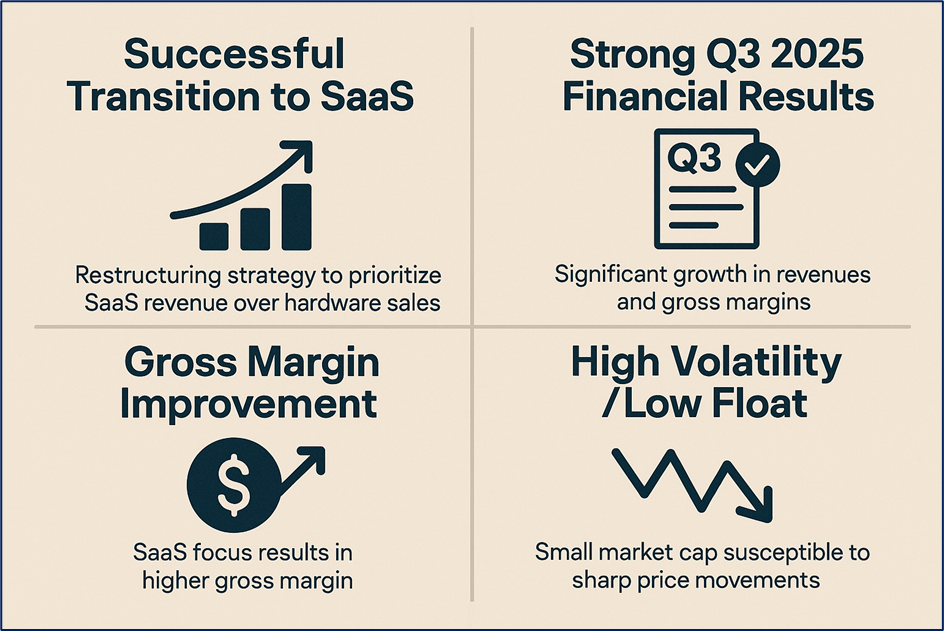
- Successful Transition to SaaS: The company is aggressively restructuring to prioritize higher-margin, Software-as-a-Service (SaaS) revenue over lower-margin, one-time hardware sales. This strategy is highly favored by the market as it creates recurring, predictable revenue.
- Strong Q3 2025 Financial Results: Recent reports indicated significant growth in revenues and, critically, gross margins, confirming the success of the SaaS pivot.
- Gross Margin Improvement: The shift to a SaaS focus has already led to a measurable increase in gross margin, signalling improved profitability per sale.
- High Volatility/Low Float: As a micro-cap stock, a moderate inflow of buying pressure can cause disproportionately large percentage moves in the share price.
Source: Kalkine Group
DCSI Business Model: Connecting the IoT
Direct Communication Solutions, Inc. (DCSI) is a technology solutions integrator focused on the Internet of Things (IoT) market.
- Core Focus: Connecting the Internet of Things (IoT) through software applications and scalable cloud services to collect and assess business-critical data from various assets.
- Key Solutions:
- MiFleet: A fleet management and tracking solution, often incorporating video telematics.
- MiSensors: Sensor-based monitoring and device management solutions.
- Revenue Model: Increasingly focused on a SaaS (Software-as-a-Service) subscription model for recurring, high-margin revenue, layered on top of its "Smart Hardware" sales.

Source: Kalkine Group
Outlook, Risks, and Strategy
Strategy
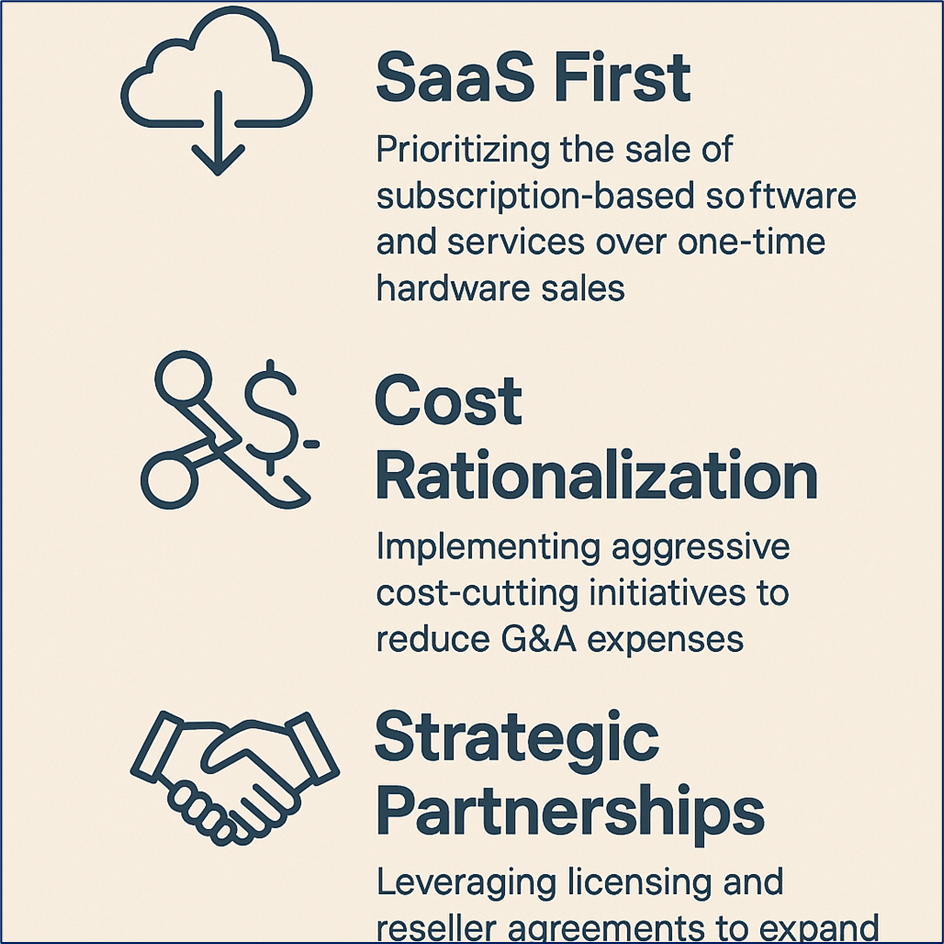
The core strategy is a sustained pivot to a long-term, high-margin, recurring SaaS model by:
- SaaS First: Prioritizing the sale of subscription-based software and services over one-time hardware sales.
- Cost Rationalization: Implementing aggressive cost-cutting initiatives to reduce General and Administrative (G&A) expenses.
- Strategic Partnerships: Leveraging licensing and reseller agreements (e.g., with System Loco) to expand its IoT solutions portfolio and drive new recurring revenue streams.
Source: Kalkine Group
Outlook
The company’s outlook is positive, provided the SaaS transition remains successful:
- Sustainable Revenue: Anticipated creation of a more stable and higher-quality revenue base through recurring subscriptions.
- Margin Expansion: Expectation for continued growth in overall gross margins as the SaaS portion of the revenue mix expands.
Risks
- Extreme Volatility: The stock is a micro-cap with high price volatility, posing a significant risk of sharp, sudden declines.
- Execution Risk: The long-term success hinges entirely on the full and timely execution of the SaaS business model transition.
- Liquidity: Low trading volumes can lead to challenges for investors trying to buy or sell shares at desired prices.
- Financial Fundamentals: Despite recent positive quarters, the company historically reported operating losses, and its overall financial health requires sustained improvement.
Conclusion
The 185% surge in DCSI stock is a classic example of a micro-cap stock rally, amplified by high volatility and a concentrated investor reaction to genuinely positive fundamental shifts. The rally is fundamentally supported by the company's aggressive and successful pivot to a high-margin, recurring SaaS business model within the high-growth IoT sector, evidenced by improving gross margins and strong Q3 2025 results. While the strategic direction is clear and promising, the stock's extreme volatility and past financial history highlight that this remains a high-risk, high-reward investment scenario tied directly to the continued success of its strategic execution.
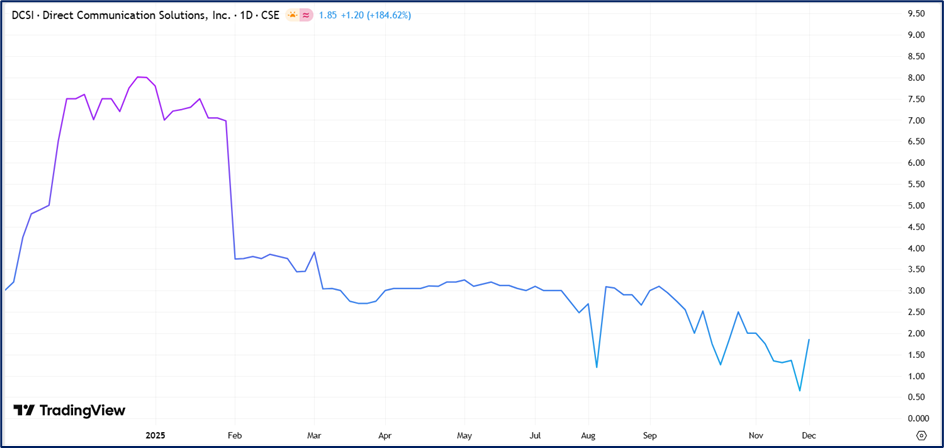
Source: Trading View, 3 December 2025


 Jun 24, 2026




 Please wait processing your request...