
 NZ
 UK
 US
 AU
 IND

 CA

 Share
 X (Formerly Twitter)
 Whatsapp
 Facebook
 LinkedIn
 Telegram
 Email This Article
 Copy Link
 Summarize with AI
 Chat GPT
 Perplexity

The Canadian tech landscape started the first week of 2026 with a jolt as Lightspeed Commerce Inc. (TSX: LSPD) saw its shares climb approximately 4.3% on January 5th.
After a transformative 2025 that saw the company cross the billion-dollar revenue milestone, investors are now betting on Lightspeed’s ability to turn "growth" into "profitable growth."
Key Drivers: Why the Jan 5 Surge?
Source: Kalkine Group
The early January rally appears to be a mix of sector rotation and a "value hunt" by institutional investors. After a cautious end to 2025, several factors converged to push LSPD higher:
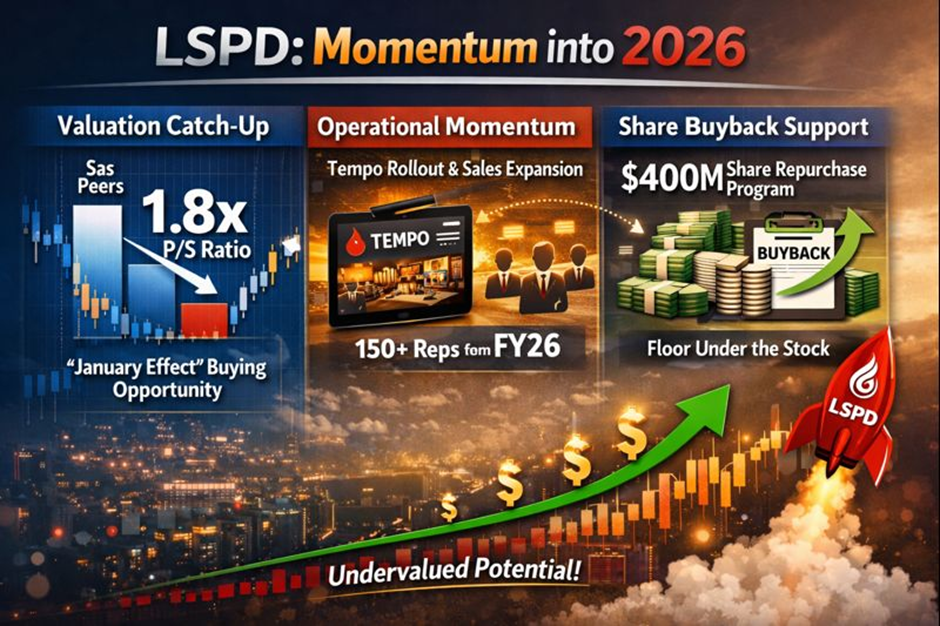
- Valuation Catch-up: Heading into 2026, analysts highlighted LSPD’s steep discount compared to SaaS peers. Trading at roughly 1.8x Next-12-Months Price-to-Sales, the stock became a target for "January Effect" buying.
- Operational Momentum: Sentiment remains buoyed by the late-2025 news of the Tempo pacing intelligence rollout for restaurants and the aggressive expansion of the outbound sales team (targeting 150+ reps by the end of FY26).
- Share Buyback Support: The ongoing execution of the $400 million share repurchase program continues to provide a floor for the stock price, signaling management's confidence that the shares are undervalued.
Latest Business Model: The "Unified" Pivot
Lightspeed has moved away from being just a "POS provider." Its 2026 model is built on three pillars:
- Unified Payments & POS: The "Mandatory Payments" initiative, though controversial with some merchants, has successfully integrated financial services into the core software.
- Vertical Specialization: The company has narrowed its focus to High-GTV (Gross Transaction Volume) merchants in North American Retail and European Hospitality—sectors where their complex inventory and table management tools have the highest "moat."
- The AI Layer: The 2026 model now includes AI-powered Benchmarks & Trends, giving SMBs enterprise-level data to optimize inventory and staffing.
Financial & Operational Update (FY 2026 Context)
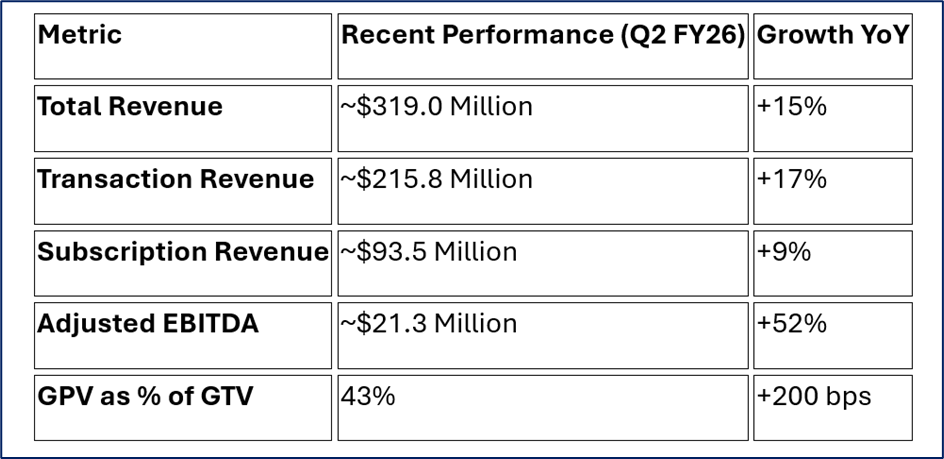
The company’s trajectory is defined by its recent shift from "growth at any cost" to "operating leverage."
Source: Company Data
- ARPU Growth: Average Revenue Per User jumped to $685, driven by the adoption of Lightspeed Payments and the "Capital" lending program.
- Location Quality over Quantity: While the total location count stabilized around 146,000, the company is successfully attracting larger, more complex merchants who process over $500k annually.
SWOT Analysis (Strategic Snapshot)
Source: Kalkine Group
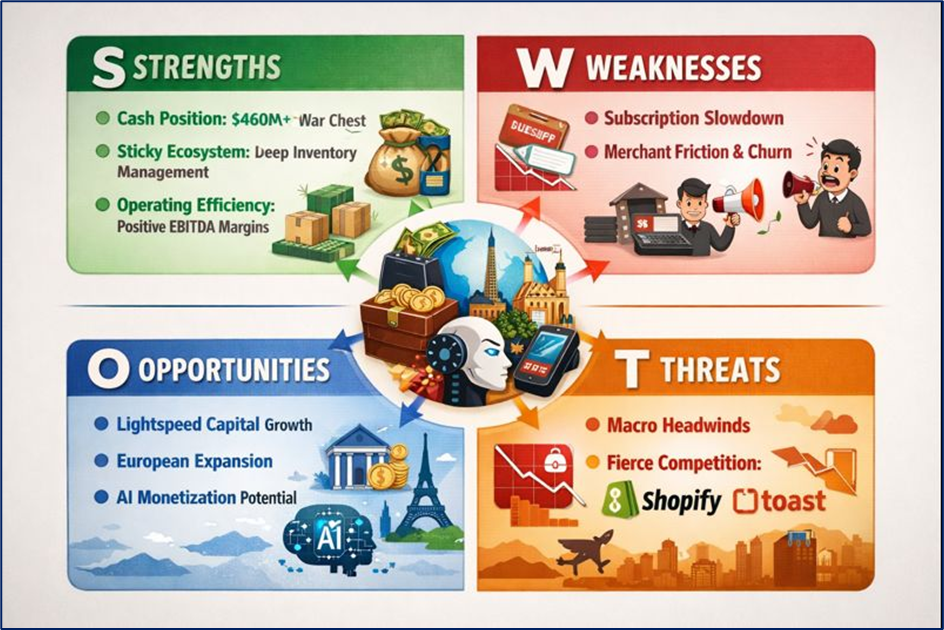
Strengths
- Cash Position: A massive war chest of ~$460M+ allows for M&A or further buybacks.
- Sticky Ecosystem: Deep inventory management makes it difficult for retail merchants to switch.
- Operating Efficiency: Significant improvement in Adjusted EBITDA margins (now consistently positive).
Weaknesses
- Subscription Slowdown: Subscription growth (9%) is lagging behind transaction growth, creating a heavier reliance on consumer spending volumes.
- Merchant Friction: Mandatory payment migrations have historically caused some churn and brand "noise" in merchant forums.
Opportunities
- Lightspeed Capital: Scaling lending services to a pre-vetted merchant base offers high-margin potential.
- European Expansion: Dominance in European hospitality (EMEA) remains a massive greenfield as manual systems digitize.
- AI Monetization: Potential for premium "AI Insights" subscription tiers.
Threats
- Macro Headwinds: High interest rates and cooling consumer spend directly impact GTV and transaction-based revenue.
- Fierce Competition: Shopify (Retail) and Toast (Hospitality) continue to innovate rapidly, squeezing margins on hardware and processing fees.
Key Risks
- Execution Risk: The success of FY2026 relies on a 150-person outbound sales team hitting their stride. If productivity ramps slower than expected, revenue guidance may be missed.
- Regulatory Scrutiny: Increased global focus on "bundled" software and payment fees could impact their "mandatory payments" strategy.
- Market Volatility: As a high-beta tech stock, LSPD remains sensitive to 10-year Treasury yields and broader NASDAQ sentiment.
Conclusion
Lightspeed’s 4.3% jump on January 5, 2026, reflects a market that is starting to reward the company’s "Year of Efficiency." By narrowing its focus to high-value merchants and successfully integrating payments, Lightspeed is proving it can be a profitable enterprise, not just a high-growth startup. However, the path ahead depends heavily on the successful ramp-up of its new sales force and the resilience of the North American and European consumer.


 Nov 20, 2026





 Please wait processing your request...