
 AU
AU
 UK
UK
 US
US
 NZ
NZ
 IND
IND

 CA
CA

 Share
Share
 X (Formerly Twitter)
 Whatsapp
 Facebook
 LinkedIn
 Telegram
 Email This Article
 Copy Link
 Summarize with AI
 Chat GPT
 Perplexity
Views Expressed Disclaimer:
You are reading a free article with opinions that may differ from the recommendation given by Kalkine in its paid research reports. Become a Kalkine member today to get access to our research reports, in-depth technical and fundamental research.
With growing investor demand for commodities, Sprott is attracting attention. Discover the risks and opportunities before investing.
Key Takeaways — February 2026
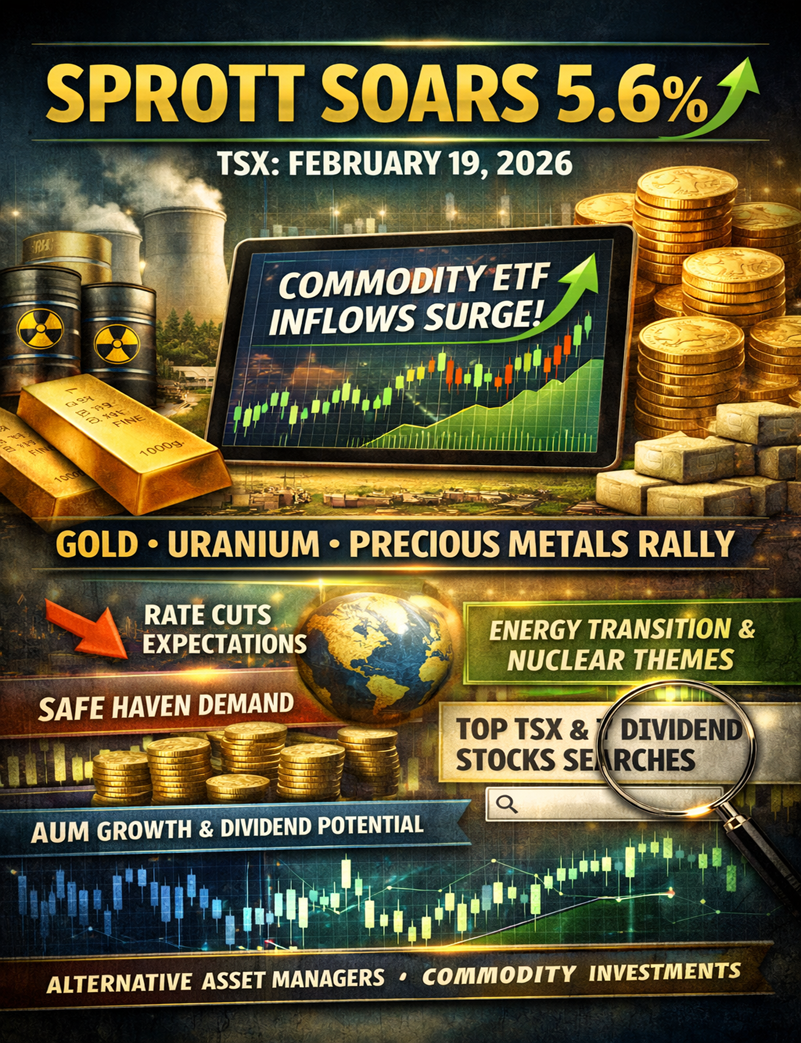
- TSX-listed Sprott stock surged approximately 5.6% on 19 February 2026, driven by strong momentum in gold, uranium, and precious metals markets alongside improving investor sentiment toward alternative asset managers.
- Global macro uncertainty, safe-haven demand, and expectations of interest rate cuts are boosting inflows into commodity ETFs, real assets, and inflation hedge investments, directly benefiting Sprott’s fee-based business model.
- Dividend visibility remains linked to assets under management (AUM) growth, commodity cycles, and capital market performance (company filings).
- Analysts maintain a balanced but constructive outlook, highlighting long-term structural growth from energy transition metals and nuclear energy demand.
- Sprott continues to trend across financial searches for top TSX stocks, dividend growth stocks Canada, commodity exposure investments, and alternative asset managers.
Source: Kalkine Group
Why Is TSX Sprott Stock Jumping 5.6% in February 2026 and Could the Momentum Continue?
Sprott stock is gaining strong attention across financial markets after climbing roughly 5.6% on 19 February 2026, making it one of the most searched TSX stocks today, Canadian dividend stocks, alternative asset manager stocks, and commodity investment opportunities this month. The surge appears closely tied to rising gold prices, uranium demand, inflation hedging trends, and expectations of global monetary easing, which are key catalysts for firms focused on real assets and natural resources investments.
Investors seeking high-growth Canadian stocks, passive income opportunities, inflation protection investments, recession-resilient assets, and commodity-linked ETFs are increasingly focusing on Sprott due to its specialized exposure to precious metals, uranium, and energy transition resources. With macroeconomic uncertainty continuing in February 2026, capital flows into hard assets are strengthening, supporting companies positioned in alternative investment strategies.
The stock’s upward move also reflects broader optimism toward TSX mining stocks, gold investment funds, uranium ETFs, and resource sector equities, which have been trending globally. Increased trading volumes indicate heightened participation from both institutional and retail investors, amplifying short-term price momentum.
How Are Global Economic Trends Supporting Sprott’s Growth Outlook in 2026?
Several global macro drivers are influencing investor behavior and supporting Sprott’s business environment:
- Anticipation of interest rate cuts across major economies
- Persistent geopolitical risks encouraging safe-haven asset allocation
- Rapid expansion in nuclear energy investment, boosting uranium demand
- Inflation concerns increasing interest in gold and real assets
- Institutional diversification toward alternative investments and commodities
These structural trends increase AUM inflows for specialized asset managers focused on real assets.
What Role Do the Canadian Economy, TSX Composite, and CAD Play in Sprott’s Performance?
Canada’s economic environment provides a supportive backdrop for resource-linked companies:
- Commodity-oriented export economy
- Stable financial system compared with global peers
- Potential Bank of Canada monetary easing cycle
- Resilient employment trends despite slower growth
The TSX Composite Index, with significant exposure to energy, mining, and financial sectors, often moves in tandem with commodity cycles. Strength in materials and mining segments tends to create positive sentiment for Sprott due to its industry alignment.
The Canadian dollar (CAD) also influences performance. A relatively weaker CAD can support commodity prices and resource sector valuations, indirectly benefiting Sprott’s ecosystem.
What Makes Sprott’s Business Model Unique Compared With Traditional Asset Managers?
Sprott operates a specialized alternative investment platform focused on:
- Precious metals and gold investments
- Uranium and nuclear energy exposure
- Energy transition and critical minerals
- Physical commodity trusts
- Exchange-traded funds and private resource strategies
Revenue is generated primarily through management fees, performance fees, and investment income (company reports).
Competitive advantages include:
- Deep expertise in commodities investing
- Strong brand recognition among resource investors
- Institutional partnerships and global reach
- Growing ETF and physical trust platform
What Recent Company Developments Are Supporting Investor Confidence?
Recent company updates highlight:
- Continued AUM growth supported by commodity price appreciation
- Expansion of uranium and precious metals investment products
- Stable capital returns through dividends
- Strategic initiatives to broaden investment capabilities (company filings)
Commodity price increases directly enhance management fee revenue because AUM valuations rise with market performance.
How Does Sprott Compare With Its Industry Peers?
Compared with traditional asset managers and alternative investment firms:
Strength Factors
- Higher leverage to commodity price cycles
- Unique uranium investment exposure
- Specialized ETF product offerings
Risk Factors
- Greater earnings volatility due to commodity dependence
- Smaller scale compared with global asset management giants
- Investor sentiment sensitivity during market downturns
What Is the Outlook for the Commodity and Alternative Asset Management Sector?
Short-Term Outlook (3–6 Months)
- Commodity price volatility likely
- Monetary policy expectations driving investor sentiment
- Potential fluctuations in ETF inflows
Medium-Term Outlook
- Energy transition investment accelerating
- Nuclear energy demand supporting uranium markets
- Institutional allocation to alternatives increasing
Long-Term Outlook
- Structural commodity demand growth
- Inflation hedging relevance
- Resource scarcity investment themes
The sector outlook remains positive but cyclical.
Is Sprott Stock Bullish or Bearish Based on Current Market Signals?
Short-Term View: Neutral to Moderately Bullish
- Positive momentum from commodity rally
- Strong investor interest
- Potential macro volatility risks
Long-Term View: Constructively Bullish
- Structural growth in alternative assets
- Expansion of ETF platform
- Increasing institutional participation
Commodity cycles remain the primary uncertainty factor.
What Strategic Actions Could Investors Evaluate Across Different Time Horizons?
Short-Term Considerations
- Monitor gold and uranium price movements
- Follow central bank policy developments
- Track ETF inflows and AUM changes
Medium-Term Considerations
- Evaluate earnings consistency
- Assess commodity demand trends
- Observe institutional capital allocation
Long-Term Considerations
- Focus on structural commodity demand
- Monitor diversification into new asset classes
- Assess dividend sustainability patterns
These analytical factors help investors understand potential risk-reward scenarios logically.
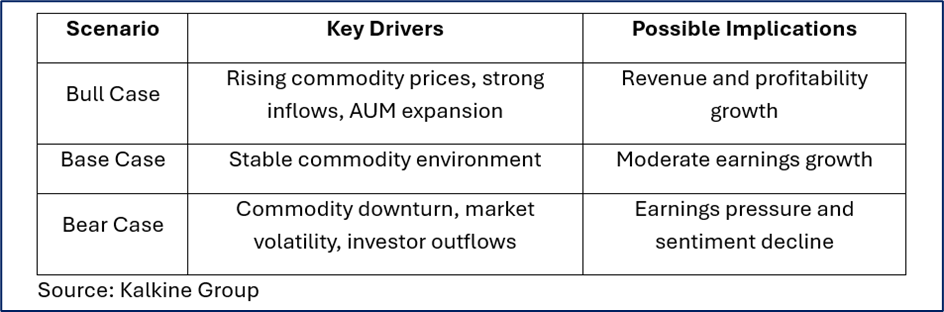
What Are the Bull and Bear Case Scenarios for Sprott Stock?
What Do Analysts Indicate About Sprott’s Valuation and Future Prospects?
Analyst consensus suggests:
- Ratings generally range from Hold to Moderate Buy
- Valuation depends heavily on commodity market conditions
- AUM growth remains the primary performance driver
Broker commentary includes perspectives from:
- RBC Capital Markets
- TD Securities
- BMO Capital Markets
- National Bank Financial
- CIBC
Forecast ranges vary due to commodity uncertainty and market volatility.
What Key Risks Could Influence Sprott’s Future Performance?
- Commodity price fluctuations
- Interest rate surprises
- Market liquidity shifts
- ETF outflows
- Currency volatility
- Regulatory developments
- Global economic slowdown
What Is the Dividend Outlook for Sprott in 2026 and Beyond?
Dividend sustainability depends on:
- Earnings growth
- AUM expansion
- Commodity market strength
- Cash flow generation
Historically, dividends have been supported by performance but may fluctuate with market cycles (company filings).
FAQ — Sprott Stock February 2026
Why did Sprott stock rise recently?
The increase appears linked to stronger precious metals markets, safe-haven demand, and improved investor sentiment.
Is Sprott considered a dividend stock?
Yes, although dividend levels may vary depending on financial performance.
What drives Sprott’s revenue growth?
Management fees, performance fees, and commodity-linked investment income.
Is Sprott sensitive to gold and uranium prices?
Yes, commodity price trends significantly influence performance.
What makes Sprott attractive to investors?
Specialized exposure to real assets, commodities, and alternative investments.
Final Analytical Conclusion — Informational Only
Sprott represents a commodity-linked alternative asset manager positioned at the intersection of global macro uncertainty, energy transition demand, and investor allocation toward real assets. The company’s long-term outlook benefits from structural commodity demand, while short-term performance remains cyclical and sensitive to market sentiment.
From an analytical standpoint, the stock presents cyclical opportunity with structural growth potential, depending on commodity trends and capital flows.


 Jun 24, 2026




 Please wait processing your request...