
 NZ
 UK
 US
 AU
 IND

 CA

 Share
 X (Formerly Twitter)
 Whatsapp
 Facebook
 LinkedIn
 Telegram
 Email This Article
 Copy Link
 Summarize with AI
 Chat GPT
 Perplexity
Key Highlights
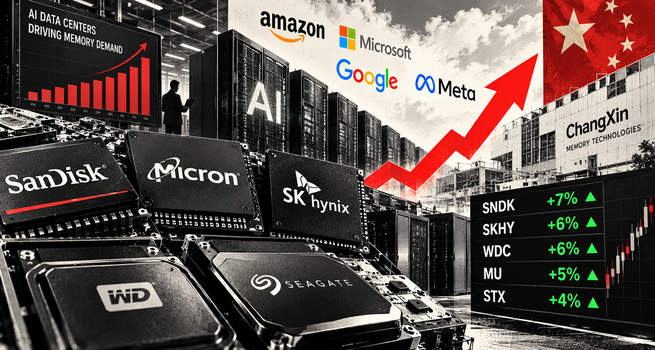
- SanDisk (SNDK) rose 7%, SK Hynix (SKHY) 6%, Western Digital (WDC) 6%, Micron (MU) 5% and Seagate (STX) 4% in early moves
- The rebound follows a multi-day selloff sparked by China’s ChangXin targeting a server memory module by year-end
- An analyst at Rosenblatt called the selloff overblown and reiterated a Buy rating on Micron
- Micron reported record fiscal fourth-quarter Revenue of $54.23 billion on September 30
- Valuation after a huge year-to-date run and the ChangXin timeline are the main risks
Memory and storage stocks opened the week with a bounce, giving traders hope that a comeback is starting after a sharp selloff. In early moves on Monday, SanDisk (NASDAQ: SNDK) rose 7%, SK Hynix (NASDAQ: SKHY) and Western Digital (NASDAQ: WDC) each gained 6%, Micron (NASDAQ: MU) climbed 5% and Seagate (NASDAQ: STX) added 4%.
What Knocked the Group Down
The slide began with a headline from China. ChangXin Memory Technologies President Cao Kanyu said on October 14 that the company is targeting a next-generation server memory module by the end of this year. The comment extended a selloff to four straight sessions by October 15. Western Digital had fallen to about $345 that day from about $447 on October 1, and the Roundhill Memory ETF dropped 6% in one session. The pressure carried into the last session of the week, when the Nasdaq 100 fell more than 2% on worries about AI financing and Debt stress at cloud providers.
Why the Selloff Was Called Overblown
Not everyone agreed with the reaction. Rosenblatt analyst Kevin Cassidy called the selloff overblown on October 14 and reiterated a Buy rating on Micron. ChangXin’s announced product is a server memory module, so its direct overlap with flash storage makers such as SanDisk is limited, and Western Digital is now a pure-play hard disk drive company. The stocks fell together anyway, which suggests the move reflected positioning as much as fundamentals.
What the Demand Backdrop Looks Like
Spending plans from the biggest customers still point up. Morgan Stanley’s latest published estimates put capex at the five largest hyperscalers at about $1.2 trillion in 2027 and $1.4 trillion in 2028, raised 9% and 10% from prior forecasts. Amazon has said higher memory costs were a key reason for lifting its 2026 capex projection to $220 billion from $200 billion. Micron reported record fiscal fourth-quarter revenue of $54.23 billion on September 30 with guidance above consensus, although its shares slipped 3% the next day.
Why a Comeback Is Hard to Call
This group has a history of fast reversals in both directions. In late July the stocks rebounded sharply after a steep selloff, with SanDisk up more than 19% in a session, yet by July 31 SanDisk was down 45% over a month. As of mid-October it was still up roughly 450% for the year, which leaves holders quick to take profits on any competitive headline. A single day of gains does not change the trend, and it is too early to say whether Monday’s moves will hold, particularly with the Federal Reserve meeting later this month and the broader market still nervous.
What Could Decide the Rebound
Several variables matter. One is whether ChangXin delivers its server memory module on schedule, since that would test the pricing power of established makers. Another is flash pricing, which SanDisk’s next Quarterly Report should help clarify. Hyperscaler spending commentary is a third, and Meta’s Earnings this week could add detail on AI capex plans. Broader technology sentiment, which has been pressured by AI debt concerns, will also set the tone.
What to Watch
Investors can follow whether the bounce extends beyond one session, how the Roundhill Memory ETF trades against the individual names, and whether analysts keep defending their targets. Further news on ChangXin’s product timeline would likely move the whole group again.
The Bottom Line
Monday’s gains give memory and storage bulls something to build on, backed by strong demand signals and a record quarter at Micron. They follow a sharp slide and sit on top of huge year-to-date gains, so Volatility is likely to continue. Whether this becomes a comeback depends on competition headlines, pricing and the AI spending that supports the whole group.
This content is for informational purposes only and does not constitute Investment advice. Readers should do their own research before making any investment decision.


 Nov 25, 2026





 Please wait processing your request...