
 AU
AU
 UK
UK
 US
US
 NZ
NZ
 IND
IND

 CA
CA

 Share
Share
 X (Formerly Twitter)
 Whatsapp
 Facebook
 LinkedIn
 Telegram
 Email This Article
 Copy Link
 Summarize with AI
 Chat GPT
 Perplexity
Highlights
- BMO’s Q3 net interest income rose 14.6% YoY on higher loan activity.
- Total Q3 revenue increased 9.7% YoY, supported by diversified business segments.
- Net income climbed 24.9% YoY on improved credit performance.
- A new share buyback program is planned for up to 30 million shares.
Bank of Montreal (TSX:BMO) is a North American financial-services institution. Its operations span four key segments: Canadian personal and commercial banking, U.S. personal and commercial banking, wealth management, and capital markets.
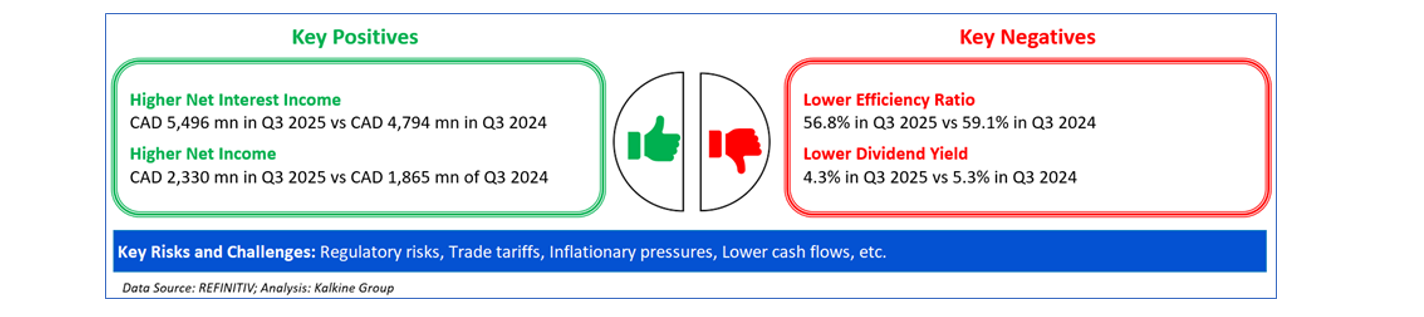
BMO reported notable year-over-year growth for Q3 2025, with net interest income increasing by 14.6% to CAD 5,496 million, driven by loan activity and higher net interest margins across its Canadian and U.S. operations. Total revenue for Q3 rose 9.7% YoY to CAD 8,988 million, supported by gains in interest income, wealth management flows, and capital markets transactions.
Non-interest expenses grew 5.5% reflecting higher personnel and technology costs, although these were partially offset by disciplined expense management. Net income increased by 24.9% to CAD 2,330 million, bolstered by healthy revenue growth, improved credit performance, and expanded operating leverage.
Recent Business Update
On November 6, 2025, BMO announced an acceleration of its share buyback program, stating plans to terminate the existing NCIB and initiate a new repurchase program for up to 30 million shares, pending approval from OSFI and TSX.
Company Outlook
BMO’s management guidance describes the near-term outlook as "decent" but recognizes ongoing challenges. The bank faces a North American environment marked by U.S. tariff uncertainty, softer Canadian GDP growth, and weakening labour markets. While a modest Canadian contraction and muted credit demand are expected for 2025, management anticipates that lower interest rates and ongoing fiscal support will boost activity into 2026. These macroeconomic factors may pressure loan growth and earnings momentum in the short term. However, stabilizing inflation, expected rate cuts, and a firmer economic environment in 2026 are projected to benefit operating conditions and improve the medium-term outlook for the bank.
Top 10 Shareholders
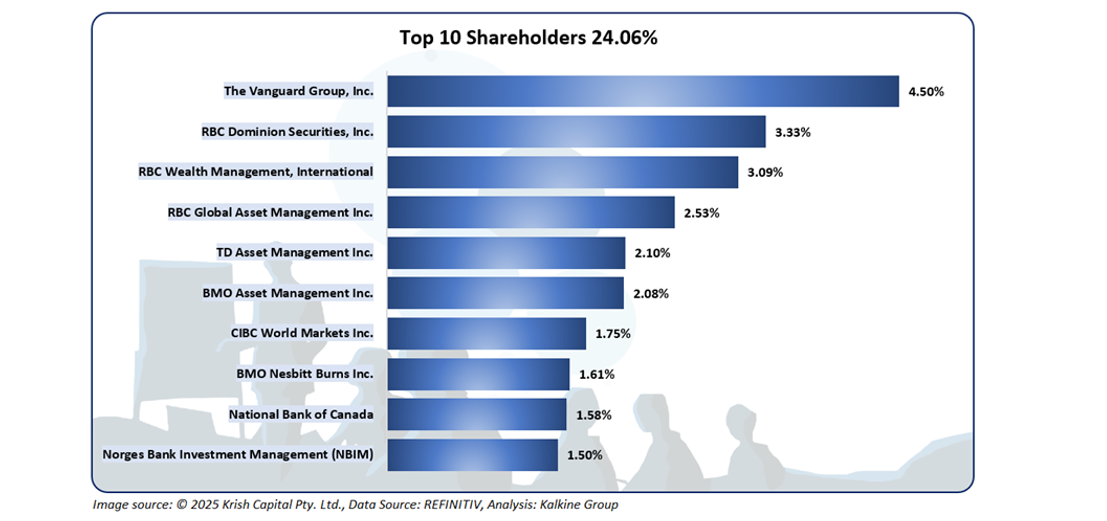
The top ten shareholders collectively account for about 24.06% of the company’s total equity. Among them, The Vanguard Group, Inc. has the largest shareholding at roughly 4.50%, followed by RBC Dominion Securities, Inc. with an estimated 3.33% stake.
Stock Information
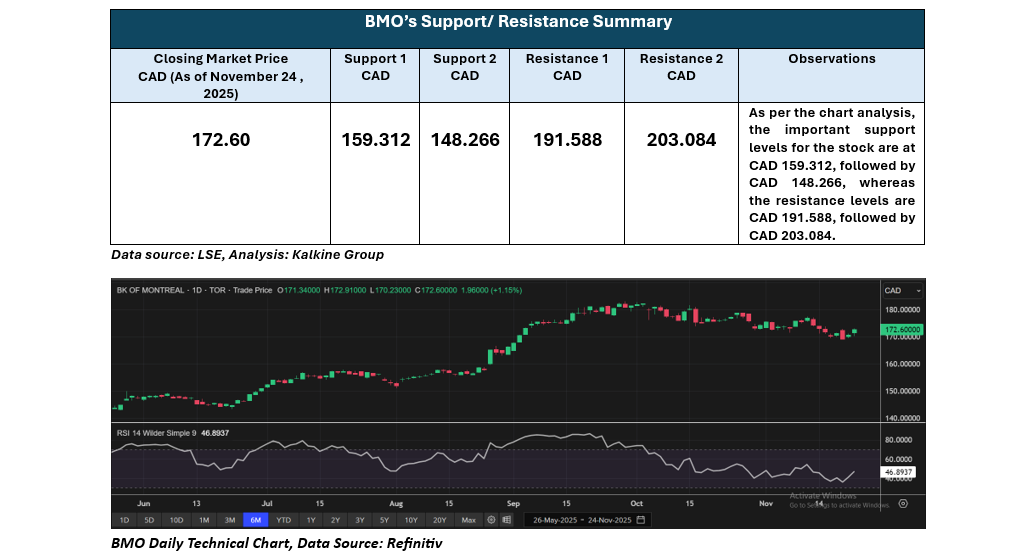
BMO closed at CAD 172.60 on November 24, 2025, posting a steady intraday rise of 1.15% (+1.96) with a moderate 0.54% gain over the past week. The stock has achieved a 30.09% return over the past year, with year-to-date performance up 23.68% (+33.05). BMO shares reached a 52-week high of 182.90 on September 29, 2025, and a 52-week low of 121.31 on April 9, 2025, and is currently above the midpoint of this range.
Note 1: Past performance is not a reliable indicator of future performance.
Note 2: The reference data for all price data, currency, technical indicators, support, and resistance levels is 24 November 2025. The reference data in this report has been partly sourced from EODHD/Others.
Technical Indicators Defined
Support: A level at which the stock prices tend to find support if they are falling, and a downtrend may take a pause backed by demand or buying interest. Support 1 refers to the nearby support level for the stock and if the price breaches the level, then Support 2 may act as the crucial support level for the stock.
Resistance: A level at which the stock prices tend to find resistance when they are rising, and an uptrend may take a pause due to profit booking or selling interest. Resistance 1 refers to the nearby resistance level for the stock and if the price surpasses the level, then Resistance 2 may act as the crucial resistance level for the stock.


 Jun 24, 2026




 Please wait processing your request...