
 AU
AU
 UK
UK
 US
US
 NZ
NZ
 IND
IND

 CA
CA

 Share
Share
 X (Formerly Twitter)
 Whatsapp
 Facebook
 LinkedIn
 Telegram
 Email This Article
 Copy Link
 Summarize with AI
 Chat GPT
 Perplexity
Air Canada shares remain volatile, but rising passenger demand and improving margins could fuel a strong recovery in 2026.
Key Takeaways – Latest Update February 2026
- Air Canada (TSX: AC) surged approximately 5% on 13 February 2026, ranking among the top TSX gainers today
• Strength in global travel demand, premium bookings, and transatlantic routes boosted airline sector momentum
• Stable oil prices and improving Canadian dollar (CAD) trends reduced cost volatility
• Analysts highlight improving EBITDA margins, free cash flow recovery, and ongoing deleveraging
• Dividend remains suspended, but balance sheet repair continues to strengthen long-term outlook

Source: Kalkine Group
Why Is Air Canada Stock Up 5% Today and Trending Across Google Finance, TSX News, and Airline Stocks in February 2026?
Air Canada stock is rapidly trending across TSX top gainers, airline stocks rally 2026, Canada stock market today, travel recovery stocks, global aviation rebound, and cyclical recovery plays. The sharp 5% surge on 13 February 2026 reflects a powerful combination of macro tailwinds, sector rotation into travel stocks, and renewed optimism surrounding global passenger demand.
Investor sentiment improved as:
- Winter travel bookings exceeded expectations
• Premium cabin load factors strengthened
• Transatlantic and long-haul routes showed pricing power
• Jet fuel prices stabilized
• Rate-cut speculation supported consumer spending outlook
In a market environment marked by volatility in commodities and tech stocks, investors are rotating capital into economically sensitive, high-beta reopening plays like Air Canada.
Are Global Market Conditions Finally Turning Supportive for Airline Stocks in 2026?
Global macroeconomic dynamics in February 2026 are increasingly favorable for aviation equities:
- Inflation moderation across North America and Europe
• Stabilizing bond yields
• Improved global GDP forecasts
• Resilient U.S. labor markets
• Gradual normalization of Asia-Pacific travel
Airlines are highly sensitive to macro cycles. As recession fears ease and global mobility accelerates, demand elasticity improves. Stabilized oil benchmarks reduce earnings uncertainty, strengthening valuation confidence across global airline stocks.
How Does the Canadian Economy and TSX Composite Performance Impact Air Canada’s Rally?
The broader S&P/TSX Composite Index has experienced sector rotation in February 2026, with cyclical and reopening stocks gaining traction.
Canada’s economic backdrop currently reflects:
- Stable unemployment levels
• Moderating inflation
• Strong immigration growth supporting domestic travel
• Recovery in corporate travel budgets
The Canadian dollar remains relatively stable versus the U.S. dollar, easing pressure on USD-denominated aircraft leases and fuel costs.
This macro stability enhances visibility for airline revenue growth, operating leverage, and earnings normalization.
What Is Air Canada’s Business Model and Competitive Advantage in 2026?
Air Canada operates a diversified aviation ecosystem:
- Mainline international and domestic passenger operations
• Air Canada Rouge serving leisure markets
• Growing cargo operations
• Aeroplan loyalty program monetization platform
Key operational themes from recent company disclosures include:
- Capacity discipline and route optimization
• Fleet modernization with fuel-efficient aircraft
• Margin recovery through yield management
• Strong premium product positioning
The Aeroplan loyalty ecosystem enhances recurring revenue streams and strengthens customer stickiness, differentiating Air Canada within North American aviation.
How Does Air Canada Compare to Global Airline Leaders?
When benchmarked against:
- Delta Air Lines
• United Airlines
• WestJet
Air Canada trades at a valuation discount relative to major U.S. peers, reflecting higher perceived balance sheet risk but also greater operational leverage to international recovery.
Peer comparison themes:
- Forward EV/EBITDA multiple normalization potential
• Strong exposure to long-haul and premium traffic
• Sensitivity to oil price fluctuations
The valuation gap could narrow if earnings momentum accelerates.
Is Air Canada Stock Bullish, Bearish, or Neutral Across Time Horizons?
Short-Term Outlook – 3 to 6 Months
- Bullish if oil remains range-bound
• Bullish if summer bookings outperform
• Neutral if macro data softens
• Bearish if recession fears re-emerge
Momentum indicators suggest improving sentiment, but airline stocks remain event-driven and cyclical.
Medium-Term Outlook
- Earnings recovery trajectory critical
• Debt reduction progress remains key
• Potential shareholder return discussions over time
Long-Term Outlook
- Structural global travel demand growth
• Loyalty program monetization expansion
• Fleet efficiency lowering cost base
Overall bias: Constructively optimistic long term with inherent short-term volatility.
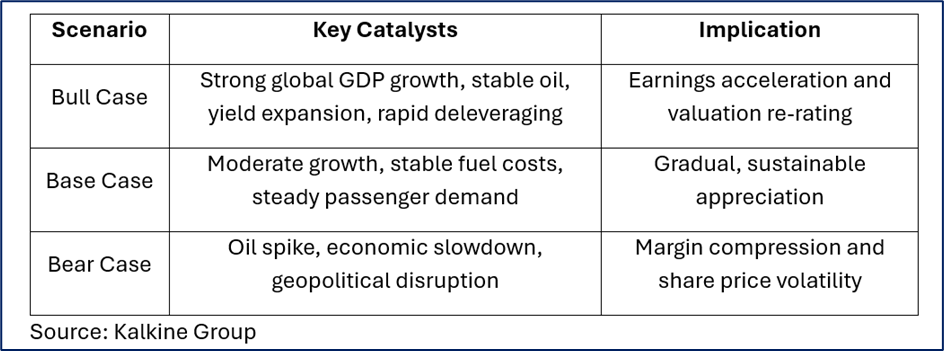
What Are the Bull, Base, and Bear Case Scenarios for Air Canada Stock in 2026?
What Are Analysts Saying About Air Canada’s Share Price Outlook?
Recent February 2026 consensus commentary indicates:
- Majority Buy or Outperform ratings
• Price targets generally above current trading levels
• Focus on summer 2026 demand strength
• Emphasis on EBITDA growth and debt metrics
Analyst optimism centers on free cash flow normalization and improving operational leverage as capacity rationalizes.
What Key Risks Should Investors Monitor Closely?
- Jet fuel price volatility
• Currency fluctuations (CAD/USD)
• Global recession risk
• Labour and wage inflation
• Geopolitical travel disruptions
Airline equities amplify macro cycles — both positive and negative.
What Forward-Looking Strategies Can Investors Consider?
Short-Term Strategy Focus
- Monitor oil price trends
• Track booking momentum and load factors
• Watch quarterly earnings updates
Medium-Term Strategy Focus
- Evaluate debt-to-EBITDA trajectory
• Assess yield per passenger growth
• Monitor macro indicators and interest rate policy
Long-Term Strategy Focus
- Structural aviation demand growth
• Loyalty ecosystem expansion
• Competitive positioning in North America
These strategies emphasize disciplined risk assessment and diversified portfolio allocation.
Frequently Asked Questions About Air Canada Stock in February 2026
Why is Air Canada stock rising today?
Improving travel demand, oil stability, and positive macro signals fueled the 5% rally.
Does Air Canada pay a dividend in 2026?
Currently, no dividend is reinstated as capital prioritizes balance sheet repair.
Is Air Canada undervalued versus global peers?
It trades at a relative discount, reflecting cyclical risk but offering potential upside if earnings normalize.
What are the main drivers of airline profitability?
Fuel costs, passenger yield, load factors, cost discipline, and macroeconomic strength.
Is Air Canada a High-Beta TSX Recovery Stock With Global Upside Potential in 2026?
Air Canada’s 5% breakout on 13 February 2026 signals strengthening investor confidence amid global travel recovery, stabilizing macro conditions, and improving operating metrics. While volatility remains inherent in airline stocks, structural travel demand and operational efficiency gains suggest a gradually improving fundamental outlook.
This content is for informational purposes only and does not constitute financial advice.


 Jun 24, 2026




 Please wait processing your request...