
 AU
AU
 UK
UK
 US
US
 NZ
NZ
 IND
IND

 CA
CA

 Share
Share
 X (Formerly Twitter)
 Whatsapp
 Facebook
 LinkedIn
 Telegram
 Email This Article
 Copy Link
 Summarize with AI
 Chat GPT
 Perplexity
Is Pembina Pipeline offering a dependable high dividend? Explore cash flows, payout safety, and income appeal.
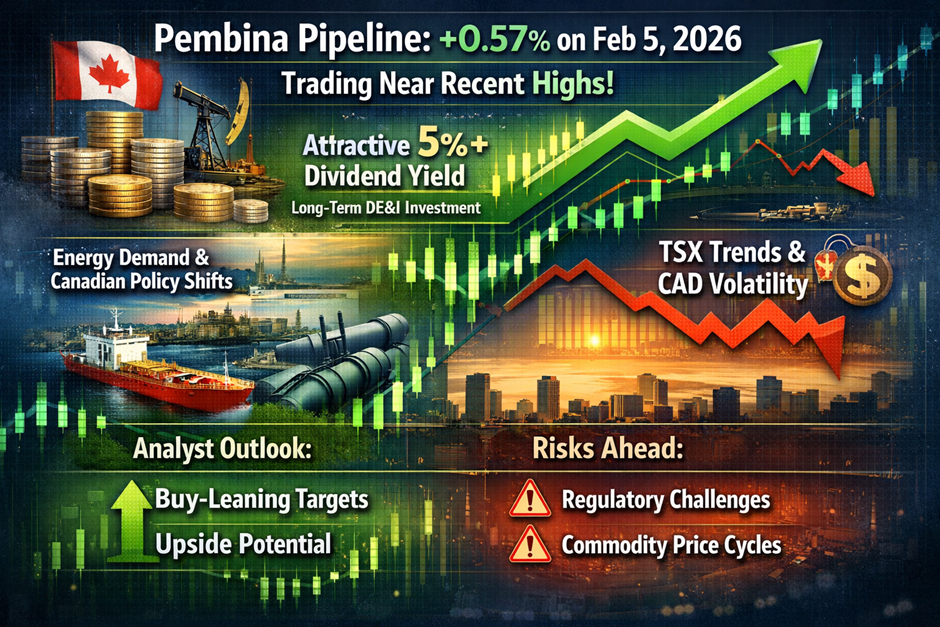
Key Takeaways – Pembina Pipeline TSX: PPL – February 2026
- Pembina Pipeline stock showed a modest +0.57% uptick on 5 Feb 2026, trading near recent highs.
• Forward dividend yields remain attractive (~5%+), underpinning long-term DE&I investment stories.
• Global energy demand dynamics, Canadian policy shifts and oil/gas infrastructure investment support long-term sector relevance.
• Short-term and medium-term price action influenced by broader TSX Composite trends and CAD volatility.
• Analyst forecasts suggest mixed but generally Buy-leaning targets with upside potential; bearish risks include regulatory headwinds and commodity pricing cycles.
Source: Kalkine Group
What Is Driving Pembina Pipeline (TSX:PPL) Up 0.57% on 5 Feb 2026?
In February 2026, Pembina Pipeline (TSX: PPL) has exhibited resilience with a 0.57% gain on 5 Feb, staging strength in the face of light economic data and broader energy market dynamics. Trading near a 52-week high reflects continued investor attention to stable dividend stocks in the Canadian energy infrastructure sector. Pembina offers diversified midstream services — from natural gas liquids processing to crude oil pipeline logistics — positioning it as a key link in North American hydrocarbon supply chains.
Key short-term price drivers include:
• Rising oil and natural gas demand amid easing global supply constraints.
• TSX Composite momentum lifting energy sector benchmarks.
• Dividend stability attracting income-oriented flows.
How Does the Canada Economy, CAD & TSX Composite Impact Pembina Pipeline?
Canada Economy Overview:
Canada’s energy sector remains a GDP driver as oil exports and midstream infrastructure expand. A trading CAD, global commodity cycles, and recent government policies (e.g., shifting emission cap frameworks) influence operational costs and export pricing dynamics — factors Pembina must navigate.
TSX Composite Context:
Pembina’s performance is positively correlated with the TSX Composite Index — especially given the index’s energy weighting — providing upside participation when Canadian equities stabilize or rally.
CAD Analysis:
Canadian dollar strength often reflects commodity price inflows; this can be a tailwind for companies earning in USD or exporting outputs, but a headwind for CAD-based revenue when translating back to TSX valuations.
Why Is Pembina Pipeline’s Dividend Outlook Still Attractive?
Pembina pays quarterly dividends on common and multiple series of preferred shares with compelling yields. Its dividend schedule aligns quarter-end payments (March, June, September, December), maintaining consistent income streams for shareholders.
According to dividend trackers, current yields near ~5% signal ongoing income appeal versus peers and may attract TFSA, RRSP, and dividend growth investors in 2026.
Sector & Stock Outlook – Short, Medium & Long Term
Short-Term (0–6 Months)
Is Pembina Pipeline poised for continued momentum?
• Depends on oil price stability and TSX market breadth.
• Dividend dates can support short-term price defense.
• Volatility could persist due to macro events or CAD fluctuations.
Short-Term Drivers:
- Energy demand growth signals.
- Dividend calendar and earnings results.
- CAD and interest rate shifts.
Medium-Term (6–24 Months)
Will Pembina Pipeline capitalise on infrastructure expansion?
• Growth linked to pipeline utilization, acquisition synergies (e.g., asset deals, PGI JV actions).
• EBITDA and margin expansion from expanded infrastructure investments.
Medium-Term Risks:
- Regulatory changes and environmental policy shifts.
- Commodity cycles impacting throughput volumes.
Long-Term (2–5+ Years)
Can Pembina Pipeline thrive amid global energy transition and capital markets?
• Infrastructure demand for oil & gas persists, even amid renewables shift.
• Long-term contracts provide predictable cash flows supporting dividends.
• Strategic expansions, processing assets and global energy needs continue to elevate midstream importance.
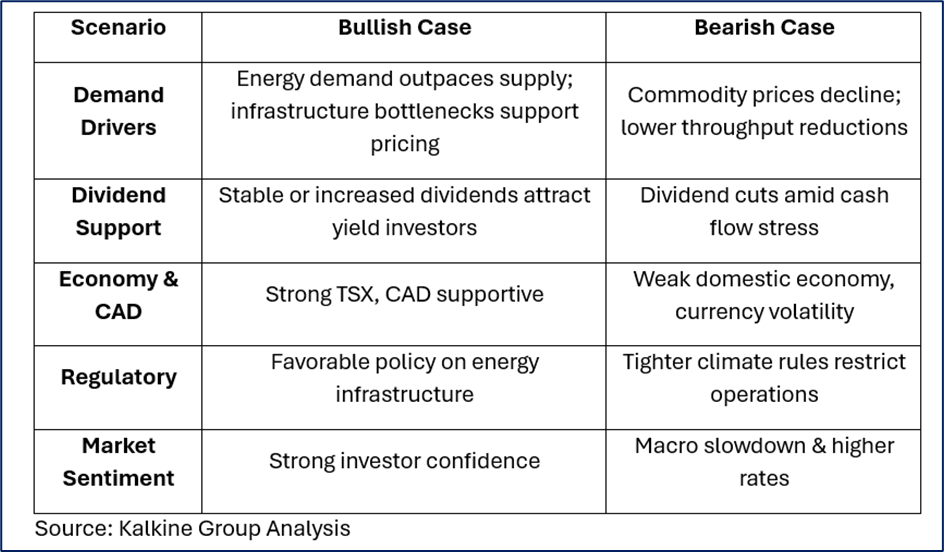
Bull vs Bear Case Matrix – Pembina Pipeline (TSX:PPL)
Analyst Forecasts & Valuations (Latest Data)
Based on consensus targets from market research sources:
- Analysts indicate standard price targets between ~CAD50–CAD66 with potential upside around CAD58 average, reflecting stable midstream valuation amid energy markets.
This reflects a modest upside from current levels, with ratings skewing mainly Buy or Hold — reinforcing a balanced but positive medium-term outlook.
Key Risks Every Investor Should Understand
- Commodity Price Slumps — Oil & gas price softening can compress revenues.
• Regulatory Shifts — Environmental policies may elevate costs or delay projects.
• Currency Fluctuations — CAD shifts may impact returns.
• Global Economic Risks — Recession scenarios could reduce energy demand and capital flows.
Frequently Asked Questions (FAQ Schema)
What is Pembina Pipeline’s current dividend yield as of Feb 2026?
Pembina’s dividend yield remains strong at around ~5%+, supported by quarterly common and preferred payouts.
How did Pembina Pipeline perform year-to-date?
Pembina’s stock has shown moderate resilience, trading near 52-week highs with positive correlation to energy sector indexes.
Will Pembina Pipeline increase dividends in coming quarters?
While not guaranteed, stable cash flows and long-term contracts underpin potential for sustained dividends, subject to board decisions.
Final Investment Conclusion (Informational Only)
Pembina Pipeline (TSX: PPL) presents a balanced mix of yield, infrastructure exposure, and midstream stability in the evolving global energy landscape. Its 2026 performance reflects both dividend appeal and sector resilience. Investors should weigh commodity price cycles, TSX and CAD dynamics, regulatory environment, and dividend sustainability when assessing Pembina’s role in diversified portfolios.


 Jun 24, 2026




 Please wait processing your request...