
 AU
AU
 UK
UK
 US
US
 NZ
NZ
 IND
IND

 CA
CA

 Share
Share
 X (Formerly Twitter)
 Whatsapp
 Facebook
 LinkedIn
 Telegram
 Email This Article
 Copy Link
 Summarize with AI
 Chat GPT
 Perplexity
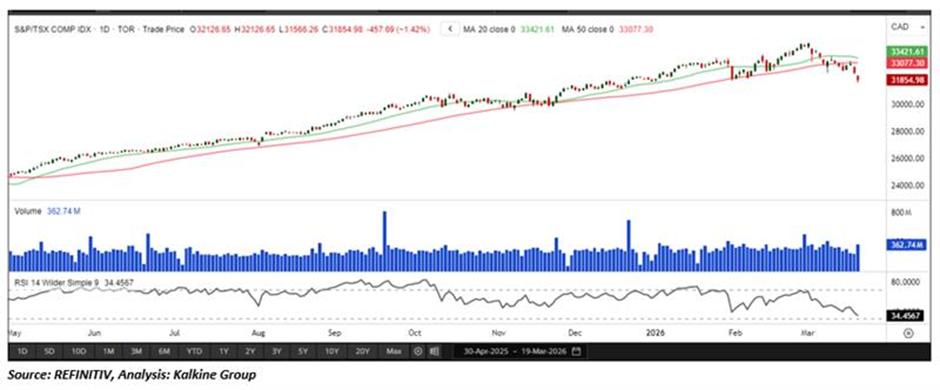
The S&P/TSX Composite Index is expected to open on a negative note following the recent market sell-off, reflecting lingering weakness in investor sentiment. In the previous session, losses were primarily led by the basic materials and industrials sectors, adding to overall selling pressure.
From a technical standpoint, the index continues to trade below a key rising trendline resistance near 31,500, signalling persistent near-term weakness in the market structure. As long as the index remains below this level, downside risks may persist, potentially leading to extended consolidation or further corrective movement. Immediate resistance is seen near 31,200, and failure to reclaim this level could keep the broader tone defensive in the near term.
Global Macro Backdrop
Global markets have shown mixed activity overnight:
- U.S. economic data released Friday showed moderate housing starts and building permits, indicating steady but unspectacular growth in the residential sector. Investors are monitoring inflation trends and potential Fed policy adjustments.
- European markets were mixed, with Germany’s IFO business climate index slightly below expectations, counterbalanced by stronger-than-expected industrial output in France.
- Asian equities posted modest gains on optimism around China’s manufacturing recovery, although geopolitical tensions continue to inject caution.
Bond yields globally are slightly higher, reflecting inflation concerns and ongoing monetary policy monitoring, influencing rate-sensitive sectors such as financials and real estate.
Macro News Impacting the TSX
The TSX Composite is likely to open with selective sector movements:
- Bank of Canada watchers remain focused on domestic inflation indicators, retail sales, and housing metrics for hints on potential rate changes.
- Investors are balancing global growth signals and domestic economic data, which may influence sector rotation across the TSX.
Commodity view — what to watch
- Crude oil: WTI crude oil futures rose to around $96 per barrel on Friday as markets remained highly sensitive to any escalation in the Middle East conflict.
- Gold: Gold rose held below $4,700 per ounce on Friday following a steep two-day selloff, and was on track for a sharp weekly decline as surging energy prices driven by the Middle East conflict stoked inflation concerns and dampened expectations for interest rate cuts.
- Base metals: Copper futures rebounded to around $5.5 per pound on Friday after hitting multi-month lows in the previous session, supported by reassurances from the US and Israel regarding the Middle East conflict.
Sector highlights
- Energy: Canadian oil and gas producers may see early support due to firming crude oil prices.
- Materials: Gold and base metal miners may see active trading depending on commodity trends and global demand.
- Financials: Banks will monitor bond yields and interest rate expectations for cues on lending margins.
- Technology: These sectors may track global equity trends and macroeconomic sentiment.
Forex watch
- The Canadian dollar (CAD) is marginally weaker versus the U.S. dollar this morning, impacted by rising oil prices and U.S. economic indicators.
- Currency movements will influence export-oriented sectors and commodity producers, with a stronger CAD potentially pressuring exporters but supporting financials.
Bottom line:
The TSX Composite is poised for a selective start, with commodity-linked sectors likely to lead early movements. Energy and materials stocks could provide directional cues, while financials and technology may track broader macro trends.
Market participants will be cautious, digesting overnight global cues, domestic macro indicators, and commodity developments. Investors are expected to watch crude, gold, and base metals closely for signs of sustained momentum into the trading day.


 Jun 26, 2026




 Please wait processing your request...