
 NZ
 UK
 US
 AU
 IND

 CA

 Share
 X (Formerly Twitter)
 Whatsapp
 Facebook
 LinkedIn
 Telegram
 Email This Article
 Copy Link
 Summarize with AI
 Chat GPT
 Perplexity
The S&P/TSX Composite index is expected to open on a positive note. Investor sentiment is being supported by stronger-than-expected quarterly results from Bank of Montreal and Bank of Nova Scotia, which reported solid Earnings growth across their Capital Markets and domestic banking operations. However, ongoing Canada-U.S. trade tensions and softer oil prices are likely to limit the upside.
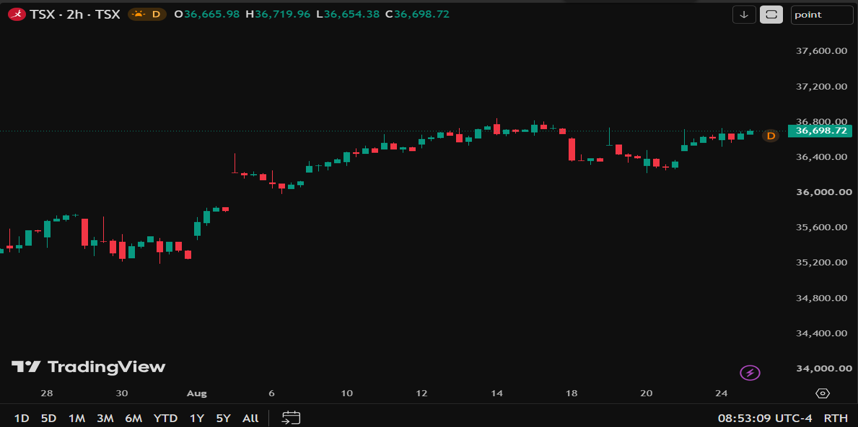
The broader technical outlook remains constructive, with the index closing at 36,714.12 on August 24 and continuing to trade close to its record high of around 36,845. The index has gained more than 3% over the past month and remains in a strong medium-term uptrend. Momentum also remains supportive, with the RSI near 65, indicating healthy buying pressure while remaining below the traditional overbought threshold of 70. Market Participants are now closely watching the 36,845 resistance zone, which represents the recent record high. A decisive breakout above this level could reinforce the bullish trend, attract fresh buying interest, and potentially push the index toward the psychological 37,000 level. On the downside, 36,500 is likely to provide the first layer of support, followed by the 36,000 zone. A sustained move below these levels could trigger profit-taking and lead to short-term consolidation.
Source: TradingView
Global Macro
Global markets remain focused on the escalating U.S.-Canada trade dispute, Middle East Supply risk, and this week's Jackson Hole Symposium, where Federal Reserve Chair Kevin Warsh delivers his first address as chair on Friday. Markets are also awaiting Wednesday's July PCE Inflation print for further clues on the rate path.
- U.S. Equity futures are mixed as investors weigh the fallout from the U.S.-Canada Tariff escalation, upcoming inflation data, and a heavy earnings slate that includes Nvidia's results on Wednesday.
- Fed policy outlook: CME FedWatch pricing shows roughly a 40% probability of a rate hike in September against a 60% probability rates hold steady, reflecting persistent inflation concerns tied to tariffs and firmer Commodity prices.
- European markets are trading cautiously as investors assess the spillover risk from the North American trade conflict alongside stable-to-easing inflation trends.
- Asian markets are mixed, with continued sensitivity to global trade developments and Chinese Demand signals.
- Bond markets: U.S. Treasury Secretary Scott Bessent's expanded buyback program for long-dated government Debt has revived "debasement trade" concerns, pressuring the dollar and supporting gold, while yields remain elevated ahead of Warsh's Jackson Hole remarks.
- Geopolitics: U.S.-Iran tensions remain elevated over the Strait of Hormuz, with Washington preparing new sanctions and Iran warning that further economic measures would be considered an act of war — a key swing Factor for oil prices this week.
Canadian Market Focus
The TSX enters Tuesday building on Monday's gains, with financials and Mining providing the main support even as trade-sensitive sectors sell off.
- The TSX closed at a record 36,714.12 on Monday despite the new U.S. tariffs, as strength in materials and financials offset weakness in industrials and autos.
- Canadian Pacific Kansas City rose after resolving a nearly three-month labour dispute, with workers returning Monday, removing a key overhang on industrials; the stock is up almost 32% year-to-date.
- Mining and materials names extended a powerful rally, with Denison Mines, Ero Copper, Energy Fuels, and G Mining Ventures each surging more than 8.6% in recent sessions on firm gold and copper prices.
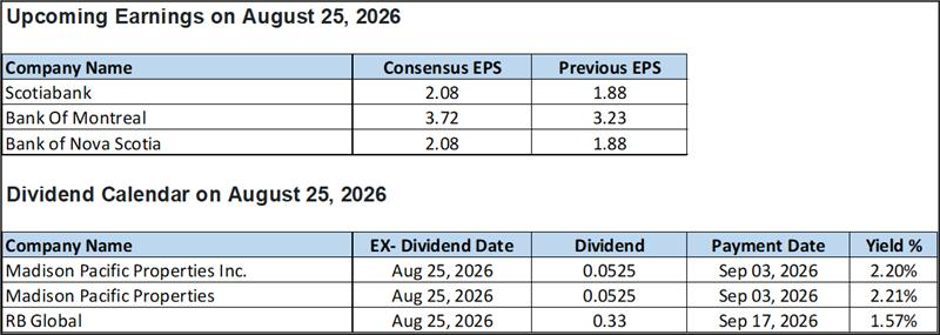
- Bank earnings season continues to be the dominant near-term catalyst, with BMO and Scotiabank both beating estimates; markets will look to the remaining Big Six banks reporting later this week for confirmation of the trend.
- The Canadian dollar weakened as the trade conflict intensified, though it remains up close to 2% over the past month, supported by elevated oil prices and broad U.S. dollar softness.
- Investors are also watching for the Bank of Canada's next policy signal amid the deteriorating trade backdrop, which raises the risk of further growth downgrades.
Commodity view - what will move the TSX
- Crude Oil: Oil prices are easing slightly from last week's sharp rally as traders take profits, though levels remain elevated on Strait of Hormuz shipping risk and stalled U.S.-Iran negotiations. Any escalation around new U.S. sanctions on Iran could quickly reverse the pullback and lift Canada's energy sector.
- Gold: Gold remains near its highest level since mid-May, supported by a weaker U.S. dollar, the Treasury's expanded debt buyback program, and safe-haven demand ahead of Fed Chair Warsh's Jackson Hole speech. Sustained strength continues to be a tailwind for TSX-listed miners.
- Silver: Silver continues to outperform gold on expectations of lower real interest rates and robust industrial and Investment demand.
- Copper: Copper is holding most of its recent gains but easing slightly as LME and SHFE inventories build, even as flooding at the Kamoa-Kakula complex in the DRC threatens to cut global supply materially this year.
Forex Watch
The Canadian dollar has come under renewed pressure as the trade conflict escalates.
- USD/CAD rose to roughly 1.386 on August 25, up from a three-month high for the loonie near 1.376 set on August 21, as the collapse of trade talks and new tariffs weighed on the currency.
- Despite the pullback, the Canadian dollar remains up about 1.9% over the past month, supported by elevated crude prices and broad U.S. dollar weakness tied to Treasury market intervention concerns.
- Markets are looking ahead to Fed Chair Kevin Warsh's Jackson Hole address on Friday for the next major catalyst for USD/CAD direction.
- Diverging Fed/Bank of Canada policy expectations, alongside the tariff dispute, continue to be the dominant drivers of near-term currency volatility.
What to watch today
Investors will closely monitor:
- Reaction to the U.S.-Canada tariff escalation and any signs of retaliatory measures from Ottawa
- Remaining Big Six Canadian bank earnings this week, following beats from BMO and Scotiabank
- Crude oil price action amid Strait of Hormuz shipping risk and pending U.S. sanctions on Iran
- Gold and copper trends as safe-haven and industrial-demand indicators
- Wednesday's U.S. July PCE inflation data and Nvidia earnings
- Fed Chair Kevin Warsh's Jackson Hole Symposium address on Friday
Market Outlook
Sentiment remains cautiously constructive but increasingly two-sided. Strong bank earnings and firm gold and copper prices are providing a genuine offset to a materially worse trade backdrop than markets had priced just a week ago. Financials should stay supportive following this week's beats, while materials and mining continue to benefit from safe-haven flows and industrial demand. Industrials, autos, and other tariff-exposed sectors are likely to remain volatile and headline-driven. Energy will continue to track Middle East developments closely. With Jackson Hole and the July PCE print both landing this week, alongside the tail end of bank earnings season, Volatility is likely to stay elevated into the weekend.
Final Takeaway
The TSX heads into Tuesday's session at a record high, having absorbed a significant escalation in U.S.-Canada trade tensions without derailing its uptrend — a testament to the offsetting strength in financials, gold, and copper. Record results from Scotiabank and a solid beat from BMO underscore resilient domestic banking fundamentals, even as tariff-exposed industrials and autos sell off sharply. With Fed Chair Kevin Warsh's Jackson Hole address, the July PCE report, and further bank earnings all due this week, investors should expect commodity prices, trade headlines, and Central Bank signals to remain the dominant swing factors for Canadian equities through the end of August.


 Nov 25, 2026

 Please wait processing your request...