
 AU
AU
 UK
UK
 US
US
 NZ
NZ
 IND
IND

 CA
CA

 Share
Share
 X (Formerly Twitter)
 Whatsapp
 Facebook
 LinkedIn
 Telegram
 Email This Article
 Copy Link
 Summarize with AI
 Chat GPT
 Perplexity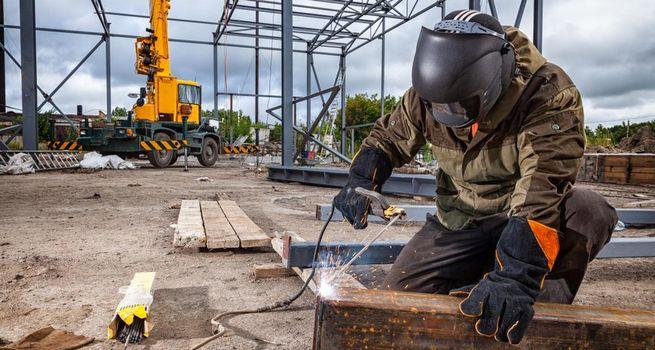
Article Highlights
ADF Group Inc (TSX: DRX) is a Quebec-based, North American fabricator of complex steel superstructures and connectors for the non-residential construction sector, with operations in both Canada and the United States.
The company reported a record order backlog of $561.1 million as at January 31, 2026, rising further to $645.8 million as at April 30, 2026 - a closely watched indicator of forward revenue visibility.
Fiscal 2026 (year ended January 31, 2026) revenue came in at $258.7 million, down from $339.6 million the prior year, while gross margin compressed to 23.1% from 31.6%, a decline the company largely attributed to the impact of US tariffs.
ADF acquired Quebec-based Groupe LAR in September 2025, returned capital through dividends and a completed share buyback, and continues to carry a founder-family dual-class voting structure.
The investment debate centres on construction-cycle exposure, steel input costs and tariffs, currency (CAD/USD) translation, labour availability and the durability of demand from data centres and US infrastructure - set against a strong backlog and an established North American footprint.
Introduction
ADF Group Inc (TSX: DRX) occupies a specialised, often overlooked corner of the Canadian public market: the design, engineering, fabrication and installation of complex steel superstructures for large non-residential construction projects. It is not a household name in the way a bank or a telecom is, yet the steel skeletons it produces stand behind some of the most demanding building and infrastructure projects across North America - office towers, airport terminals, industrial complexes, recreational facilities and transport infrastructure.
For investors, ADF Group represents a relatively pure-play exposure to the North American non-residential construction cycle, with a meaningful presence on both sides of the Canada-United States border. That cross-border footprint is both a strength and a complication. It opens the company up to large US projects and US infrastructure spending, but it also exposes it to currency translation, US trade policy and the swings of two construction markets at once.
This article offers an original, balanced analysis of ADF Group as a listed equity. It walks through what the company does, why it has drawn attention recently, the sector dynamics shaping its prospects, an editorial buy case, the specific watchpoints prudent investors should track, and the risks that could undermine the story. The aim is to inform, not to recommend. Nothing here should be read as personal financial advice, and the cautious, balanced tone reflects the reality that much depends on cyclical forces outside any single company's control.
Company Snapshot
What does ADF Group Inc do?
ADF Group Inc is a North American fabricator of steel superstructures. In plain terms, it designs the connections, fabricates the steel - including the application of industrial coatings - and, in the United States, installs the complex steel structures that form the load-bearing skeletons of large buildings and infrastructure. Its work also extends to heavy steel built-ups and to miscellaneous and architectural metals for the non-residential sector.
The company describes itself as one of the relatively few players able to take on highly technically complex 'mega' projects on fast-track schedules across the commercial, institutional, industrial and public sectors. That positioning - at the engineered, complex end of the steel fabrication spectrum rather than the commoditised end - is central to how management frames the business.
Where did the company come from?
ADF's roots run deep. The business was founded in 1956 by Giacomo 'Jacques' Paschini, an immigrant from the Friuli region of Italy, under the name 'Au Dragon Forge' in Sainte-Rose, Laval, Quebec. For its first decades the company concentrated on wrought iron works, largely for Quebec's residential construction industry.
In 1980, the founder passed control to the next generation - Jean, Pierre and Marise Paschini - who steered ADF toward the production of metal structures for the non-residential construction industry in Quebec and Ontario. That generational pivot set the company on its current path as a fabricator of large, engineered steel structures. The Paschini family remains central to the company today.
Where does ADF operate?
ADF is headquartered in Terrebonne, Quebec. According to company disclosures, the corporation operates three fabrication plants and three paint shops across Canada and the United States, together with a Construction Division in the United States that specialises in the installation of steel structures and related products.
Two facilities anchor the network. The Terrebonne plant in Quebec serves a territory extending from northeastern Canada through the central and southeastern United States; it has a 140-ton lifting capacity and ten production bays, one of which is fully automated. In the United States, ADF opened a fabrication plant in Great Falls, Montana, in 2014. Originally around 100,000 square feet on a 100-acre industrial lot, the company says the Great Falls facility has since tripled in size to roughly 630,000 square feet, with a 100-ton lifting capacity and a specialisation in conventional components as well as the production and assembly of modular steel components.
How is ADF Group structured as a public company?
ADF trades on the Toronto Stock Exchange under the ticker DRX. Its share capital is split into two classes: Subordinate Voting Shares carrying one vote each, and Multiple Voting Shares carrying ten votes each. As disclosed for the period as at January 31, 2024, Marise, Jean and Pierre Paschini together beneficially owned roughly 2.73% of the outstanding Subordinate Voting Shares and all of the Multiple Voting Shares - a combination representing approximately 89% of the voting rights.
This dual-class structure means founding-family control of the company is firmly entrenched, regardless of how many subordinate voting shares trade in the public market. Investors buying DRX should understand they are buying into a founder-controlled business, with the governance implications that carries.
Why ADF Group Is in Focus
A record order backlog
The most concrete reason ADF has drawn investor attention is its order backlog, which the company reports as a record. As at January 31, 2026, the backlog reached $561.1 million, up sharply from $293.1 million a year earlier. That figure included the orders of newly acquired Groupe LAR, which totalled $138.2 million, of which 57% was made up of Canadian contracts.
Momentum appeared to continue into the new fiscal year. The company reported an order backlog of $645.8 million as at April 30, 2026, up from the $561.1 million reported at the prior fiscal year-end. For a fabricator whose revenue depends on winning and executing large projects, a rising backlog is one of the clearest signals of forward visibility - though, as discussed later, backlog is not the same as guaranteed, evenly distributed revenue.
Contract announcements
ADF periodically announces new contract awards, and recent years have seen a series of announcements spanning both Quebec and the United States with sizeable headline values. These announcements feed directly into the backlog and help explain why the market follows the stock's order flow closely. As always, individual contract figures should be read as company disclosures rather than independently verified totals, and the timing of revenue recognition can vary.
An acquisition that expands the footprint
In September 2025, ADF completed the acquisition of Quebec-based Groupe LAR. Company disclosures indicate the transaction was finalised on September 18, 2025, and reference an acquisition value in the area of the mid-teens of millions of dollars. The deal added Groupe LAR's order book to ADF's backlog and broadened the company's reach within its core market. Acquisitions of this kind are notable because they can shift a fabricator's capacity, customer base and regional mix relatively quickly.
A reset year for revenue and margins
ADF's financial results have also kept the company in focus - for less uniformly positive reasons. For the fiscal year ended January 31, 2026, the company reported revenue of $258.7 million, down from $339.6 million the prior year. Gross margin as a percentage of revenue fell to 23.1% from 31.6%, a decline management largely attributed to the impact of US tariffs. More recently, the company reported revenue of $99.3 million for the first quarter ended April 30, 2026, against $55.5 million in the same quarter a year earlier - a sharp year-over-year increase at the top line.
That combination - a softer full-year result, compressed margins, but a strong quarterly rebound and a record backlog - is precisely what makes ADF an interesting case study. The story is neither uniformly bullish nor uniformly bearish, and reasonable investors can read the same data and reach different conclusions.
Sector Background and Market Context
How does the non-residential construction cycle drive ADF?
ADF's fortunes are tied to non-residential construction. Its products and services are aimed at five principal segments: office towers and high-rises, commercial and recreational buildings, airport facilities, industrial complexes, and transport infrastructure. These are large, capital-intensive projects whose pipelines expand and contract with the broader economic cycle, interest rates, financing availability and the confidence of project owners.
This cyclicality is the defining feature of the steel fabrication business. When economies expand and credit is accessible, project pipelines fill, fabricators compete for work and capacity can tighten. When economies cool, projects are delayed or cancelled, competition for a smaller pool of work intensifies, and pricing power erodes. ADF is not immune to this rhythm; it is shaped by it.
What role do US infrastructure and reshoring spending play?
Because ADF has substantial US operations, the trajectory of US construction and infrastructure investment matters greatly. Industry commentary heading into 2026 has pointed to a divided market: broad commercial construction activity slowed for much of 2025, even as data centres and energy infrastructure surged. A large share of contractors expect the data centre construction market to keep growing, and steel is a core component of building shells, server racks, containment systems, power housings and cooling equipment in these facilities.
Reshoring - the relocation of manufacturing back to North America - has been widely discussed as a structural tailwind for industrial construction. The evidence, however, is mixed. Some analysts caution that it is too early to call a reshoring 'boom', noting that US manufacturing construction spending has actually declined from its peak, with a pronounced slowdown in electronics and semiconductor fabrication. The clearer growth has been in data centres and power generation. For ADF, the practical question is whether the projects it can realistically win are growing in number and value - not whether reshoring is a popular theme.
How do steel input costs and tariffs affect fabricators?
Steel is both ADF's raw material and the essence of its product, so steel pricing and trade policy are central. In 2025, US steel and aluminium tariffs were raised significantly - commentary referenced rates moving to 25% and then to 50% on steel and aluminium, with coverage extended to derivative products including structural components and fasteners. The effective tariff rate on construction goods reportedly climbed to multi-decade highs.
For a cross-border fabricator, tariffs cut several ways. They can raise input costs, complicate project economics and squeeze margins - which is consistent with ADF attributing much of its fiscal 2026 gross margin compression to US tariffs. At the same time, surveys suggest contractors responded by raising bid prices and accelerating purchases, with many passing most or all tariff-related costs to project owners, though a minority absorbed them. The net effect on any individual fabricator depends on contract structures, the ability to pass through costs, and the timing of when steel is bought relative to when prices move.
Why does labour availability matter?
Skilled labour is a perennial constraint in construction and fabrication. Industry commentary repeatedly pairs tariffs with labour as the twin challenges facing contractors, even as demand from data centres climbs. For a fabricator that emphasises complex, technically demanding projects, access to skilled welders, fitters, engineers and installers is not a trivial input - it can shape how much work the company can take on and how efficiently it executes. Labour cost inflation can also weigh on margins independently of steel prices.
What Investors Should Know
Backlog is visibility, not certainty
ADF's record backlog is a genuine positive, but investors should understand what backlog does and does not represent. A backlog is the value of contracted work not yet delivered. It provides visibility into future revenue, but the conversion of backlog into revenue depends on project schedules, client decisions, site readiness and execution. Backlog can also be lumpy: a single large project can swing the figure materially, and revenue may not be recognised evenly across quarters. A high backlog is encouraging, but it is a starting point for analysis, not a guarantee of smooth, predictable earnings.
Margins can move sharply
The fiscal 2026 gross margin decline - to 23.1% from 31.6% - is a reminder of how quickly profitability can shift in this business. Margins in steel fabrication are sensitive to input costs, tariffs, project mix, competitive intensity, execution and the prices locked in when contracts were signed. A backlog won at one set of cost assumptions can become less profitable if input costs rise before the work is delivered. Investors should treat margin stability as something to be demonstrated over time rather than assumed.
The balance sheet and capital returns
Company commentary around fiscal 2026 indicated ADF maintained a higher cash position even after completing the Groupe LAR acquisition, and that it returned capital to shareholders. The company completed the buyback and cancellation of Subordinate Voting Shares totalling $9.0 million during the fiscal year ended January 31, 2026, under its normal course issuer bid. It also paid a dividend of $0.02 per share in May 2025 and announced a further semi-annual dividend of $0.02 per share. These are relatively modest cash returns, but they signal a willingness to return capital while investing in growth. Investors should monitor how capital allocation evolves - between dividends, buybacks, acquisitions and capacity investment - particularly through a cyclical downturn.
Currency exposure cuts both ways
With operations and projects in both Canada and the United States, ADF carries CAD/USD exposure. A stronger US dollar can flatter the Canadian-dollar value of US revenue and earnings; a weaker US dollar can do the reverse. Currency movements can therefore add or subtract from reported results independently of the underlying operating performance. This is a structural feature of cross-border industrials and one investors should factor into how they interpret quarter-to-quarter changes.
Founder control shapes governance
As noted, the Paschini family controls roughly 89% of the voting rights through the multiple voting shares. For some investors, founder control aligns long-term incentives and provides continuity. For others, dual-class structures concentrate decision-making and can limit the influence of minority shareholders on matters such as board composition, major transactions and capital allocation. Neither view is inherently right; the point is that DRX is a controlled company, and that should be part of any investment assessment.
Buy Case (editorial view only, not personal financial advice)
The following is general editorial commentary on the bullish argument for ADF Group. It is not a recommendation, and it deliberately sits alongside the risks set out later. Investors should weigh both.
A specialised niche with real barriers
The strongest part of the bull case is ADF's positioning at the complex, engineered end of steel fabrication. The company emphasises its ability to handle technically demanding mega projects on fast-track schedules - work that requires engineering depth, heavy-lift capacity, automation and proven execution. These are not trivial capabilities to replicate, and they can act as a barrier that keeps the field of credible bidders for the largest projects relatively narrow.
A record backlog provides a runway
A backlog that climbed to $561.1 million at fiscal year-end and then to $645.8 million by April 30, 2026, gives the company a substantial runway of contracted work. Even allowing for the caveats around timing and lumpiness, a backlog of this scale relative to recent annual revenue suggests the company has line of sight to a meaningful volume of future activity. For a cyclical business, entering a period of uncertainty with a full order book is a genuine advantage.
Cross-border exposure to large US projects
ADF's US fabrication and construction operations give it access to the large American market at a time when certain pockets - notably data centres and energy infrastructure - are expanding. A fabricator with established US capacity and a track record of complex projects is positioned to compete for work in segments where steel-intensive structures are essential. If US infrastructure and selected industrial investment remain firm, ADF's footprint could be an asset.
Disciplined capital returns
The combination of a completed buyback, dividends and an acquisition funded while maintaining a healthy cash position points to a management team attempting to balance growth with capital discipline. For investors who value shareholder returns alongside reinvestment, that balance is part of the appeal - provided it is sustained through the cycle.
The editorial bottom line on the buy case
Taken together, the bull case rests on a specialised operator with a record backlog, a genuine North American footprint and a willingness to return capital. The honest qualification is that every element of this case is cyclical and partly outside the company's control. The buy case is credible, but it is a cyclical-industrial case, not a defensive one - and it should be sized and assessed accordingly by each investor on their own terms.
Key Investor Watchpoints
For those following ADF Group, a handful of metrics and developments are likely to matter more than any single quarter's headline. These are the watchpoints to track over time.
Order backlog trajectory
Backlog is the single most-watched indicator for this company. Investors should track not just the absolute level but the direction and composition - how much is Canadian versus US, how concentrated it is in a few large projects, and how quickly it is converting into revenue. A backlog that keeps growing while converting steadily is the ideal; a stalling or shrinking backlog would be an early warning.
Gross margin trend
Given the sharp move in fiscal 2026, the path of gross margin is critical. The key questions are whether margins stabilise, whether tariff-related pressures ease or persist, and whether the company is winning new work at healthier margins than the contracts now rolling through. Margin recovery would strengthen the bull case; continued compression would undermine it.
Tariff and trade-policy developments
Because management explicitly linked margin pressure to US tariffs, changes in US trade policy on steel and derivative products are a direct input to ADF's economics. Investors should watch for tariff escalation, de-escalation or exemptions, and for how ADF's contract terms allow it to pass through cost changes.
US construction demand, especially data centres
The health of US non-residential construction - and the durability of the data centre and energy infrastructure boom in particular - will shape the opportunity set. A broadening of demand beyond data centres would be encouraging; a narrowing or a cooling of that segment would reduce the pool of attractive projects.
Integration of Groupe LAR
The Groupe LAR acquisition added backlog and capacity, but acquisitions carry integration risk. Investors should look for evidence that the combination is delivering the expected benefits without disrupting execution or diluting margins.
Capital allocation and the balance sheet
How ADF deploys cash - between dividends, buybacks, further acquisitions and capacity investment - will signal management's priorities and confidence. Maintaining balance-sheet strength through a potential downturn is especially important for a cyclical fabricator.
Risks to Watch
Cyclicality and demand risk
The foremost risk is cyclicality. ADF's revenue depends on large non-residential projects, which are sensitive to economic growth, interest rates, financing conditions and owner confidence. A downturn in construction activity could shrink the pipeline, intensify competition for fewer projects and pressure both volumes and pricing. A strong current backlog mitigates near-term risk, but it does not eliminate the cyclical nature of the business.
Steel input costs and tariffs
Steel is central to ADF's cost base, and recent results show how directly tariffs and input-cost movements can hit margins. Further tariff changes, steel price volatility or an inability to pass through cost increases on existing contracts could continue to weigh on profitability. This is a structural exposure for any steel fabricator and a recurring theme for ADF specifically.
Margin and execution risk
Complex, fast-track mega projects are demanding to deliver. Cost overruns, scheduling problems, labour shortfalls or execution missteps on a large contract can damage profitability and reputation. The fiscal 2026 margin decline underscores how quickly profitability can move, even without any single project failing.
Labour availability and cost
A shortage of skilled labour - or rising labour costs - could constrain how much work ADF can take on and how efficiently it executes. In a tight labour market, even a full order book is only as valuable as the company's ability to staff and deliver it.
Currency risk
CAD/USD movements can swing reported results independently of operating performance. A material shift in the exchange rate could flatter or depress earnings in any given period, adding volatility to the numbers investors see.
Concentration and project lumpiness
Revenue tied to a relatively small number of large projects can be lumpy. The loss, delay or cancellation of a major contract - or a gap between finishing one large project and ramping another - can create uneven results from quarter to quarter and year to year.
Governance and minority-shareholder risk
The dual-class structure concentrates voting control with the founding family. While this can support long-term stewardship, it also limits the influence of minority shareholders and means key decisions ultimately rest with the controlling shareholders. Investors uncomfortable with limited voting influence should weigh this carefully.
Balance-sheet and acquisition risk
While recent commentary pointed to a healthy cash position, acquisitions and capacity investment consume capital. A cyclical downturn arriving while the company is investing for growth could test the balance sheet. Integration of acquired businesses also carries the usual execution risks.
What Could Happen Next?
Predicting the path of a cyclical industrial is inherently uncertain, and what follows is scenario thinking rather than forecasting. No outcome is guaranteed, and the future will depend on factors well beyond the company's control.
A constructive scenario
In a constructive scenario, US non-residential demand - led by data centres and energy infrastructure - holds up, ADF converts its record backlog into revenue at improving margins as tariff pressures ease or are passed through, and the Groupe LAR acquisition delivers on its rationale. In that world, the company's specialised positioning and full order book translate into steadier results, and continued capital returns reinforce investor confidence. This scenario is plausible, but it assumes several favourable conditions align.
A challenging scenario
In a more challenging scenario, the construction cycle turns, project starts slow, tariffs and steel costs continue to pressure margins, and labour constraints complicate execution. A backlog-rich company can still face a difficult stretch if new orders dry up, margins stay compressed and large projects experience delays. In that environment, the cyclical and input-cost risks discussed above would dominate the narrative.
The most likely reality: somewhere in between
The realistic expectation is that ADF's results will continue to reflect the push and pull of these forces - a strong backlog providing visibility, offset by margin and cost pressures, with currency and project timing adding noise. Investors are likely to learn most by watching the watchpoints above quarter by quarter rather than anchoring to any single projection.
Long-Term Outlook
Over a longer horizon, the case for ADF Group rests on a few durable themes. North America will continue to need large, complex steel structures for buildings and infrastructure, and the set of fabricators able to deliver the most demanding projects on fast-track schedules is not unlimited. If ADF maintains its engineering depth, heavy-lift and automation capabilities, and cross-border footprint, it should remain a credible competitor for significant projects.
Structural demand drivers - data centres, energy infrastructure, transport infrastructure and selected industrial investment - could provide a multi-year pipeline, even if no single theme delivers on the most optimistic expectations. ADF's challenge over the long term is the perennial challenge of cyclical industrials: to manage costs, margins and the balance sheet well enough that it emerges from the inevitable downturns intact and ready to capitalise on the upturns.
Equally, the long-term outlook is not one-directional. Persistent tariff pressure, a structurally weaker construction cycle, chronic labour shortages or missteps on large projects could all erode the company's economics over time. The dual-class structure means the strategic direction will continue to be set by the controlling family, for better or worse. A balanced long-term view acknowledges both the durability of the niche and the cyclical, input-sensitive nature of the business - and resists the temptation to extrapolate any single strong or weak year indefinitely.
Conclusion
ADF Group Inc (TSX: DRX) is a specialised North American steel superstructure fabricator with deep roots, a record order backlog, a meaningful US footprint and a founder-controlled governance structure. Its recent results capture the dual nature of the business: a record backlog and a strong quarterly revenue rebound on one hand, and a softer full-year revenue figure with sharply compressed margins - largely attributed to US tariffs - on the other.
The investment debate is ultimately about how an investor weighs a specialised niche and strong forward visibility against the cyclicality, input-cost sensitivity, currency exposure and governance features that come with it. The buy case is credible but cyclical; the risks are real but partly mitigated by the backlog. For those willing to do the work, ADF offers a relatively pure exposure to the North American non-residential construction cycle - with all the opportunity and volatility that implies.
As with any single stock, the appropriate response is independent research, an honest assessment of one's own risk tolerance and time horizon, and, where helpful, professional advice. The facts discussed here are drawn from company disclosures and industry commentary; the interpretation is editorial; and none of it is a recommendation to act.

 Jun 26, 2026



_06_25_2026_15_20_45_132372.jpg)
 Please wait processing your request...