
 NZ
 UK
 US
 AU
 IND

 CA

 Share
 X (Formerly Twitter)
 Whatsapp
 Facebook
 LinkedIn
 Telegram
 Email This Article
 Copy Link
 Summarize with AI
 Chat GPT
 Perplexity

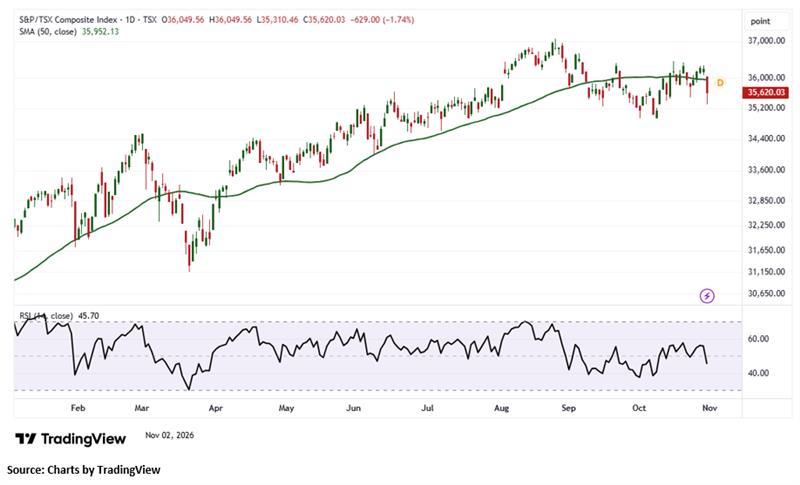
The S&P/TSX Composite index is expected to commence trading on a positive note, supported by strength in the energy sector. However, from a technical perspective, the index continues to trade below its 50-day Simple Moving Average (SMA), which remains a key dynamic resistance level and may limit the near-term recovery. Immediate support is positioned near 35,400, a crucial level for maintaining the current technical structure. Sustained trading above this level could improve market sentiment and attract fresh buying interest, potentially driving the index towards the recent high near 35,900. Conversely, a decisive break below 35,400 could undermine the recovery attempt, intensify selling pressure, and expose the index to further downside risks.
Global Macro Backdrop
Federal Reserve and U.S. inflation: The outlook for U.S. Monetary Policy remains a major influence on global financial conditions. Investors will be assessing the latest available inflation, employment and business-activity indicators to determine whether price pressures are easing sufficiently to permit lower rates without undermining economic growth. Persistent Inflation could keep Treasury yields elevated and put pressure on Equity valuations, while moderating inflation alongside resilient Demand could support risk appetite.
The direction of real yields and the U.S. dollar will be particularly important for gold, industrial metals and growth-oriented equities. Upcoming U.S. data and Federal Reserve commentary may influence expectations for the pace of future policy adjustments.
Bank of Canada and the domestic economy: Canadian inflation, employment, consumer spending and Business Investment remain central to the domestic policy outlook. A cooling economy could strengthen expectations for monetary easing, while persistent price pressures could limit the scope for lower rates. These developments matter for mortgage-sensitive businesses, bank Credit quality, corporate borrowing costs and the valuation of dividend-paying stocks.
China and global manufacturing: China remains a critical influence on industrial Commodity demand. Manufacturing activity, infrastructure investment and construction trends can affect copper, nickel and other base metals, with direct implications for Canadian miners. Improving demand expectations could support industrial commodities, while weaker activity or continued concerns about the property sector could weigh on prices.
Global bond yields and risk appetite: Government bond yields remain a key transmission channel between macroeconomic developments and equity valuations. Higher yields can pressure long-duration technology stocks and increase financing costs for utilities and real estate companies. Lower yields may provide relief, although a decline caused by Recession concerns could be negative for cyclical sectors.
New-month positioning: The start of November may bring portfolio adjustments, fresh allocations and reassessment of sector exposures. Such flows can influence individual stocks, although the direction and magnitude of any positioning-related effects should not be assumed without market evidence.
Canadian Market Focus
The TSX Composite begins November with the balance between commodity-linked Earnings and domestic interest-rate sensitivity remaining central to its outlook.
Energy and materials companies provide substantial exposure to global commodity markets. However, underlying price movements are only one part of the investment picture. Production volumes, operating costs, capital expenditure, balance-sheet strength and management guidance will determine how effectively companies convert commodity prices into sustainable cash flow.
Canadian banks remain sensitive to household finances, business lending, deposit costs and credit-loss provisions. Stable employment and consumer spending would help support credit quality, whereas weaker Loan demand or rising borrower stress could create pressure on earnings. The Yield Curve and funding costs will also influence expectations for bank profitability.
The Canadian dollar remains another important variable. A weaker loonie can increase the Canadian-dollar value of overseas earnings for companies with substantial foreign operations, including some resource producers. However, it can also raise the cost of imported goods and inputs. Relative U.S. and Canadian interest-rate expectations, oil prices and global risk appetite will continue to influence currency direction.
Corporate earnings and forward guidance remain important sources of stock-specific volatility. Investors should focus on Revenue quality, Margin trends, free cash flow, capital discipline and balance-sheet resilience. Companies with credible earnings growth and strong cash generation may be better positioned if market conditions become more challenging.
Commodity view — what will move the TSX
- Crude: Crude oil fell 4% to below $100 per barrel on Monday, erasing gains from last week as investors weighed signs of diplomatic efforts to end the Middle East conflict against fears of renewed US military action against Iran.
- Gold: Gold prices climbed above $3,900 an ounce on Monday, recovering modestly from one-year lows as declining oil prices eased concerns over inflation and potential Interest Rate increases.
- Silver: Silver climbed toward $50 an ounce on Monday, recovering modestly from near one-year lows as declining oil prices eased concerns over inflation and potential interest rate increases.
- Copper: Copper futures climbed toward $6.50 per pound on Monday, snapping a two-day decline as the selloff in technology stocks driven by AI concerns lost momentum, lifting sentiment toward the metal.
Forex Watch
USD/CAD: The Canadian dollar remains sensitive to relative U.S. and Canadian economic performance, central-bank expectations, Crude Oil prices and global risk sentiment. A stronger loonie can reduce the translated value of foreign earnings for some exporters, while a weaker currency may support those earnings but increase imported-input costs.
U.S. dollar: Broad dollar strength can create a headwind for dollar-denominated commodities, although supply-demand fundamentals and geopolitical developments can override the relationship. A softer dollar may support gold and selected industrial metals if other market conditions are favourable.
Government bond yields: U.S. Treasury and Canadian government yields remain important for the TSX's interest-sensitive sectors. Lower yields can improve the relative appeal of dividend-paying stocks and ease refinancing pressure, while higher yields can weigh on valuations and increase borrowing costs.
Key signal: Watch USD/CAD alongside crude oil and government bond yields. Together, these indicators can help investors assess whether conditions favour resource producers, domestic financials or rate-sensitive equities.
Key Market Drivers Today
- U.S. economic data and Federal Reserve expectations: Verified inflation, employment and activity releases that could alter the expected path of interest rates.
- Canadian inflation and growth: Developments affecting Bank of Canada expectations, household finances and domestic demand.
- Government bond yields: Changes in U.S. and Canadian yields, particularly for financials, technology, utilities and real estate.
- Crude oil: Supply developments, inventory trends and changes in global demand expectations.
- Gold and silver: Real yields, U.S. dollar movements and safe-haven demand.
- Copper and other base metals: Chinese economic conditions, manufacturing activity and supply-demand balances.
- USD/CAD: Currency movements affecting commodity sentiment and internationally exposed corporate earnings.
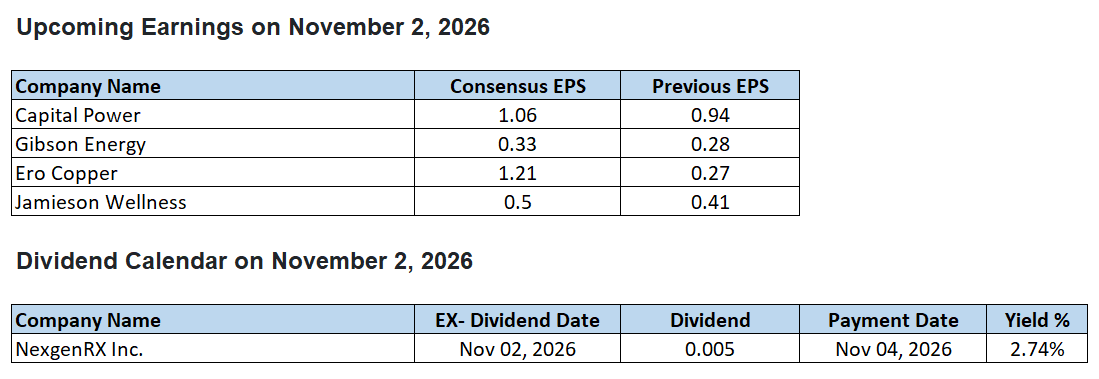
- Corporate earnings: Results, margin trends, forward guidance, Capital Expenditure and shareholder-return announcements.
- New-month positioning: Portfolio adjustments that may influence sector performance independently of fundamental changes.
- Global risk sentiment: Developments influencing confidence in economic growth and demand for cyclical versus defensive investments.
Market Outlook
The TSX Composite's near-term outlook will depend on whether commodity-sector support and resilient corporate earnings can offset uncertainty surrounding global growth and interest rates.
A constructive scenario would combine stable or easing bond yields, resilient economic activity and supportive oil and metal prices. These conditions could benefit energy and materials shares while helping financials and rate-sensitive sectors maintain investor interest. Broad participation across the index would provide a stronger signal of improving sentiment than gains concentrated in a small number of resource companies.
A less favourable scenario would involve rising yields, a stronger U.S. dollar and weakening industrial demand. This combination could pressure growth-oriented equities, utilities, real estate and base-metal producers. Deteriorating domestic credit conditions would add another challenge for Canadian financials.
As November begins, investors should assess whether commodity prices, currency movements and bond yields are sending consistent signals. Earnings quality, free Cash Flow and balance-sheet resilience remain important indicators of corporate strength in an uncertain macroeconomic environment.
Bottom line: The TSX's direction on November 2 will be shaped by global interest-rate expectations, commodity prices, currency movements and company fundamentals. Crude oil, gold, copper, USD/CAD, government bond yields and earnings guidance are the principal variables to monitor. A measured, fundamentals-led approach focused on cash-flow quality, financial resilience and sector-specific risks remains appropriate as investors enter a new month.


 Nov 24, 2026





 Please wait processing your request...