
 NZ
 UK
 US
 AU
 IND

 CA

 Share
 X (Formerly Twitter)
 Whatsapp
 Facebook
 LinkedIn
 Telegram
 Email This Article
 Copy Link
 Summarize with AI
 Chat GPT
 Perplexity

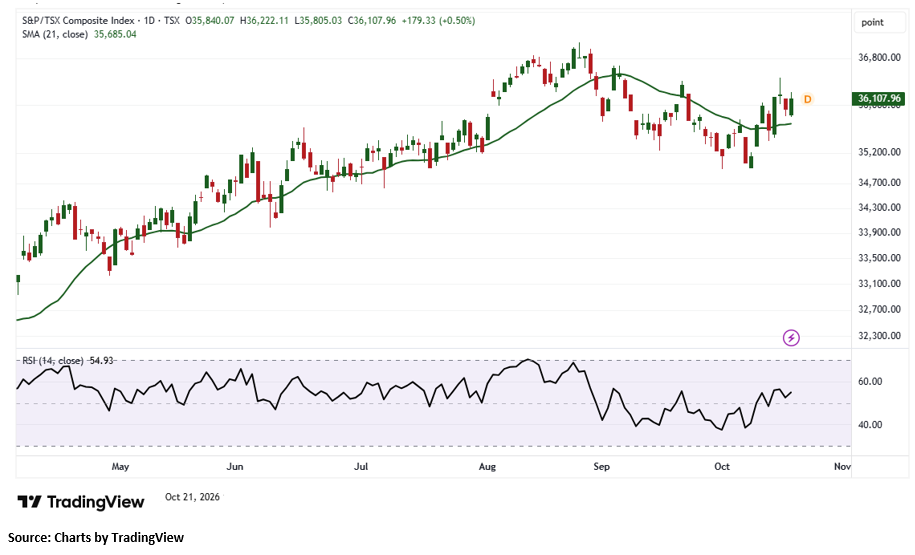
The S&P/TSX Composite index is expected to commence trading on a positive note, supported by gains across the technology and healthcare sectors. However, the index remains below its 21-day Simple Moving Average (SMA), which continues to act as a key dynamic resistance level, indicating that the broader technical outlook remains cautious. Immediate support is located near 35,900, a critical level for maintaining the ongoing recovery attempt. Holding above this level could improve market sentiment and attract fresh buying interest, potentially driving the index towards the recent high near 36,450. On the downside, a decisive break below 35,900 could increase selling pressure, undermine the near-term recovery, and expose the index to further downside risks.
Global Macro Backdrop
Monetary policy remains central to the global Investment outlook. Investors continue to assess how the Federal Reserve will balance Inflation risks against economic-growth and employment conditions following its latest policy decision. Incoming economic data and central-bank commentary will remain important in determining expectations for future rate adjustments.
U.S. Treasury yields are a key transmission channel for global markets. Lower yields can support growth-oriented equities and precious metals by reducing discount rates and the Opportunity cost of holding non-yielding assets. Conversely, a renewed rise in yields could weigh on Equity valuations, tighten financial conditions and strengthen Demand for the U.S. dollar.
The global growth outlook remains equally important. U.S. economic activity affects demand for Canadian exports, while China's manufacturing, infrastructure and property-related activity influence demand for industrial commodities. Any deterioration in global demand expectations could create headwinds for cyclical stocks and Commodity producers.
For Canada, the Bank of Canada’s policy outlook remains tied to domestic inflation, labour-market conditions and economic growth. Differences between Canadian and U.S. interest-rate expectations could influence the Canadian dollar, government-bond yields and the relative attractiveness of Canadian financial assets.
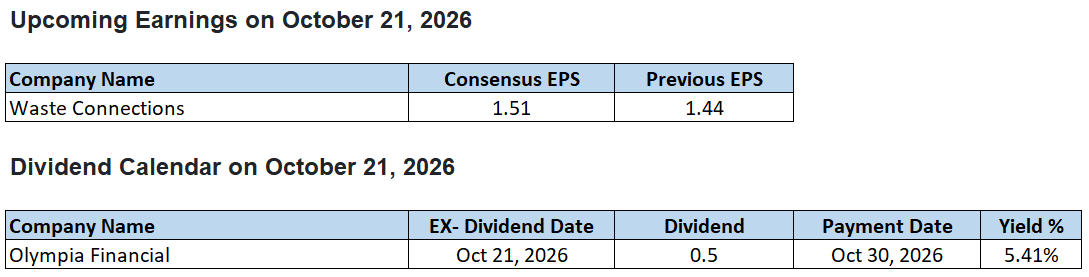
Investors should also remain attentive to economic releases and corporate Earnings updates during the October reporting period, as surprises in inflation, Business activity or company guidance could shift market expectations.
Canadian Market Focus
The TSX remains particularly exposed to movements in energy, materials and financials. This sector composition makes commodity prices, global demand and interest-rate expectations especially important for the benchmark.
Energy companies remain sensitive to crude prices and the outlook for global consumption. Materials stocks face a more varied set of influences: gold producers are exposed to real yields and safe-haven demand, while copper and diversified miners depend more heavily on industrial activity and Chinese demand.
Canadian banks remain an important focus as investors assess Loan growth, Credit quality, net interest margins and the outlook for households and businesses. The trajectory of borrowing costs and economic activity will be central to evaluating the sector's earnings prospects.
The Canadian dollar adds another layer to the outlook. A weaker CAD can increase the Canadian-dollar value of U.S.-dollar revenues earned by resource producers, although higher imported-equipment costs, foreign-currency expenses and hedging arrangements can offset some of the benefit.
Commodity view — what will move the TSX
- Crude: Crude oil climbed to around $100 a barrel on Wednesday, its highest level since September 17 as continued attacks in the Strait of Hormuz heightened concerns over global Supply security.
- Gold: Gold prices fell toward $4,100 per ounce on Wednesday, marking a fourth straight session of declines as elevated oil prices intensified inflation concerns and strengthened expectations for Interest Rate hikes.
- Silver: Silver fell toward $57.5 an ounce on Wednesday, paring gains from the previous session as rising oil prices intensified inflation concerns and strengthened expectations for interest rate hikes.
- Copper: Copper futures held below $6.60 per pound on Wednesday, hovering near one-month lows as expectations grew that the US may abandon proposed tariffs on refined copper imports.
Forex Watch
The Canadian dollar remains influenced by commodity prices, the relative outlook for Canadian and U.S. interest rates, and broader demand for the U.S. dollar.
Higher U.S. yields or renewed dollar strength could put pressure on CAD. Conversely, stronger crude and metals prices could provide support, although domestic economic concerns or changing interest-rate expectations may offset that effect.
For TSX-listed companies, currency movements have different implications. Resource exporters with substantial U.S.-dollar revenues may benefit from a weaker Canadian dollar, while companies dependent on imported equipment or foreign-currency inputs may face higher costs.
Investors will continue to monitor USD/CAD as an indicator of cross-border rate expectations and a potential influence on corporate earnings translation.
Key Market Drivers Today
- Federal Reserve outlook: The implications of the Fed's latest policy decision and expectations for future rate adjustments remain central to global financial conditions.
- Bank of Canada expectations: Domestic inflation, employment and growth conditions will influence the outlook for Canadian interest rates.
- Bond yields: U.S. and Canadian government yields remain important for equity valuations, financing costs and rate-sensitive sectors.
- Crude oil: Supply developments, inventory trends and global demand expectations remain key for Canadian energy stocks.
- Gold and silver: Precious metals remain sensitive to real yields, the U.S. dollar and demand for defensive assets.
- Copper and base metals: Chinese industrial activity, Manufacturing conditions and supply trends remain important for Canadian miners.
- Canadian dollar: USD/CAD movements could affect exporters, resource producers and companies with international operations.
- Global market sentiment: Developments in U.S., European and Asian markets may influence the tone at the Toronto open.
- Earnings and economic data: Corporate updates and incoming economic indicators could change expectations for growth, profitability and sector leadership.
Market Outlook
The TSX approaches Wednesday’s session with commodity-market direction and monetary-policy expectations remaining the principal cross-market influences. Energy and materials could provide support if crude and metals prices remain firm, while financials will continue to reflect expectations for Canadian economic activity, credit conditions and interest rates.
Bond yields and the U.S. dollar remain particularly important for technology, utilities, real estate and precious metals. Meanwhile, the Canadian dollar could amplify or offset commodity-driven moves for exporters, depending on the currency exposure and cost structure of individual companies.
Investors will also be assessing whether global growth can sustain demand for industrial commodities as the fourth quarter progresses. Developments in the United States and China remain particularly relevant for Canada's export-oriented and resource-intensive sectors.


 Nov 23, 2026





 Please wait processing your request...