
 NZ
 UK
 US
 AU
 IND

 CA

 Share
 X (Formerly Twitter)
 Whatsapp
 Facebook
 LinkedIn
 Telegram
 Email This Article
 Copy Link
 Summarize with AI
 Chat GPT
 Perplexity
Highlights
Bayhorse Silver Inc (CVE: BHS) is a micro-cap silver explorer-developer focused on re-opening the past-producing, high-grade Bayhorse Silver Mine in Baker County, Oregon, USA.
The project carries a historical NI 43-101 inferred resource of 292,300 tons at 21.65 ounces per ton (673 g/t) silver, for roughly 6.3 million ounces of contained silver, plus copper, zinc and antimony credits.
Antimony, present in the mine's concentrate, is a recognised critical mineral, adding a strategic angle at a time of tight non-Chinese supply and elevated prices.
Management has guided toward an Oregon operating permit and a phased restart, but the company remains pre-revenue at scale and dependent on permitting, financing and metal prices.
BHS is a highly speculative micro-cap: thin liquidity, dilution risk and development uncertainty mean outcomes range widely, and the shares are not suitable for risk-averse investors.
Introduction
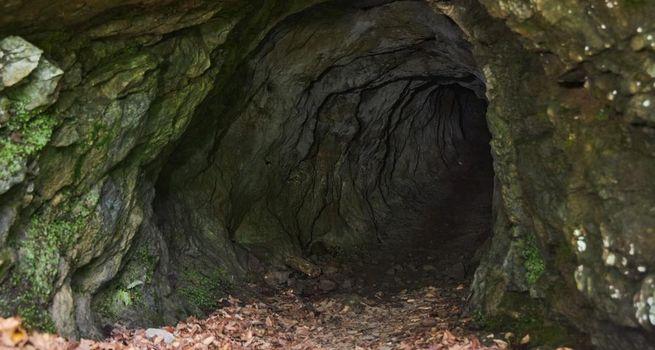
Bayhorse Silver Inc, which trades on the TSX Venture Exchange under the ticker CVE: BHS, is one of a small cluster of Canadian-listed junior resource companies trying to turn a historic, high-grade mine into a modern producer. The company's flagship asset is the past-producing Bayhorse Silver Mine in eastern Oregon, a property that produced high-grade silver before being shut in the mid-1980s when the metal's price collapsed.
What makes Bayhorse interesting to some investors is the combination of grade, location and metal mix. The Oregon mine is described by the company as a high-grade silver system that also carries copper, zinc and antimony. Antimony, in particular, has moved from obscurity to the front pages of mining coverage because it is now treated as a critical mineral in the United States, and because China's tightening grip on antimony exports has reshaped the global market.
That said, this is emphatically a speculative, micro-cap story. Bayhorse is not a producing major with steady cash flow, a diversified asset base and an investment-grade balance sheet. It is a small explorer-developer whose value depends on a sequence of events that have not yet fully played out: securing permits, financing a restart, demonstrating that historical grades translate into commercial production, and selling into favourable silver and antimony markets.
This article offers an original, balanced look at Bayhorse Silver. It walks through the company snapshot, why the stock is in focus, the broader sector backdrop, what investors should understand, a clearly editorial buy case, the watchpoints that matter most, the risks, and several scenarios for what could happen next. Throughout, the tone is deliberately cautious. Where hard data is limited, the language reflects that, and nothing here should be read as a forecast or a recommendation.
Company Snapshot
Bayhorse Silver Inc is a junior natural-resource company engaged in the acquisition, exploration and development of mineral properties, with its principal focus in the United States. Its core asset is a 100% interest in the Bayhorse Silver Mine, located in Baker County, Oregon, near the Oregon-Idaho border.
What does Bayhorse Silver own?
The company's flagship is the Bayhorse Silver Mine, a past-producing, high-grade underground silver mine. Bayhorse reports a National Instrument 43-101 inferred mineral resource of 292,300 tons grading 21.65 ounces per ton (673 grams per tonne) silver, equivalent to approximately 6.3 million ounces of contained silver. The mineralisation is also reported to contain copper, zinc and antimony, which the company frames as potential by-product or co-product credits.
Importantly, an inferred resource is the lowest-confidence resource category under NI 43-101. It is not a mineral reserve, it has not been demonstrated to be economically mineable through a feasibility study, and it should be treated as an early-stage estimate rather than a bankable production figure.
Beyond the Oregon mine, Bayhorse has historically held or optioned additional exploration interests in the United States and Canada, including claims in Idaho and an option on the Brandywine silver-gold property in British Columbia, Canada. The company also operates a milling and processing facility in Idaho intended to treat concentrate from the Bayhorse mine. Investors should always confirm the current asset portfolio against Bayhorse's latest public filings, because junior explorers frequently add, drop or restructure exploration options over time.
Where is the company in its lifecycle?
Bayhorse sits at the explorer-to-developer transition. It has a defined inferred resource, surface infrastructure, a mill, and a multi-year programme of sampling, metallurgical work and permitting. It is pursuing an operating permit to resume mining under Oregon Department of Geology and Mineral Industries (DOGAMI) guidelines. What it does not yet have is sustained commercial production at scale or the consistent revenue that comes with it. In other words, the equity is a bet on execution, not a claim on existing cash flow.
Who runs the company and how is it financed?
Bayhorse is led by a management team headed by chief executive Graeme O'Neill, who has been closely associated with the project's long campaign to advance the Oregon mine. As is common in the junior-mining space, insiders have participated in financings, which can align management with shareholders but also concentrates the company's fortunes around a small group of individuals. Investors evaluating any micro-cap should weigh the experience, track record and incentives of the people steering it, because in companies this size leadership decisions have an outsized effect on outcomes.
On the financing side, Bayhorse has repeatedly tapped equity markets to fund its activities, including brokered offerings and private placements, with proceeds directed toward mine and mill working capital, exploration and general corporate purposes. This pattern is normal for a developer without production revenue, but it underscores a simple truth: the company's progress is paced by its ability to keep raising capital on tolerable terms. When silver sentiment is strong, that capital tends to be available; when it is weak, financing windows can close quickly. Prospective investors should therefore track not only the asset but also the cadence, size and pricing of each raise.
Why Bayhorse Silver Is in Focus
Several threads have combined to put Bayhorse Silver on the radar of speculative resource investors. None of them guarantees success, but together they explain why the name attracts attention disproportionate to its small size.
A high-grade, past-producing silver asset
High grade is the single most compelling feature of the Bayhorse story. A reported inferred grade above 21 ounces per ton is well above the grade of many bulk-tonnage silver deposits. For a small company, high grade matters because it can, in principle, allow meaningful metal output from a modest mining and milling operation, lowering the upfront capital intensity compared with a large, low-grade open pit. The fact that the mine produced historically also means some of the geological risk of whether silver is present has already been answered.
Antimony as a critical-mineral angle
The second thread is antimony. The Bayhorse concentrate is reported to contain antimony, which the company has estimated could make up a meaningful share of the concentrate. Antimony is used in flame retardants, lead-acid batteries, ammunition and a range of defence and industrial applications. It sits on the United States critical-minerals list, and the supply chain is heavily concentrated in China.
When China introduced antimony export controls in 2024, prices rose sharply and Western buyers began looking harder for non-Chinese supply. Bayhorse has highlighted metallurgical testing work, including a reported high-recovery antimony leach test conducted with an engineering partner, as evidence that the antimony in its concentrate could become a saleable product rather than a penalty element. If that thesis holds, antimony credits could improve project economics; if it does not, antimony is simply a contaminant to be managed.
Silver's strong macro backdrop
The third thread is silver itself. Silver has had a powerful run, supported by a multi-year structural supply deficit, strong industrial demand from solar and electronics, and its traditional role as a precious-metal and inflation hedge. A higher silver price lifts the theoretical value of any in-ground silver resource and improves the appeal of restart stories. It also makes financing easier to obtain, because investors are more willing to fund silver developers when the metal is in favour. The flip side, of course, is that silver is volatile, and sentiment can reverse quickly.
Corporate activity and newsflow
Finally, Bayhorse generates a steady stream of news: sampling results, metallurgical updates, geophysical surveys, permitting progress and financings. For a micro-cap, frequent newsflow keeps the story in front of retail investors and can drive short-term trading activity. It also means investors must read carefully and distinguish between genuine value-adding milestones and routine operational updates.
A favourable mining jurisdiction
Location is an underrated part of the story. The Bayhorse mine sits in the United States, a jurisdiction generally regarded as politically stable with established mining law and property rights. For investors who have grown wary of resource nationalism, expropriation risk or unstable fiscal regimes in some emerging markets, a domestic North American asset carries a certain reassurance. The trade-off is that United States permitting and environmental compliance can be rigorous and time-consuming, so jurisdictional safety comes with its own procedural demands. On balance, though, a high-grade silver and critical-minerals project located in the American West is the kind of asset that aligns with current Western policy priorities around securing domestic supply chains.
It is also worth noting the proximity of the company's Oregon mine to its Idaho milling facility. Co-locating mining and processing within a single regional footprint can, in principle, simplify logistics and reduce the cost and complexity of trucking material long distances. Whether that theoretical advantage translates into real operating efficiencies will only become clear once the operation is running at a steady state, but it is a structural feature of the project worth keeping in mind.
Sector Background and Market Context
To understand Bayhorse, it helps to step back and look at the markets it sells into and the universe of companies it belongs to.
How does the silver market work?
Silver is a hybrid metal. Roughly half of demand is industrial, used in solar panels, electronics, electrical contacts and a growing list of green-technology applications. The other half is investment and jewellery demand, where silver behaves like a junior cousin of gold. This dual nature makes silver more volatile than gold: it benefits from both industrial growth and safe-haven flows, but it can also fall hard when either driver weakens.
In recent years, analysts have pointed to a persistent structural deficit, where annual silver demand exceeds newly mined and recycled supply, drawing down above-ground stocks. A sustained deficit is supportive for prices over time, but it does not move in a straight line, and silver remains one of the more turbulent major metals. For a developer like Bayhorse, the prevailing silver price directly affects project economics, financing conditions and investor appetite.
Why does antimony matter now?
Antimony has become a strategic talking point. It is on critical-mineral lists in the United States and other Western economies, partly because supply is concentrated in China and a handful of other producers. China's introduction of antimony export controls triggered a dramatic price spike and a scramble for alternative supply. Defence applications add a national-security dimension, and Western governments have funded efforts to rebuild domestic antimony capacity.
For Bayhorse, this backdrop is a potential differentiator. A North American operation that can produce a domestic, non-Chinese source of antimony as a by-product of silver mining fits neatly into the critical-minerals narrative. The caveat is that antimony markets are small, opaque and volatile, and the value of Bayhorse's antimony depends on recoveries, concentrate quality, off-take arrangements and prevailing prices, none of which is fixed.
What is the junior silver developer landscape like?
Bayhorse competes for capital within a crowded field of junior silver explorers and developers, many listed in Canada. These companies share common characteristics: small market values, limited cash, reliance on equity financing, and binary outcomes that hinge on exploration success, permitting and commodity prices. In any given cycle, a few juniors deliver outsized returns while many disappoint. Capital tends to flow toward stories with clear catalysts, credible management and favourable metal prices, and away from them when sentiment cools. Bayhorse must continually compete for that capital.
How are early-stage silver developers valued?
Valuing a pre-production junior is as much art as science. Because there is no steady earnings stream to anchor a traditional price-to-earnings multiple, the market tends to value developers on a blend of factors: the size and grade of the resource, the implied value per ounce in the ground, the credibility of the path to production, the strength of the balance sheet, and prevailing sentiment toward the underlying metal. Two companies with similar resources can trade at very different valuations depending on how investors judge management, jurisdiction and timing.
For Bayhorse, this means the share price can respond sharply to qualitative shifts in the narrative, not just to hard operational data. A favourable permitting headline, a strong metallurgical result, or simply a rising silver price can lift sentiment, while a disappointing financing or a quiet news period can let it drift. This sentiment-driven dynamic is part of what makes micro-cap developers so volatile, and it is why disciplined investors focus on the underlying milestones rather than short-term price action.
What Investors Should Know
Before considering a micro-cap developer like Bayhorse Silver, it is worth grounding the analysis in a few practical realities.
Inferred resources are not reserves
Bayhorse's headline resource is classified as inferred. Under NI 43-101, inferred resources carry the lowest level of geological confidence and cannot be converted directly into a production plan. Moving from inferred resource to a feasibility-backed reserve typically requires substantial additional drilling, engineering and economic study, all of which cost money and take time. Investors should not treat the 6.3-million-ounce figure as a guaranteed production target.
Permitting is a gating factor
A restart of the Bayhorse mine depends on obtaining and maintaining the necessary operating permits from Oregon regulators. Permitting timelines for mining in the United States can be uncertain and subject to environmental review, public input and regulatory discretion. The company has expressed expectations about permit timing, but expectations are not guarantees, and delays are common in the sector. A permit that arrives late, or with conditions attached, would directly affect the development schedule.
Financing and dilution are central to the story
Like most pre-cash-flow juniors, Bayhorse funds itself primarily through equity issuance, including private placements and brokered offerings. The company has completed financings to support its mine, mill and exploration activities. Each raise brings in needed capital but also issues new shares, diluting existing holders. Until the company generates reliable internal cash flow, ongoing dilution should be assumed as part of the base case rather than treated as an exception.
Liquidity and volatility
BHS is a micro-cap with limited trading liquidity. Thinly traded stocks can experience sharp price swings on modest volume, wide bid-ask spreads, and difficulty entering or exiting positions at desired prices. The combination of small size, news-driven trading and a speculative investor base makes the share price highly volatile. Position sizing and risk tolerance matter enormously here.
By-product credits cut both ways
A frequently misunderstood feature of polymetallic projects like Bayhorse is the role of by-product credits. When a mine produces silver alongside copper, zinc and antimony, the revenue from those secondary metals can offset the cost of producing the primary metal, lowering the effective cost per ounce of silver. In a strong scenario, valuable antimony and copper credits could make the silver look cheaper to produce than its standalone economics would suggest.
However, by-product credits depend on several moving parts: the recovery rates achieved, the quality and marketability of the concentrate, the terms of any off-take or smelting arrangements, and the prices of each metal at the time of sale. Antimony, in particular, can be treated as either a credit or a penalty depending on whether a processor can handle it cleanly. Until Bayhorse demonstrates consistent, commercial-scale recoveries and secures clear routes to market for each metal, the favourable by-product economics remain a hypothesis rather than a proven fact. Investors should treat optimistic cost-per-ounce figures with appropriate caution.
Buy Case (Editorial View Only, Not Personal Financial Advice)
The following is general editorial commentary on why some speculative investors might find Bayhorse Silver interesting. It is not a recommendation, and it deliberately pairs each positive with its corresponding uncertainty.
- Leverage to a strong silver market
As a high-grade silver developer, Bayhorse offers leveraged exposure to the silver price. If silver remains firm or rises, the perceived value of an in-ground, high-grade resource and a near-term restart can increase more than proportionally. For investors who are constructive on silver's structural-deficit thesis and want a small-cap, high-beta way to express that view, a developer like Bayhorse is one option. The trade-off is that this leverage works in reverse when silver falls.
- Genuine high grade and existing infrastructure
High grade combined with a past-producing mine and an existing mill is a meaningful starting point. It potentially lowers the capital and tonnage hurdles to first production compared with a greenfield, low-grade project. The historical production also provides geological comfort that silver is genuinely present at depth. The open question is whether historical grades and infrastructure translate into reliable, profitable modern operations at the scale management envisions.
- Optionality from antimony and critical minerals
The antimony component gives Bayhorse a topical, strategic angle. If the company can produce a saleable domestic antimony product alongside silver and copper, it taps into a critical-minerals theme that resonates with both investors and policymakers. In a favourable scenario, antimony and copper credits could materially improve project economics. In a less favourable one, by-product credits prove smaller or harder to monetise than hoped. The optionality is real but unquantified.
- Multiple potential catalysts
Bayhorse has a pipeline of potential catalysts: permitting decisions, metallurgical results, exploration updates that could extend known mineralisation, and progress toward a phased restart. For traders and speculative investors, a steady cadence of catalysts can create opportunities. For longer-term holders, the key is whether those catalysts cumulatively de-risk the project and move it toward sustainable production.
A measured conclusion to the buy case
On balance, the editorial buy case for Bayhorse rests on high grade, a critical-minerals angle and silver-price leverage, set against the reality that the company still has to permit, finance and prove out a restart. It is a story for investors who consciously seek high-risk, high-variance exposure and who can afford to lose their investment. It is not a story for those who need capital preservation, income or predictability.
Key Investor Watchpoints
If an investor chooses to follow Bayhorse Silver, a handful of indicators are likely to matter most for the investment thesis over time.
Permitting milestones
Watch for concrete, verifiable permitting progress in Oregon. The receipt of an operating permit, and the specific conditions attached to it, would be among the most significant de-risking events for the company. Conversely, repeated delays or unexpected regulatory hurdles would be a warning sign.
Financing terms and the share count
Track each financing closely: the size, the price relative to the market, the presence of warrants, and the resulting change in shares outstanding. The quality and frequency of financings reveal how much dilution shareholders are absorbing and how supportive the market is of the story. Steadily rising share counts at low prices are a structural headwind that investors should monitor.
Metallurgy and concentrate quality
Metallurgical results determine how much of the contained silver, copper and antimony can actually be recovered and sold, and at what concentrate quality. Watch for consistent, repeatable recovery figures and for clarity on how antimony will be treated and marketed. Bench-scale success is encouraging but must ultimately be reproduced at commercial scale.
Resource growth and conversion
Exploration that extends known zones or improves geological confidence is worth following, as is any move to upgrade inferred material toward higher-confidence categories. The trajectory of the resource, in both size and confidence, is a useful gauge of whether the underlying asset is getting stronger or merely staying still.
Silver and antimony prices
Because Bayhorse is pre-cash-flow, its fortunes are tightly tied to metal prices and to overall risk appetite for junior miners. Sustained strength in silver and antimony supports the thesis and eases financing; a sustained downturn pressures both the asset's perceived value and the company's access to capital.
Risks to Watch
The risks attached to Bayhorse Silver are substantial and should be weighed at least as heavily as the opportunities. This is a high-risk, speculative micro-cap, and the following risks are not exhaustive.
Development and execution risk
The central risk is that the company fails to convert a historical, high-grade resource into a profitable operating mine. Restarting a past-producing mine involves geological, technical, metallurgical and operational challenges. Grades realised in production can differ from historical or sampled grades. Equipment, infrastructure and processing performance can disappoint. Any of these can delay or derail the path to sustainable production.
Permitting and regulatory risk
The restart depends on obtaining and keeping operating permits. Permitting can be delayed, denied or granted with onerous conditions. Environmental review, community engagement and shifting regulatory priorities all introduce uncertainty. A permitting setback would materially affect the timeline and the investment case.
Financing and dilution risk
Bayhorse relies on external financing. If capital markets tighten, if silver weakens, or if the company's story falls out of favour, raising money could become more expensive or difficult. Continued equity issuance dilutes existing shareholders, and there is no assurance that future financings will be available on acceptable terms, or at all. In a worst case, a funding shortfall could threaten the company's ability to advance its projects.
Commodity-price risk
Silver and antimony prices are volatile and outside the company's control. A sharp, sustained fall in silver would undermine project economics and investor sentiment simultaneously. Antimony markets are small and can swing dramatically, so by-product credits are far from guaranteed. Copper and zinc prices add further variables.
Liquidity and micro-cap risk
As a thinly traded micro-cap, BHS can be difficult to trade in size, exhibits wide spreads and can move violently on small volumes or single news items. Micro-caps are also more exposed to promotional dynamics and to abrupt shifts in retail sentiment. Investors may be unable to exit at preferred prices during periods of stress.
Resource and data-confidence risk
The flagship resource is inferred, the lowest-confidence category. Future drilling could fail to confirm or could reduce the resource. Where public data is limited, projections about production rates, recoveries and economics carry significant uncertainty and should be treated cautiously.
What Could Happen Next?
Rather than predict a single outcome, it is more honest to sketch a range of scenarios. The reality will likely fall somewhere along this spectrum, and the path is unlikely to be smooth.
A constructive scenario
In a favourable case, Bayhorse secures its operating permit, completes the financing needed for a phased restart, and demonstrates that it can mine and process high-grade material with solid silver, copper and antimony recoveries. Strong silver and antimony prices support both economics and financing. Exploration extends known zones and improves confidence in the resource. In this scenario, the company transitions toward production and the equity could re-rate, although the magnitude and durability of any re-rating would depend on execution and market conditions.
A muddle-through scenario
In a middle case, progress is real but slower and bumpier than hoped. Permits and financings come, but with delays, dilution and periodic setbacks. Metallurgical and operational results are mixed. The company keeps advancing the project but takes longer to reach steady production, and the share price chops sideways with high volatility as sentiment ebbs and flows with silver. This is a common trajectory for junior developers.
An adverse scenario
In a negative case, permitting stalls, financing becomes scarce or punitive, metallurgy or grades disappoint, or silver and antimony prices fall sharply. Continued dilution erodes shareholder value, and the restart is delayed indefinitely or abandoned. In the most severe outcome, the company could struggle to fund operations, with serious consequences for the equity. For a speculative micro-cap, this downside scenario is a genuine possibility, not a remote tail risk.
What would shift the odds?
The probability weighting across these scenarios shifts with the watchpoints described earlier: permitting, financing terms, metallurgy, resource trajectory and metal prices. Investors who follow the name should update their view as each of these data points arrives, rather than anchoring to an early thesis.
Long-Term Outlook
Over a multi-year horizon, Bayhorse Silver's outlook is a function of two largely independent forces: the company's own execution and the macro environment for silver and antimony.
On execution, the long-term prize is a small but high-grade, possibly multi-metal North American operation producing silver with copper and antimony credits. If the company can reach and sustain profitable production, the high-grade nature of the resource and the strategic antimony angle could make it a niche but relevant producer. Achieving that requires clearing the permitting, financing, metallurgical and operational hurdles in sequence, and history shows that many juniors stumble somewhere along that path.
On the macro side, the long-term backdrop has supportive elements. A structural silver deficit, rising industrial demand from solar and electrification, and Western efforts to secure critical-mineral supply chains, including antimony, are all themes that could favour a domestic developer. None of these is guaranteed to persist, and metal prices can fall as well as rise, but they provide a coherent long-term narrative for why such a project might matter.
The honest long-term conclusion is one of wide dispersion. Bayhorse could become a small, viable producer in a supportive metals market, or it could remain a perpetual developer that consumes capital without reaching scale, or it could fail. The range of outcomes is unusually broad, which is precisely what makes it a speculative holding rather than a core one. Investors should size any exposure accordingly and revisit the thesis as the company delivers, or fails to deliver, on its milestones.
Patience and realism are essential ingredients for anyone holding a story like this over the long run. Development timelines in mining routinely slip, and the gap between a company's stated ambitions and the eventual reality can be wide. The most successful approach to speculative developers is usually to treat them as a small, deliberately sized slice of a diversified portfolio, to expect volatility and dilution along the way, and to judge progress against concrete, verifiable milestones rather than promotional language. Investors who keep those principles front of mind are better placed to navigate whichever of the scenarios above ultimately unfolds.
Conclusion
Bayhorse Silver Inc (CVE: BHS) is a high-risk, high-variance micro-cap built around a genuinely high-grade, past-producing silver mine in Oregon, with an added antimony angle that aligns neatly with today's critical-minerals theme. The bull case is straightforward to articulate: high grade, existing infrastructure, by-product optionality and leverage to a strong silver market. The bear case is equally clear: the company is pre-cash-flow, dependent on permitting and financing, exposed to volatile metal prices, and burdened with the liquidity and dilution risks typical of micro-caps.
For speculative investors who understand and accept those risks, Bayhorse offers a focused way to play silver and antimony through a single development story. For everyone else, the combination of development risk, financing risk and micro-cap volatility makes it unsuitable. As always with early-stage resource companies, the appropriate response is rigorous, independent research, careful position sizing, and a clear-eyed acceptance that the most likely path forward is neither smooth nor certain.


 Nov 27, 2026





 Please wait processing your request...