
 NZ
 UK
 US
 AU
 IND

 CA

 Share
 X (Formerly Twitter)
 Whatsapp
 Facebook
 LinkedIn
 Telegram
 Email This Article
 Copy Link
 Summarize with AI
 Chat GPT
 Perplexity
Highlights
Belo Sun Mining Corp (TSX: BSX) is a Toronto-based, pre-construction gold developer whose entire investment case rests on a single asset: the wholly owned Volta Grande gold project in Pará state, in the Brazilian Amazon.
A 2015 feasibility study outlined a large open-pit deposit, with mineral reserves historically reported at roughly 3.79 million ounces of gold and measured-and-indicated resources of about 4.95 million ounces — a scale that explains long-running investor interest despite the project’s difficulties.
The story has been defined for more than a decade by environmental licensing, jurisdictional and Indigenous-consultation disputes, including a 2017 injunction, a 2022 licence suspension, and a series of conflicting court rulings between 2023 and 2026.
In early 2026 a Brazilian federal court granted interim relief reinstating the project’s Installation Licence, though prosecutors continued to appeal and further hearings were scheduled, leaving the legal outcome genuinely unresolved.
As a single-asset, pre-revenue developer, Belo Sun carries concentrated permitting, legal, financing, dilution and gold-price risk; the potential reward is leverage to a large gold resource if — and only if — the path to construction clears.
Introduction
Few Canadian-listed mining stories illustrate the tension between geological promise and on-the-ground reality as sharply as Belo Sun Mining Corp (TSX: BSX). On paper, the company controls one of the larger undeveloped gold deposits in the Americas. In practice, it has spent more than a decade contending with a tangle of environmental licensing requirements, jurisdictional disputes between Brazilian state and federal authorities, and sustained opposition from Indigenous communities and civil-society organisations near the Xingu River in Pará state.
For investors, that combination produces a stock that behaves less like a conventional mining company and more like a long-dated option on a single regulatory and legal outcome. When courts rule in the company’s favour, shares can move sharply higher. When licences are suspended or appeals advance, the opposite happens. Understanding Belo Sun therefore means understanding the permitting process at the heart of the Volta Grande project, rather than dwelling on quarterly production figures that do not yet exist.
This article offers an original, balanced analysis of Belo Sun Mining Corp for a Canadian financial-news audience. It walks through the company snapshot, the reasons the stock has been in focus, the broader gold-developer backdrop, the practical things investors should know, an editorial buy case, the specific watchpoints to monitor, the risks that could derail the thesis, and a sober view of what could happen next. Throughout, the emphasis is on verifiable facts and even-handed framing. This is a development-stage gold story where permitting — not metallurgy or grade — is the central variable, and the analysis treats it that way.
Company Snapshot
Belo Sun Mining Corp is a Canadian exploration and development company headquartered in Toronto, Ontario, and listed on the Toronto Stock Exchange under the ticker BSX. Its corporate purpose is narrow and clear: to advance its 100%-owned Volta Grande gold project toward construction and, ultimately, production.
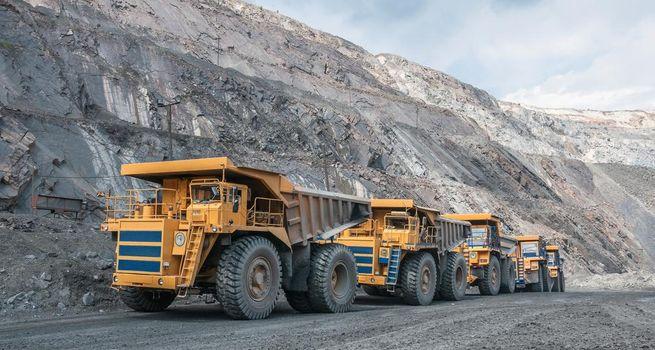
The Volta Grande project is located in the state of Pará, in northern Brazil, roughly 60 kilometres southeast of the city of Altamira, within the broader Volta Grande do Xingu region of the Amazon. The project envisions a conventional open-pit gold mine with a processing facility, water and tailings management infrastructure and associated support facilities. Company materials have historically described it as positioned to become one of Brazil’s largest gold mines, reflecting both the size of the resource and the scale of the proposed operation.
What does Belo Sun actually own?
Belo Sun is a single-asset developer. Volta Grande is the company; there is no diversified portfolio of producing mines, no stream of operating cash flow and no secondary project of comparable scale to fall back on. That concentration is the defining feature of the investment case. It magnifies both the upside, if Volta Grande is built, and the downside, if it is not.
On the resource side, the project’s technical foundation is a feasibility study completed in 2015. That study described a large mineral resource and reserve base, with mineral reserves historically reported in the region of 3.79 million ounces of gold and measured-and-indicated resources of roughly 4.95 million ounces, plus additional inferred ounces. The deposit has been described across multiple zones split between a North Block and a South Block. Estimated overall gold recovery in the study was high, reflecting a relatively amenable ore.
How is the company financed and owned?
As a pre-revenue developer, Belo Sun funds itself through the equity markets rather than operating income. Over the years it has raised capital through share issuance and strategic investments to sustain permitting work, legal proceedings, community programmes and corporate overhead. In a notable corporate development announced in late 2024, the company introduced a new cornerstone shareholder, La Mancha, which was set to become Belo Sun’s largest shareholder, holding a significant minority stake on completion of the related transaction and financing. The presence of a well-capitalised strategic backer is relevant context for a developer that will need substantial funding to reach construction.
Investors evaluating the snapshot should hold two facts together. First, the geological asset is large and well studied. Second, the company has not been able to convert that asset into a built mine because the permitting and legal pathway has not allowed it. The remainder of this analysis is essentially an exploration of why, and what it means.
Why Belo Sun Mining Is in Focus
Belo Sun returns to investor attention in waves, and those waves are almost always triggered by the courts rather than by the drill bit. The company’s share price has shown a pattern of sharp moves around legal milestones — rising on favourable rulings that appear to clear a path toward construction, and falling when licences are suspended or appeals gain traction.
A renewed legal and permitting cycle
The most recent cycle of attention has centred on the status of the project’s environmental licences. In January 2025, the Federal Court of Appeals in Brasília (TRF1) ruled that the State of Pará’s environmental authority, SEMAS (the Secretariat of Environment and Sustainability), would be the competent body for the project’s environmental permitting going forward. That decision reversed an earlier September 2023 ruling that had designated the federal environmental agency, IBAMA, as the competent authority. The jurisdictional question — state versus federal — has been one of the most consequential threads in the whole saga, because it determines which body controls the licensing process.
Attention intensified again in early 2026. In February 2026, a Brazilian federal regional court accepted an appeal and granted interim relief reinstating the project’s Installation Licence, which had been suspended years earlier. The court was reported to have found that the company had complied with conditions previously imposed, including completion of an Indigenous Component Study based on primary data and the conduct of prior, free and informed consultation with affected Indigenous communities. A reinstated Installation Licence is significant because it is the permit that, in principle, allows installation and construction activities to proceed.
Why the focus comes with caveats
The same period also produced reasons for caution. Federal prosecutors continued to challenge the company’s licensing progress, and further court proceedings were scheduled in 2026 to determine whether the project would remain suspended. Indigenous Juruna (Yudjá) and Arara associations from the Volta Grande do Xingu region formally rejected the validity of the consultation process the company points to, and the Federal Public Prosecutor’s Office argued that court-imposed requirements had not been satisfied. In other words, the favourable interim ruling did not end the dispute; it advanced one stage of a multi-front legal contest.
There is also a forward-looking operational reason for the renewed focus. In May 2026 the company reported that it had engaged a mining consultancy to review and update the technical studies underpinning the Installation Licence, with the stated goals of identifying improvements, outlining updates to a definitive feasibility study and developing a phased project plan, targeting completion of that work by the third quarter of 2026. For a project whose core technical study dates to 2015, refreshing the economics is a meaningful step — and a signal that, even if the legal path clears, there is engineering and study work still to complete before a construction decision.
Sector Background and Market Context
To assess Belo Sun, it helps to understand the category it belongs to: the single-asset, pre-construction gold developer. These companies sit between explorers, which are still searching for and defining ounces, and producers, which are mining and selling metal. Developers have typically defined a resource and completed economic studies, but have not yet built or operated a mine. Their value is forward-looking and contingent.
How gold-developer valuations work
Because developers generate no revenue, the market does not value them on earnings or cash flow. Instead, valuation tends to revolve around the size and quality of the resource, the projected economics of the proposed mine, the perceived probability and timing of reaching production, and the amount of capital and dilution required to get there. A large, high-recovery deposit in a stable jurisdiction with clear permits commands a premium. A large deposit hindered by permitting and legal uncertainty trades at a steep discount to the theoretical value of its ounces, precisely because the market is pricing the risk that those ounces never get mined.
Belo Sun sits firmly in that second category. The resource is large by any reasonable standard, but the discount reflects years of unresolved permitting and legal disputes. This is the central reason the stock can appear inexpensive relative to its in-ground gold while still being entirely rational to price cautiously.
The gold-price backdrop
The broader commodity context matters as well. Gold-developer equities are leveraged to the gold price because higher prices improve the projected economics of a deposit and increase the willingness of investors and lenders to fund construction. A strong gold-price environment can lift sentiment across the developer space and make financing more achievable; a weak environment does the opposite. Investors should note, however, that gold-price strength is a tailwind, not a cure. No prevailing gold price can substitute for the permits and legal clearances a project like Volta Grande requires, and it would be a mistake to treat a favourable metal price as a reason to discount the project-specific risks discussed throughout this article.
The Brazilian jurisdiction
Brazil is an established mining jurisdiction with significant gold, iron ore and base-metal production, a developed mining law framework and substantial domestic and international investment. At the same time, projects in or near the Amazon face heightened environmental scrutiny, complex overlapping federal and state authority, and strong legal protections for Indigenous peoples that require consultation and impact studies. Volta Grande sits at the intersection of these dynamics. The jurisdiction is neither uniformly easy nor uniformly hostile; it is specific, and the specifics around the Xingu region have proven especially demanding.
What Investors Should Know
Beyond the headline narrative, several practical realities shape how Belo Sun should be approached. These are the points that tend to matter most once an investor moves past the broad pitch of “large gold deposit in Brazil.”
This is a binary, single-catalyst story
More than most mining stocks, Belo Sun is driven by discrete legal and permitting events. The asset and its economics are relatively well understood; what is not understood is whether and when the company will be permitted to build. That makes the share price unusually sensitive to court decisions, prosecutorial appeals and regulatory determinations. Investors should expect episodic, sometimes violent, volatility around such events rather than the gradual re-rating that accompanies a producing miner’s operational delivery.
The permitting history is long and contested
A condensed timeline helps frame the risk. SEMAS, the Pará state environmental authority, issued the project’s Preliminary Licence in 2014 and its Construction Licence in 2017. In February 2017, a court in Altamira issued a temporary injunction halting certain work to allow time to address the relocation of families living near the project, and land-acquisition irregularities were also raised in legal proceedings. Licences were subsequently caught up in suspensions, and a 2022 order suspended key licences pending compliance with conditions, including an Indigenous Component Study and prior, free and informed consultation. The jurisdictional question then swung from state (pre-2023) to federal (2023) and back to state (2025), before the 2026 interim reinstatement of the Installation Licence. The throughline is that nearly every step forward has been contested, and several have been reversed.
Indigenous and community considerations are central, not peripheral
The Volta Grande do Xingu region is home to Indigenous communities, including Juruna (Yudjá) and Arara peoples, whose rights to consultation are protected under Brazilian and international frameworks. Affected associations have publicly rejected the validity of consultation processes the company relies upon, and civil-society and human-rights organisations have been vocal opponents of the project. For investors, this is not a peripheral “ESG” footnote; the adequacy of consultation has been a live legal question that directly affects the validity and durability of the project’s licences. A licence won in court can be challenged again on consultation grounds.
Financing and dilution are unavoidable
Building a large open-pit gold mine requires substantial capital. As a pre-revenue developer, Belo Sun must raise that capital externally, and the most likely sources — equity, strategic investment, project debt or a combination — carry implications for existing shareholders. Equity raises dilute current holders; strategic deals may come with conditions; project debt depends on lenders’ willingness to finance a project with this legal history. The arrival of a cornerstone shareholder such as La Mancha provides balance-sheet support and validation, but it does not eliminate the need for further funding on the road to construction, and the terms of future financing will matter to the per-share outcome.
The 2015 study is being refreshed
Investors should also internalise that the project’s headline economics derive from a feasibility study completed in 2015. Cost structures, gold prices and engineering assumptions have changed materially since then. The company’s 2026 move to engage a consultancy to update the technical studies and work toward a definitive feasibility study is a necessary modernisation, but it also means the precise economics of the project as it might be built today are, for now, being reassessed rather than settled. Treat older economic figures as historical context, not as a current guarantee of returns.
Buy Case (Editorial View Only, Not Personal Financial Advice)
The following is general editorial commentary on why some investors are drawn to Belo Sun. It is not a recommendation, and it should be read alongside the risks set out later in this article.
Leverage to a large, well-defined resource
The most straightforward part of the bull case is scale. Volta Grande is, by the measures of resource and reserve ounces historically reported, a genuinely large gold deposit. Large deposits are scarce and strategically valuable, particularly to larger producers seeking to replace depleting reserves. For an investor who believes the permitting and legal obstacles will eventually be overcome, the current valuation can look like deep leverage to a substantial in-ground gold endowment.
A potential re-rating on legal clearance
Because the stock trades at a discount that reflects permitting and legal uncertainty, the removal of that uncertainty — even partially — can drive sharp re-ratings. The market’s reaction to favourable court rulings has demonstrated this dynamic repeatedly. The bull case holds that a durable, defensible licensing position, once achieved, could close some of the gap between the stock’s market value and the theoretical value of its ounces. The 2026 interim reinstatement of the Installation Licence is, in this framing, the kind of catalyst that can move sentiment quickly.
Strategic backing and gold-price tailwinds
The addition of a cornerstone strategic shareholder provides financial credibility and capital depth that a contested developer badly needs. Combined with a supportive gold-price environment, which improves both project economics and the practical ability to raise money, the company arguably enters the latest chapter of its story better positioned financially than during some earlier crises. Bulls argue that strategic backing plus high gold prices is the combination most likely to carry a difficult project across the line if the legal path opens.
Optionality for risk-tolerant investors
Finally, the editorial bull case frames Belo Sun as optionality. For an investor with a high tolerance for risk and a long time horizon, a small position offers exposure to a large potential payoff if Volta Grande is ultimately built, with the understanding that the position could also lose substantial value if it is not. That asymmetric, option-like profile is what attracts a particular type of speculative capital to the name. It is emphatically not a profile suited to investors who need capital preservation or predictable outcomes.
Key Investor Watchpoints
Given the nature of the story, monitoring Belo Sun is largely a matter of tracking a specific set of legal, regulatory and corporate developments. The following watchpoints are the variables most likely to determine the outcome.
The durability of the Installation Licence
The single most important watchpoint is whether the 2026 interim reinstatement of the Installation Licence proves durable or is overturned on appeal. Interim relief is, by definition, provisional. Investors should follow whether the reinstatement is confirmed in subsequent rulings, whether prosecutors’ appeals succeed, and whether any conditions are attached. The difference between a provisional win and a final, defensible licence is enormous for the investment case.
The competent-authority question
Closely related is the question of which body — state SEMAS or federal IBAMA — holds permitting authority. This has swung more than once, and any further reversal would reshape the licensing process. A settled, uncontested answer to the jurisdictional question would remove a major source of uncertainty; renewed disputes would reintroduce it.
Indigenous consultation and its legal acceptance
Watch the status of the Indigenous consultation process and whether courts accept it as adequate. Affected associations have rejected its validity, and prosecutors have argued that requirements were not met. Because consultation adequacy underpins licence validity, this is not a side issue — it is a potential basis for future suspensions even after other hurdles are cleared.
The updated technical studies and feasibility work
The consultancy review and the path toward an updated definitive feasibility study, targeted for completion around the third quarter of 2026, will reveal how the project’s economics look under current cost and price conditions and what a phased development plan might involve. Investors should watch for the substance of those updates, including capital cost estimates, production phasing and any changes to the scale or sequencing of the proposed mine.
Financing announcements and dilution
Track how the company funds itself from here. New equity raises, strategic investments, offtake or streaming arrangements, or project-level debt would each carry different implications for existing shareholders. The size, pricing and structure of any financing — and the degree of dilution involved — directly affect the per-share value of any eventual success.
Gold price and sector sentiment
Finally, keep an eye on the gold price and the broader appetite for developer equities. A strong gold environment supports both the economics and the financeability of the project, while a downturn would pressure both. Sentiment toward Amazon-region mining projects specifically can also shift with the political and regulatory climate in Brazil.
Risks to Watch
Belo Sun is a high-risk equity, and the risks are concentrated and serious. The following are the most material, presented plainly.
Permitting and legal risk is the dominant risk
The overriding risk is that the project is never permitted to be built, or is delayed for many more years. The history of injunctions, suspensions and reversals shows that favourable rulings can be appealed and overturned, and that licences can be granted and then suspended. The 2026 interim reinstatement, while positive, sat alongside continuing prosecutorial appeals and scheduled hearings. There is a genuine, non-trivial possibility that the legal contest ends unfavourably for the company.
Single-asset concentration
With its value tied almost entirely to Volta Grande, Belo Sun has no operational diversification to cushion a negative outcome. A definitive adverse ruling, or an indefinite stalemate, would have an outsized impact precisely because there is no second project or cash-flowing mine to absorb it. Concentration cuts both ways, and on the downside it is unforgiving.
Community opposition and reputational risk
Sustained opposition from Indigenous communities, civil-society groups and human-rights organisations creates ongoing legal, reputational and operational risk. Even where the company prevails legally, opposition can prolong timelines, complicate financing and attract scrutiny from international stakeholders. The social licence to operate, distinct from the legal licence, is contested.
Financing and dilution risk
The capital required to build a large open-pit mine is substantial, and the company must raise it externally. There is a risk that financing is available only on dilutive or otherwise unfavourable terms, particularly given the legal overhang. Repeated equity issuance can erode the per-share value of the resource, and there is no guarantee that project debt or strategic capital will be available in the amounts and on the terms required.
Gold-price and macro risk
A sustained decline in the gold price would weaken the project’s economics and could make financing harder to secure, independent of the permitting outcome. Broader macro factors — interest rates, currency movements between the Canadian dollar, US dollar and Brazilian real, and risk appetite for speculative resource equities — also influence both the share price and the practical feasibility of construction.
Execution and study risk
Even in a scenario where permits are secured and financing is arranged, the company would still have to build and operate a large mine in a remote region — a complex undertaking with its own cost, schedule and technical risks. The need to update studies dating to 2015 underscores that the project as it might be built today is not fully defined, and updated economics could differ from historical figures in either direction.
Volatility
Finally, investors should be prepared for extreme volatility. As an event-driven, single-catalyst developer, the stock can move dramatically on news, and position sizing should reflect the possibility of large swings, including the potential for significant permanent loss of capital.
What Could Happen Next?
Predicting the precise outcome of an ongoing legal process is not possible, and this section deliberately avoids forecasts. Instead, it sketches the broad scenarios investors can reasonably hold in mind, recognising that reality may unfold differently.
A constructive path
In a constructive scenario, the interim reinstatement of the Installation Licence is upheld through subsequent rulings, the competent-authority question settles in a stable way, and the consultation process is ultimately accepted as adequate. The company completes its updated technical studies and definitive feasibility work, secures financing on workable terms with the support of its strategic shareholder and a favourable gold backdrop, and moves toward a construction decision. In this path, the long discount to the resource could narrow meaningfully. It is important to stress that even this scenario would likely unfold over an extended period and would involve further milestones and risks along the way.
A stalemate path
In a stalemate scenario, the legal contest continues without resolution. Favourable rulings are met with appeals, suspensions and counter-suits, and the project remains stuck in the same pattern it has occupied for years. The company continues to incur costs and may need to raise dilutive capital simply to sustain the process, while the asset remains undeveloped. This is, on the evidence of history, a plausible outcome, and it would be a frustrating one for shareholders even without an outright defeat.
An adverse path
In an adverse scenario, the courts ultimately rule against the company’s licensing position in a durable way, or opposition and prosecutorial action succeed in blocking the project indefinitely. In that case, the value tied to Volta Grande could be sharply and permanently impaired. Given the single-asset structure, this scenario carries severe downside.
No one can assign reliable probabilities to these paths, and investors should be sceptical of anyone who claims to. What can be said is that the range of outcomes is unusually wide, and that the next set of court decisions and study updates will do much to indicate which way the story is leaning.
Long-Term Outlook
Over a long horizon, Belo Sun’s fate hinges on a simple question with a complicated answer: can a large gold deposit in the Volta Grande do Xingu region of the Brazilian Amazon be permitted, financed and built in a way that satisfies the courts, the regulators and the affected communities? The geology is not seriously in dispute. The pathway is.
If the company can establish a durable, legally defensible licensing position and complete updated, modern technical studies, the long-term outlook would shift from a permitting fight to a financing-and-construction challenge — still demanding, but of a more familiar kind for the mining industry. A supportive gold price and a committed strategic shareholder would help carry that challenge. In such a world, the long-term prize is a substantial gold mine and the cash flow that would accompany it.
If, instead, the legal and social obstacles prove insurmountable, the long-term outlook is far bleaker, and the single-asset structure means there is little to fall back on. The wide gap between these two long-term outcomes is exactly why the stock trades the way it does, and why it remains suitable only for investors who fully understand and can tolerate that uncertainty.
A balanced long-term view, then, resists both the temptation to dismiss the company outright — the resource is real and the recent legal momentum has at times been positive — and the temptation to assume success is inevitable. The honest position is that the long-term outlook is genuinely undetermined and unusually dependent on factors outside the company’s full control.
Conclusion
Belo Sun Mining Corp is one of the more distinctive names on the TSX: a single-asset gold developer holding a large, well-studied deposit that it has spent more than a decade trying, and so far failing, to bring to construction because of a sustained tangle of environmental licensing, jurisdictional and Indigenous-consultation disputes. The Volta Grande project is both the entire reason to own the stock and the entire reason to be cautious about it.
The investment case is unusually clean in its logic and unusually uncertain in its outcome. The upside is leverage to a large gold resource and the potential for a re-rating if the permitting and legal pathway clears; the recent interim reinstatement of the Installation Licence and the engagement of a consultancy to update the project’s technical studies are tangible, if provisional, steps in that direction. The downside is the very real possibility that the project remains blocked, with the company’s concentrated structure offering no cushion if that happens.
For investors, Belo Sun is best understood as a high-risk, event-driven, optionality play whose direction will be set by courtrooms, regulators and communities at least as much as by management or the market. Those drawn to it should size any exposure accordingly, follow the watchpoints closely, and keep the risks firmly in view. As always, the appropriate course is to do independent research and, where needed, consult a licensed professional rather than rely on any single article’s framing.


 Nov 27, 2026





 Please wait processing your request...