
 NZ
 UK
 US
 AU
 IND

 CA

 Share
 X (Formerly Twitter)
 Whatsapp
 Facebook
 LinkedIn
 Telegram
 Email This Article
 Copy Link
 Summarize with AI
 Chat GPT
 Perplexity


- Nvidia’s strong earnings sparked a relief rally, but macro headwinds sharply reversed sentiment.
- Delayed U.S. jobs data (NFP) and a sticky unemployment signal complicated rate-cut expectation.
- Private-credit stress and liquidity strains added a quieter but meaningful backdrop to the risk reset.
- Treasury yields surged in both directions, fuelling volatility across stocks, commodities, FX, and crypto.
- On the TSX, energy and defensives held up, while growth and precious-metal names saw cross-asset spillovers.
- Going forward, the focus shifts to macro datapoints, policy clarity, liquidity flows, and sector rotation - not just corporate headlines.
- Equities: AI Optimism Meets Macro Reality
Wall Street opened November 20 with relief, buoyed by Nvidia’s stellar earnings. Investors hoped the AI narrative would continue fuelling growth names. But the mood soured through the day:
- Tech and growth names saw heavy profit-taking as valuation concerns re-emerged.
- Broader indexes slipped into the red even after a strong start.
- The session highlighted a clash: the power of corporate earnings vs. the gravity of macro risk.
This reversal underscored how even strong headline earnings can be disrupted when policy and macro data demand attention.
- Fixed Income & Yields: Betting on the Fed Gets Complicated
Treasury markets reacted sharply as macro data came into sharper focus:
- Yields initially dropped, offering duration relief, but then reversed course as traders reassessed the odds of near-term rate cuts.
- The yield curve’s short-to-long dynamics became more pronounced — a barometer for shifting rate expectations.
- These yield swings amplified cross-asset risk, feeding into equity and FX volatility.
In essence, yields acted as a live signal of risk re-pricing: not just about rates, but about how investors see growth, liquidity, and credit risk.
- Macro Shock: Jobs, Unemployment, Credit Risk & Liquidity
Several overlapping macro forces drove the sharp reversal.
- Delayed NFP & Jobs Data
A postponed U.S. jobs report finally landed, revealing a +119,000 non-farm payrolls gain. That number, while modestly supportive, raised critical questions:
- The labour market remains resilient, reducing pressure on the Fed to cut aggressively.
- Wages could still fuel inflation, complicating the path to easier policy.
- But because the data was delayed, its signal strength was somewhat diluted — increasing uncertainty.
- Unemployment Rate Nuances
The unemployment rate did not plunge, but it also didn’t spike. This mixed reading suggests:
- The economy may be softening — but not rapidly.
- There’s no clear “easy pass” for the Fed: labor conditions are not deteriorating fast enough to force deep cuts, yet not so strong as to justify aggressive tightening.
Such ambiguity tends to unsettle markets more than clear-cut readings.
- Private Credit Strain
Behind the scenes, institutions flagged rising risks in private-credit markets:
- Floating-rate private loans (especially in commercial real estate and mid-market firms) are under pressure from higher rates.
- Analysts noted growing refinancing risk, tighter underwriting, and potential stress in non-bank credit pools.
- These credit tensions don’t always hit the front page, but they feed into liquidity and risk-risk frameworks.
- Liquidity Frictions Return
Markets are also watching liquidity more closely:
- Funding spreads in money markets widened.
- Dealer balance sheets and liquidity buffers are tighter, reducing shock absorption.
- With funds and hedge vehicles defensive, even “normal” volatility can feel amplified.
Taken together, the macro-overlay of a sticky labour market + private-credit strain + liquidity stress created a backdrop ripe for rotation — especially once the jobs shock landed.
- Commodities & FX: Diverging Moves & Dollar Strength
Cross-asset behavior added intrigue:
- Oil spiked after an unexpected inventory draw, reminding markets that supply risks are not gone.
- Gold fell as a stronger dollar and rising yields made non-yielding assets less attractive.
- The US dollar strengthened, pressuring emerging-market equities and commodity-linked currencies.
These shifts intensified flows: rising oil drew energy demand, while gold’s weakness cut into safe-haven appetite. The dollar’s strength acted as a transmission mechanism — connecting macro stress with wider market reactions.
- Crypto & Volatility: High-Beta Gets Repriced
Crypto markets, especially Bitcoin, followed risk sentiment rather than leading it:
- Bitcoin dropped from recent highs as profit-taking accelerated.
- Options markets lit up with a surge in put-buying and rising implied volatility.
- Hedge funds and institutional traders showed increased defensive positioning via derivatives, highlighting how quickly high-beta plays can unwind.
Crypto’s alignment with growth names reinforced the idea: when macro risk accelerates, high-beta digital assets are among the first to feel the heat.
- Institutional Sentiment: Rotation, Breadth & Caution
Major institutions weighed in with a unified, measured tone:
- Research teams at Goldman, JPMC, Morgan Stanley, BlackRock, and others emphasized the risk of over-concentration in a few tech/AI names.
- Many described the day as a liquidity- and data-driven rotation, not a systemic crash.
- Analysts urged attention to policy guidance, breadth metrics, and macro datapoints — not only earnings headlines.
This institutional framing signalled a shift: from momentum chasing to strategic positioning and risk management.
- TSX Spotlight: Canadian Stocks & Themes to Track
On the TSX, Canadian equities echoed several of the same themes — with particular sector-level nuance.
- Energy Names
- Suncor Energy (SU), Canadian Natural Resources (CNQ), and Cenovus Energy (CVE) remain relevant given oil’s renewed strength.
- These names often act as a barometer for capital discipline, supply forecasts, and global demand trends — especially when oil volatility picks up.
- Gold Miners
- Barrick Gold (ABX), Agnico Eagle Mines (AEM), Kinross Gold (K) are sensitive to dollar strength and yield re-pricing.
- They’re strategically interesting given how bullion and rates interplay: pressure on gold can compress miner leverage and cash-flow dynamics.
- Technology & Growth
- Shopify (SHOP), Constellation Software (CSU), Kinaxis (KXS) are tied to global growth, digital adoption, and long-term AI/cloud narratives.
- Their performance often reflects U.S. tech sentiment, making them important to watch as the macro-risk regime evolves.
- Financials & Credit-Sensitive Names
- Royal Bank of Canada (RY), Toronto-Dominion Bank (TD), and Brookfield Corp (BN) carry exposure to both traditional lending and alternative-credit ecosystems.
- With private-credit risk back in focus, these names help observers gauge how credit stress could flow into broader Canadian financials.
- Industrials & Infrastructure
- Canadian National Railway (CNR), Canadian Pacific Kansas City (CP), and WSP Global (WSP) are being watched as macro barometers.
- Their sensitivity to freight volumes, capital expenditure cycles, and infrastructure investment offers insight into longer-term economic resilience.
Strategic themes for TSX moving forward
How rate curve shifts affect rate-sensitive sectors.
- The cross-asset signals between commodities (oil, gold) and equities.
- Credit stress read-through, especially for Canadian financials and private-credit–exposed companies.
- Breadth versus concentration: whether TSX leadership remains narrow or broadens.
- Earnings updates tied to cash flow, debt refinancing, and capex planning.
- What to Track Next: Strategic Forward Focus
Instead of reacting to every headline, the next phase of markets is likely to hinge on macro clarity, liquidity conditions, and the quality of flows. Key areas to watch:
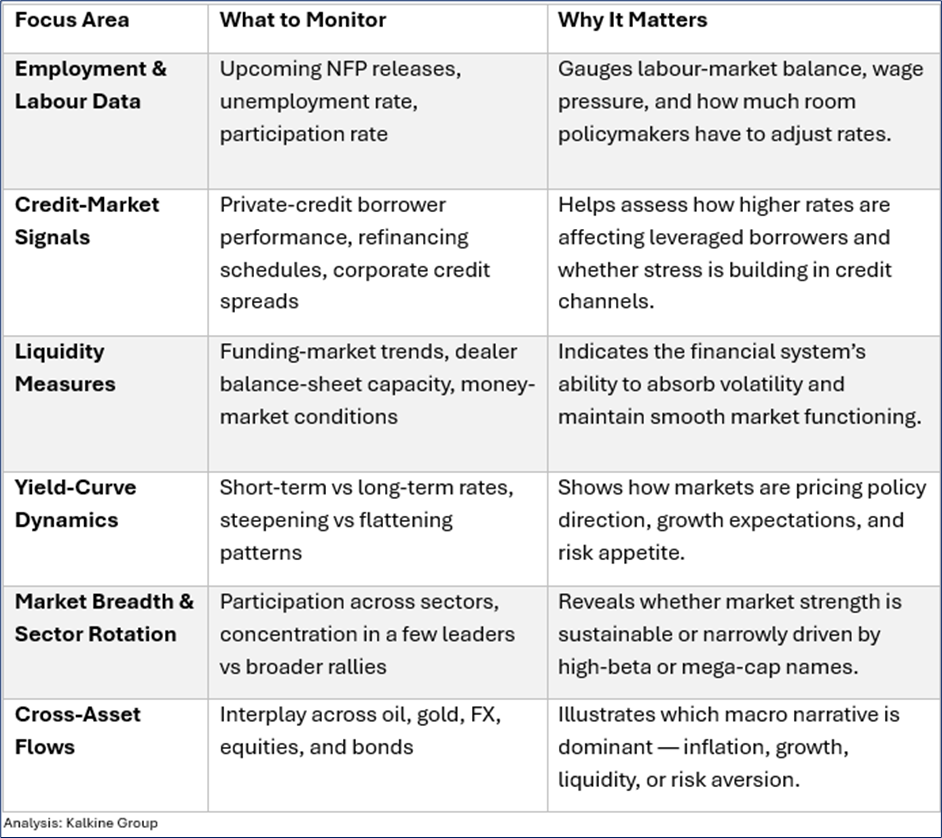

November 20 delivered a powerful message: strong earnings (even from AI giants) do not immunize markets from macro, credit, and liquidity risk. The reversal was not a panic-driven crash, but a re-pricing moment — one that emphasized repositioning over capitulation.
Going forward, investors, strategists, and observers should focus not on hype, but on how macro data and cross-asset signals evolve. The next leg of the market’s story may not come from a tech breakout, but from how well markets navigate a more nuanced, less certain regime.


 Nov 20, 2026





 Please wait processing your request...